

Audio By Carbonatix
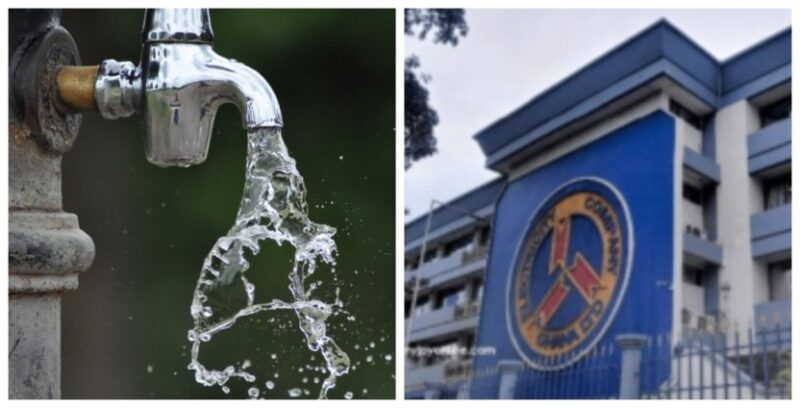
The Electricity Company of Ghana (ECG) and Ghana Water Limited are under intense pressure after three business associations launched a scathing attack.
Three associations, including the Food and Beverages Association (FBA) and Ghana Union of Traders Association (GUTA) and Ghana Plastic Manufacturers' Association, described the companies as "leaking baskets" plagued by waste and inefficiency and are demanding immediate reforms under the government's reset agenda.
The associations are petitioning the President to launch an Executive Reform Agenda committee within 30 days to tackle challenges such as technical and commercial losses, revenue collection, and other operational shortcomings.
They want the committee’s work anchored to key performance indicators enforced by a presidential task force.
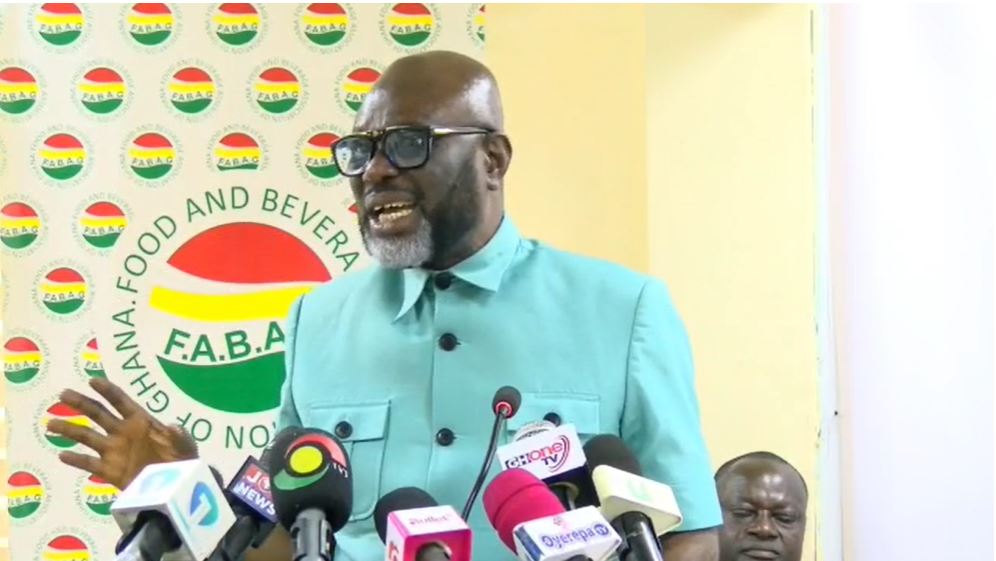
President of the Food and Beverages Association, John Awuni,urged the President to “Let the reset agenda that his excellency sold to Ghanaians and which we bought kick start at the ECG and the Ghana Water Company respectively."
“The Auditor-General’s reports over the years, together with data from the Energy Commission of Ghana, reveal that ECG in particular is bleeding money through inefficiency, corruption, and waste. We therefore, ladies and gentlemen of the press, call on His Excellency the President — and hereby petition him — to launch an executive reform agenda anchored on measurable key performance indicators, to be enforced by a Presidential Task Force,” he added.
The group also slammed the companies’ proposed tariff increases of 225% for ECG and 280% for Ghana Water, saying it is unreasonable for monopolistic utility companies to be incurring losses year after year.
Mr Awuni said members are not willing to pay higher tariffs to companies “riddled with waste and corruption.”
“We are hereby warning that approving new tariff hikes for utilities, especially the ECG and the Ghana water company, without deep reforms, would be a profound injustice to the businesses and households of Ghana,” he warned.
President of GUTA, Joseph Obeng, noted that Ghanaian traders struggle to export goods because of the country’s high utility rates and warned that the government’s 24-Hour Economy initiative could fail if the utility situation is not addressed.
According to him, the earlier these issues are dissected, the better for the economy and its industrialization.
“We don’t have to continue to increase and increase while businesses suffer. It does not make us competitive,” he lamented
Latest Stories
-
Power restoration fault suspected in Kumasi Central Market fire
2 hours -
The 7-foot giant of Ngleshie Amanfro: Seven-foot Ghanaian Ephraim Saawa dreams of joining the national basketball team
3 hours -
Government promises support for Kumasi Central Market fire victims
3 hours -
Vibes The Movie: Big Ghun’s Ghanaian film earns five nominations at 2026 REFFA
3 hours -
MamaCare CEO warns unresolved conflicts among health workers could undermine maternal and neonatal care
4 hours -
Health professionals urged to translate medical knowledge into practice to save mothers
4 hours -
Conflicts among care providers linked to maternal, neonatal deaths – Expert
5 hours -
GIS marks 10th TIME conference, champions improved teaching practices
6 hours -
BRICS Or Balance? What Ghana’s bid really means
6 hours -
GPRTU wants full TRAFFITECH-GH implementation to start in 2027
6 hours -
Mahama announces plans to import electric wheelchairs for PWDs
6 hours -
KGL U17 Colts 2026: Western beat Prempeh Elite Academy to set up final final with Greater Accra Region
7 hours -
Late Solanke strike salvages 10-man Spurs draw at Man United
7 hours -
Gender Ministry to monitor welfare of Nana Akua Addo’s children amid domestic violence case
7 hours -
Benedict Okyere Yeboah: Ghana’s football problem goes beyond sacking a coach
7 hours