

Audio By Carbonatix
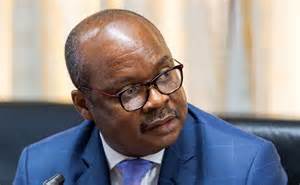
The fiscal costs in terms of stimulus package deployed to moderate the adverse socioeconomic consequences on the households and businesses in the country is estimated at over GH¢11.2 billion, the Governor of the Bank of Ghana, Dr. Ernest Addison has revealed.
However, the inclusion of the financial sector and the energy sector costs raised the estimate of the financial burden from the three sources to GH¢24 billion.
Speaking on the topic: “Pandemic, The Economy and Outlook at the University of Ghana Alumni lecture, Dr. Addison said difficult decisions will have to be taken to reorganize public finances and expenditure priorities while exploring more sustainable revenue sources.
The programme of interventions to revitalize businesses and cushion households will have to be defined to scale and there should be no expectation that these should become permanent obligations of government, he stressed.
“The wide fiscal gap raises important financing issues, and its financing should not be by recourse to central bank funds as this will weaken the central bank’s ability to serve as the anchor of monetary and exchange rate stability.
"Let me conclude by reiterating that, the global economy is not out of the woods yet and neither is the Ghanaian economy”, he emphasized.
Continuing, the Governor said “the pandemic [covid-19] and its socio-economic impact would be felt long after we have reached herd-immunity and started seeing the full benefits of the success in the vaccines. Which means as public policy makers, we will still be faced with tough decisions that require a response function asymptotic to Pareto principles. The critical decisions that we take will be judged by posterity.”
Ghana’s debt
Ghana’s public debt reached 71 percent of the estimated Gross Domestic Product at the end of September 2020, fairly above the maximum early warning sustainability threshold of 70% for the Market Access Countries (MACs).
Dr. Addison said the country’s debt service indicators and gross financing needs have breached the sustainability thresholds.
The non-resident holdings of the public debt, although declined, is still high at 59.9% of GDP, above the threshold of 45% for the MAC.
Public gross financing needs are also above the 10% MAC threshold on the back of increased fiscal obligations, suggesting constrained fiscal space for growth spending.
He added that although external financing requirement as a share of GDP has declined and within acceptable thresholds, efforts need to be put in place to increase buffer levels to help meet future external obligations.
Latest Stories
-
Church of Pentecost supports over 2,000 BECE candidates in Obuasi with career guidance seminar
57 minutes -
Brandon Asante and Coventry all but promoted to Premier League despite Sheffield Wednesday draw
1 hour -
GPL 2025/26: Late Kwartemaa strike downs Hearts in Tema
1 hour -
Ghana Faces Sierra Leone Moment as Prosecutorial Powers come under strain
2 hours -
Don’t consume fish or seafood from Tema Shipyard until further notice – FDA warns
2 hours -
Why volunteering might be Africa’s most underrated career accelerator
2 hours -
ActionAid Ghana raises concern over gender gaps in Feed Ghana Programme
2 hours -
Windstorm wreaks havoc in Gushegu, displacing nearly 2,000 residents and damaging schools
2 hours -
Friends of Bridget Bonnie Marks her 35th birthday with donation to Kasseh Model Health Centre
3 hours -
From Ekumfi Kokodo to the Pulpit Stage: Essi Donkor’s gospel journey takes shape
3 hours -
Landfilling waste management creates no value, it’s an economic waste
3 hours -
Photos: Speaker Bagbin Commissions MPs constituency office under parliamentary decentralisation programme
3 hours -
Black Stars technical advisor Winfried Schäfer sacked as GFA shakes up backroom staff
3 hours -
Wenchi water project almost complete, critical to gov’t agenda – GWL MD
4 hours -
Anti-LGBTQ+ bill not part of government’s legislative agenda – Inusah Fuseini
4 hours