

Audio By Carbonatix
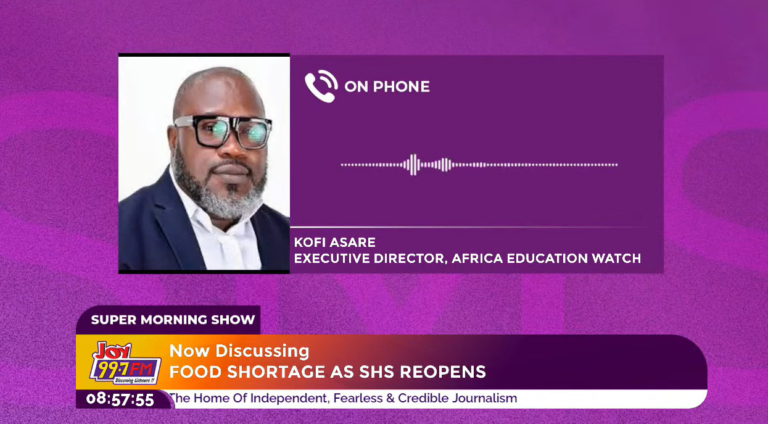
Executive Director of Africa Education Watch, Kofi Asare says even though food shortages are being recorded in some SHSs, there is enough food to supply.
Speaking on Joy FM’s Super Morning Show, he explained that "while some food items are available, there is a shortfall in essential ingredients, largely due to systemic and political challenges.”
“Rice and some other staples are sufficiently available,” he noted, “but there’s a scarcity of key ingredients due to liquidity challenges. The issue isn’t about the total absence of food, but the lack of essential items to make up a complete food basket.”
According to Mr. Asare, schools depend on food supplies from the National Food Buffer Stock Company, which delivers 18 centrally procured food items. Schools then use their subventions to purchase perishable items like fish and eggs locally. However, certain ingredients, such as bread, have become a rare commodity in many schools, forcing students to adjust.
Mr. Asare attributed these challenges to the ad hoc nature of the Free SHS feeding policy, which he said is far from being a structured system. He also highlighted the influence of political transitions on food supply chains.
“Suppliers have shown significant caution in food deliveries since September due to uncertainties surrounding political transitions,” he said. He explained that such transitions often result in delayed payments, making suppliers hesitant to continue operations.
Adding to the complexity, he pointed out that the National Democratic Congress (NDC) has pledged to abolish the current centralised food procurement system , favouring a decentralised system where schools manage their own procurement under supervision from the Ghana Education Service. This, he said, has created additional uncertainty for suppliers who fear being excluded from future contracts.
Mr. Asare concluded that addressing these issues requires solving the liquidity problem and transforming the Free SHS feeding programme from an ad hoc arrangement into a sustainable and efficient system.
The food shortage issue, he emphasised, is not new but demands a long term solution to ensure consistency in the feeding of students.
Latest Stories
-
Gold edges lower with focus on Fed minutes, rate path clues
1 hour -
Oil prices rise as storms and air strikes threaten supply
1 hour -
Nigeria nears 2,000 repatriations from South Africa after latest evacuation flight
1 hour -
‘I never gave up’ – Abanga Fusani reflects on journey to NPP Youth Organiser victory
2 hours -
World Bank maintains Ghana’s growth rate forecast at 4.8% in 2026
2 hours -
Cedi was worst African currency in quarter 2, 2026 – World Bank
2 hours -
US death row inmate Christa Pike awake and speaking after failed execution, lawyers say
3 hours -
AI gains can lift three times as many people out of poverty in Ghana – World Bank
3 hours -
Scammers target ECG customers with fake meter sales and MoMo payment calls
4 hours -
Abanga Fusani credits hard work and consistency for NPP Youth Organiser victory
4 hours -
We did not take security issues seriously – Abanga Fusani reflects on NPP’s 2024 election loss
5 hours -
Nigeria’s Dangote refinery aims to draw more retail investors than Aramco IPO, CEO says
5 hours -
Banker in court for allegedly stealing GH¢1 million
5 hours -
Police arrest suspect over jewellery theft during fire outbreak
5 hours -
EOCO returns Hanan’s £6,700, GH¢2,750 and devices after defence challenge
5 hours