

Audio By Carbonatix
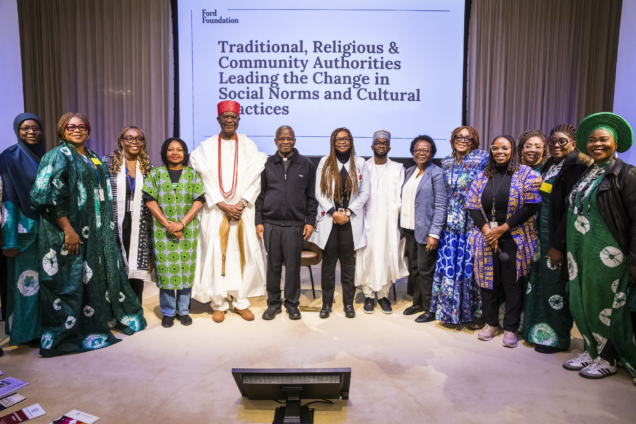
The Ford Foundation Center for Social Justice has hosted a pivotal hybrid event titled “Traditional, Religious, and Community Leaders Driving Meaningful Change.”
It focused on the critical issue of gender-based violence in West Africa as a part of the 69th session of the Commission on the Status of Women (CSW69).
The event was organised to mark the 30th anniversary of the Beijing Declaration and Platform for Action, underscoring the foundation's ongoing commitment to preventing gender-based violence and advancing justice and equity for women and girls.
The discussion centered on the critical role of traditional, religious, and cultural leaders in transforming harmful social norms that perpetuate gender-based violence.
The session featured a distinguished panel of leaders who are working with Ford Foundation’s Office of West Africa to prevent violence against women and girls, challenge discriminatory social norms, and promote gender equality across the region.
The panelists included Igwe Nnaemeka Alfred Achebe CFR, Obi of Onitsha, Father George Ehusani, Executive Director of Lux Terra Leadership Foundation and Dr. Awwal Nasir, Imam and Project Advisory Board Member at the Development Research and Projects Centre.
The speakers shared their insights and experiences in challenging harmful norms and advocating for change.
They highlighted various forms of gender-based violence, including physical violence, sexual assault, harmful widowhood practices, and the violence women sometimes face from other women, particularly in polygamous families.
They noted that these practices thrive because of what Igwe Achebe calls “the culture of silence”—a tendency to keep painful truths hidden within families and communities.
Gender-based violence remains a pervasive issue in West Africa, where deep-rooted social and cultural norms, driven by patriarchy, continue to fuel inequality. Patriarchy often reinforces discriminatory practices that harm women and girls.
Speaking at the session, Sarita Gupta, vice president of US programs at the Ford Foundation, stated, “We recognise the influence that traditional, religious, and community leaders have in shaping societal norms.
"By joining forces with local leaders who hold the respect and authority necessary to inspire transformation at the grassroots level, we can create lasting change that prevents violence and promotes gender equality.”
The foundation’s efforts are part of a broader initiative to address and eliminate gender-based violence, a persistent issue in many parts of the world.
By promoting collaboration and supporting the critical voices of community leaders, Ford Foundation strives to create a more just and equitable society for women and girls everywhere.
The leaders emphasised the importance of creating context-specific approaches to transform harmful social, religious, and cultural practices that restrict women's participation.
Igwe Nnaemeka Alfred Achebe, Obi of Onitsha, stated that, “To combat gender-based violence, we must address socio-economic root causes – poverty, unemployment, substance abuse – which fuel gender-based violence in communities.
He highlighted efforts like economic empowerment programs, strengthening female leadership, and conflict mediation as part of a broader approach to reducing violence.
Reverend Father George Ehusani of the Lux Terra Leadership Foundation emphasized the role of religious leaders in shaping societal attitudes.
To him, “religious leaders must challenge harmful interpretations of scripture and lead the way in promoting gender justice.”
His foundation, with support from Ford Foundation, has trained over 500 Christian leaders to address gender-based violence by creating ‘Centers of Excellence’ in churches and organisations that advocate for zero tolerance towards violence and support legal advocacy for women’s rights.
For Dr Awwal Nasir, from the Development Research and Projects Centre, “Shifting societal norms begins with empowering local leaders to speak out against violence and engage communities in meaningful dialogue.”
He shared the achievements of the Muslim Opinion Leaders project, funded by the Ford Foundation, in raising awareness about gender-based violence in sermons and community dialogues, successfully shifting attitudes in Northern Nigeria while respecting cultural and religious traditions.
Priscilla Usiobaifo, Founder of BraveHeart Initiative, stated, “Grassroots advocacy is the key to changing deeply rooted cultural practices and ensuring women’s rights are upheld.”
By engaging local leaders through town hall meetings and community dialogues, Usiobaifo’s work has led to reforms in harmful traditions like female genital mutilation (FGM) and widowhood rites, promoting gender equality and women’s rights.
Participants at the session called for stronger cultural and political institutions that not only protect women’s rights but also enable them to contribute actively to lawmaking and policy decisions.
Other key action points from the event included the need to promote advocacy and legal frameworks that support greater engagement and participation by women and girls in community life.
This involves reinterpreting religious teachings that have been misused or misunderstood, as well as ensuring that administrative and policy structures safeguard women from harmful cultural and religious practices.
Ford Foundation’s Office for West Africa, through its Gender, Racial, and Ethnic Justice Strategy, aims to reduce gender-based violence in the region by working with traditional, religious, and community leaders to promote positive cultural and traditional practices while transforming harmful ones.
The Foundation acknowledges the pivotal role these leaders play as custodians of the cultural, social, and religious norms that often tacitly approve of gender-based violence and inequality.
The goal is to build stronger, more inclusive systems that protect and promote the rights of women and girls.
Latest Stories
-
Conflicts among care providers linked to maternal, neonatal deaths – Expert
3 minutes -
GIS marks 10th TIME conference, champions improved teaching practices
10 minutes -
BRICS Or Balance? What Ghana’s bid really means
36 minutes -
GPRTU wants full TRAFFITECH-GH implementation to start in 2027
55 minutes -
Mahama announces plans to import electric wheelchairs for PWDs
59 minutes -
KGL U17 Colts 2026: Western beat Prempeh Elite Academy to set up final final with Greater Accra Region
1 hour -
Late Solanke strike salvages 10-man Spurs draw at Man United
1 hour -
Gender Ministry to monitor welfare of Nana Akua Addo’s children amid domestic violence case
2 hours -
Benedict Okyere Yeboah: Ghana’s football problem goes beyond sacking a coach
2 hours -
GPL 2026/27: Darkwah Wiafe’s winner sees All Blacks beat Kotoko
2 hours -
ITF World Tour : Patel Wins Boys’ Singles Final at J100 Accra
2 hours -
Ghana must pursue BRICS partnership if it brings economic benefits – Kpebu
2 hours -
Success and Wright Claims J100 Accra Girls’ Doubles Championship
2 hours -
ITF J100: America’s Wright wins J100 Accra Girls’ Singles Title
2 hours -
Expedition hopes to find aviator Amelia Earhart’s plane on remote island
2 hours