

Audio By Carbonatix
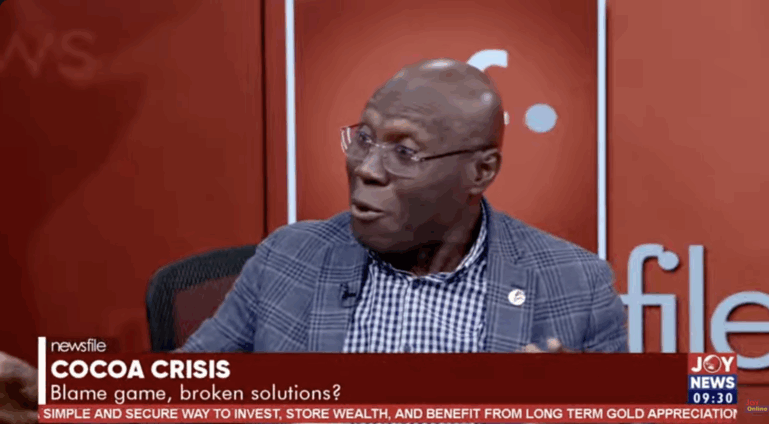
The Ghana Cocoa Board's (COCOBOD) syndicated loan model was never sustainable, with significant portions of borrowed funds spent on administration rather than core operations, former Lands and Natural Resources Minister Alhaji Inusah Fuseini has stated.
The former Tamale Central Member of Parliament, speaking on Joy FM's Newsfile programme, criticised the financial management that has left COCOBOD struggling with debt and unfulfilled delivery contracts.
"Anytime they took the syndicated loan, they spent a heavy part of the syndicated loan on themselves, on administration. We raised red flags that this model was not sustainable," Fuseini said.
The National Democratic Congress (NDC) stalwart drew particular attention to expenditure on cocoa roads during the period when COCOBOD was taking on substantial debt.
"You go and look at the cocoa roads. The amount of money in that period that was spent on cocoa roads. Then you ask yourself, what model was that? How can you rack in that debt and still think that an institution, a trading institution like COCOBOD, could survive?" he questioned.
The comments highlight long-standing concerns about resource allocation within COCOBOD, particularly whether infrastructure projects should have been prioritised while the institution was accumulating debt through annual syndicated loans.
Fuseini also addressed the implications of COCOBOD's forward-sale contracts, explaining that failure to deliver contracted quantities does not absolve the institution of its obligations.
"If you enter into a delivery contract and fail to deliver the quantities, you're not excused of that obligation. So, you had forward sold. And when you fail, and there's a rollover, you are still obligated to supply at that amount," he explained.
He emphasised that these contractual failures occurred not because buyers refused to take delivery, but because COCOBOD could not supply the agreed volumes – a critical distinction in terms of legal and financial liability.
The former minister noted that Ghana would have benefited from its forward-sale contracts only if cocoa prices in subsequent years had dropped below $2,600 per tonne.
Latest Stories
-
A source of excellence across generations – Vice President Opoku-Agyemang lauds Mfantsipim
11 minutes -
(Photos) Mfantsipim School launches historic 150th anniversary
34 minutes -
Knights and Ladies of Marshall group backs Catholic Bishops’ stance on anti-LGBTQ+
2 hours -
Bright Simons writes: All the Filla in the Ibrahim Mahama/E&P – Gold Fields Saga
2 hours -
Monetise Idiocy In Ghana
2 hours -
The Ghanaian prophet and the mysterious death of his scottish wife Charmain Speirs
3 hours -
Nearly 400 sentenced in Nigeria for links to militant Islamists
3 hours -
Ghana’s recovery supported by gold strength despite global oil price pressures – Standard Bank Research
3 hours -
Methodist Church hails Mfantsipim@150; calls for “fresh consecration” to excellence
4 hours -
‘Excellence is our inheritance’ – Nana Sam Brew-Butler hails Mfantsipim’s 150-year reign in leadership
4 hours -
Kwaku Azar writes: A-G vs OSP
4 hours -
Mfantsipim–Adisadel rivalry built excellence, not division – Sam Jonah
4 hours -
Vice President launches Mfantsipim’s 150 years of shaping Ghana’s greatest mind
5 hours -
I assure Otumfuo, Mahama will join him to commission KNUST Teaching Hospital by end of this year – Haruna Iddrisu
5 hours -
Barcelona dominate derby to extend La Liga lead
5 hours