

Audio By Carbonatix
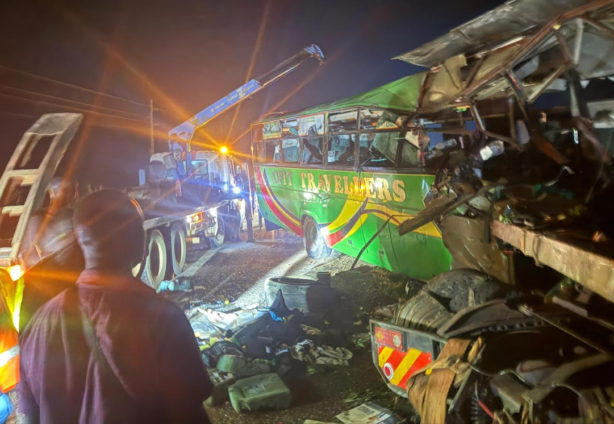
A catastrophic road accident in northern Uganda has left 14 people dead and 28 others critically injured following a head-on collision on the Kampala-Gulu Highway late Tuesday night. This tragedy on the vital transport artery involved a passenger bus travelling toward the city of Gulu colliding with a large commercial trailer. The incident took place at the Bobi Trading Centre, situated roughly 20 kilometres from Gulu City.
Collision Dynamics and Preliminary Findings
Authorities report that the collision involved an Isuzu passenger bus, operated by OPIT Travellers Company, and a Mercedes-Benz Actros trailer. The trailer, which bore Kenyan registration plates, was reportedly transporting cargo from South Sudan at the time of the crash. According to Uganda Police spokesperson Michael Kananura, initial investigations point to human error as the primary factor. The bus driver was allegedly operating at an excessive speed.
"Preliminary reports indicate that the driver of the bus, who was allegedly speeding, attempted to avoid a pedestrian crossing the road, lost control of the vehicle and collided head-on with the oncoming trailer," the police statement said.
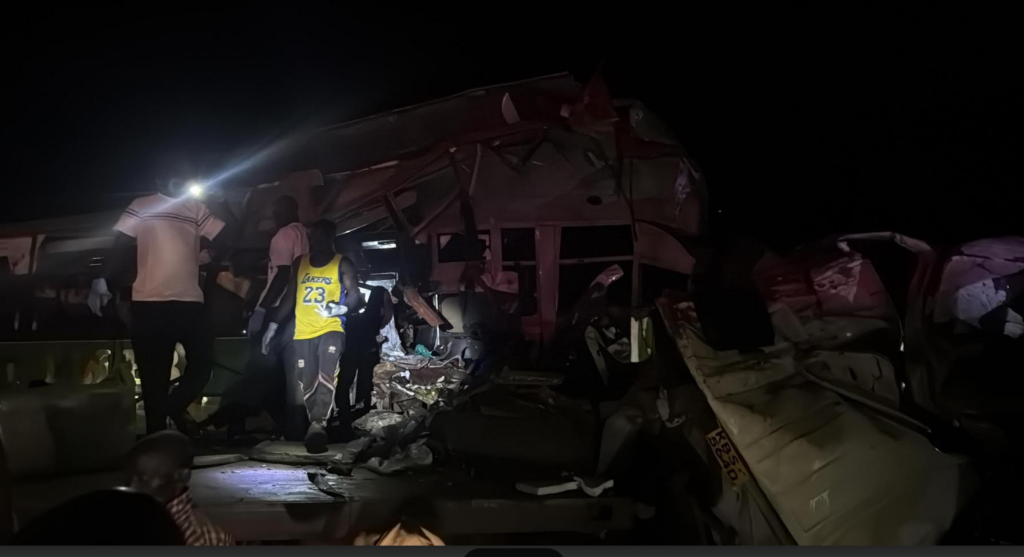
The bus veered into the opposing lane following the driver's manoeuvre. This sudden loss of control resulted in the direct impact with the oncoming heavy vehicle. Images from the scene captured the scale of the destruction. The bus suffered a shattered windscreen, mangled seating, and extensive structural damage.
Human Toll and Emergency Response
The physical cost of the accident remains significant. Police confirmed that 14 individuals perished at the scene, including the driver of the Kenyan-registered trailer. Emergency response teams and local authorities worked through the night to extract survivors from the wreckage. Medical personnel rushed 28 critically injured passengers to nearby health facilities for urgent treatment. While official police figures confirm 28 injuries, some local witnesses have suggested that as many as 40 people may have been harmed during the collision.
Safety Concerns on East African Roadways
This incident underscores the persistent dangers associated with road travel in East Africa. Narrow infrastructure and heavy commercial traffic frequently create hazardous conditions. Ugandan officials often cite speeding, dangerous overtaking, and driver negligence as the leading causes of such fatal encounters.
In the wake of this latest tragedy, law enforcement is renewing its focus on public safety protocols. The police have issued a stern reminder to all motorists regarding the necessity of caution, particularly after dark.
"We urge all motorists to strictly observe speed limits, especially during the night when visibility is reduced. Drivers are also reminded to remain vigilant, anticipate pedestrian movement in trading centres, and always drive at speeds that allow them to stop safely," Kananura stated.
As investigators continue to process evidence from the Bobi Trading Centre, the focus remains on the broader issue of driver behaviour and the management of high-traffic corridors. The government continues to emphasise that excessive speed remains the leading line of inquiry in this investigation.
Regional Context and Traffic Safety Initiatives
This tragedy arrives as Ugandan authorities intensify efforts to curb the rising human and financial burden of road traffic injuries. Recent high-level engagements between the Traffic Police and medical professionals, such as the Association of Surgeons of Uganda, emphasise that road safety is a shared responsibility requiring evidence-based intervention. Despite these collaborative efforts and existing campaigns like the National Road Safety Action Plan, the high frequency of fatal crashes on major routes like the Kampala-Gulu Highway persists as a critical public health and infrastructure challenge.
The recurring nature of these accidents highlights a broader regional challenge that requires sustained investment in road infrastructure and stricter enforcement of traffic regulations to protect the lives of those traversing these vital transport corridors.
Latest Stories
-
Interest payments to average a high 20% of government revenue over next 4 years
2 hours -
Strategy of accumulating foreign reserves, gold carries high fiscal cost – S&P Global
2 hours -
Weak institutional arrangements, high debt servicing constrain Ghana’s rating – S&P
2 hours -
Bond market: Turnover declined by 28% to GH¢1.56bn
3 hours -
Volta Region National Public Speaking contest advances drug prevention conversation
3 hours -
New health training facility at Ampoma-Jema to address admission shortfalls, but Minister flags missing amenities
3 hours -
Black Challenge unveiled with sights set on Amputee World Cup glory
3 hours -
Pay striking teachers before expressway spending, Dr Kingsley Agyemang tells government
4 hours -
Customs intercepts assault rifle, two pistols and 610 rounds of ammunition at Tema Port
4 hours -
PKO boxers secure wins at Odwira Festival
5 hours -
South Tongu Records Rise in Teenage Pregnancy
5 hours -
Cabinet threw out US health compact faster than anything I’ve seen – Mahama
5 hours -
MoFA urges Finance Ministry to reverse World Bank food programme withdrawal over GH¢643m commitments
5 hours -
NAGRAT demands signed timelines before calling off strike
5 hours -
National Investment Quiz: West Africa SHS, St. Louis SHS advance to semi-finals
6 hours