

Audio By Carbonatix
A teacher, Emmanuel Afful, has asked the Education Minister to concede that there are challenges with the Free SHS programme and consult other relevant stakeholders on how the policy can be improved.
According to him this is the only way to address the loopholes, improve the policy and ensure its sustainability.
"Let's not pretend we don't know there are issues...Sometimes it pays just to say that we thought this was going to happen but we were wrong," he said.
Speaking on the Super Morning Show, on July 14, where he lamented the poor state of the policy, he also bemoaned the fact that parents have been excluded from decision making in the implementation of the policy.
“I never anticipated a situation where a child of 13, 14, 15,16 years cannot eat because he decided to go to school and it baffles me that I am not allowed to make decisions on issues affecting the education of my own child” he stressed.
“Why aren’t we allowing parents and school management committees who are ready to help in this regard to do so? I think we should bow our heads down in shame,” he added.
He further bemoaned what he described as "the over politicisation of the policy," stressing that this has largely affected the progress of the programme.
He also mentioned that the Free Senior High School (Free SHS) policy was not feasible from the onset due to various challenges associated with the educational system.
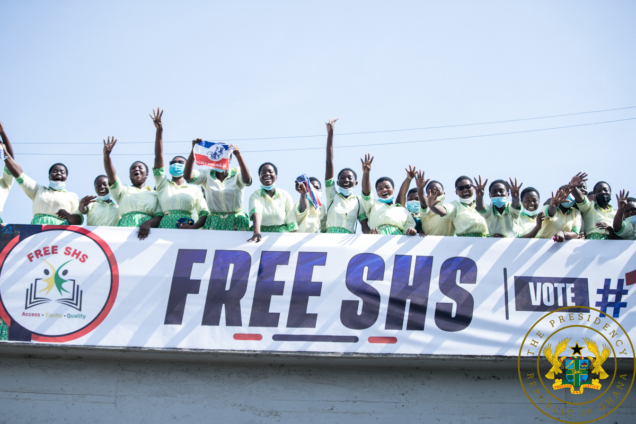
The Free SHS policy was introduced under the first administration of President Akufo-addo to provide free, quality and assesssibe education for all school going children at the Senior High School level.
However, the policy has come under heavy criticism following discrepancies associated with it.
"As far back as 2016, I’ve been on the record to have been one of those who has been opposed to the Free SHS policy not because in principle I hated it, but because we were not ready for it.
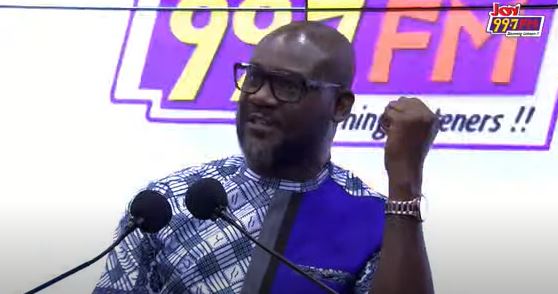
"We spoke about the fact that we had issues – teaching methods, lack of resources, infrastructure and we were called naysayers and unfortunately, the larger majority of Ghanaians who didn’t understand the issues then thought well, because it is free, let’s go with it and here we are today," Mr. Afful stated.
He is, however, confident that the input of Civil Society Organistaions (CSOs, particularly those in the education sector) will significantly improve the policy.
"The policy would come from the government in power but you need to leave it for people who have in-depth knowledge in these things to deal with them. Let's come together and find a solution because we never anticipated these challenges," he said.
Going forward, he proposed the decentralising the feeding aspect of the programme.
He said, "all schools must be allowed to deal directly with suppliers of food commodities instead of government serving as the intermediary."
He believes this will significantly improve feeding under the policy.
Latest Stories
-
Ghana’s economy grows by 7.4% in July 2026
6 minutes -
NDC member challenges Dennis Yeboah Twumasi’s eligibility for Bono Regional Secretary elections
16 minutes -
Popular Nigerian gospel singer Toluwanisings dies
26 minutes -
Spio-Garbrah proposes debt swaps to fund reparative justice in Africa and Caribbean
33 minutes -
Alban Bagbin calls for governance reforms and coordinated action to address Africa’s debt crisis
36 minutes -
AAK Academy Ghana trains 22 chocolate and confectionery companies in production techniques
38 minutes -
Adwumawura Programme trains second cohort of young entrepreneurs in Bono East
39 minutes -
Destroying Jimi River for gold could cost us our lives – Asantehene
46 minutes -
Sammy Gyamfi didn’t say BoG has ceded its forex role to us – GoldBod
2 hours -
High Court sets November 4 for ruling on Wontumi’s bail application
2 hours -
Tetteh Kwetey files nomination for NDC Greater Accra Regional Chairmanship
2 hours -
Korle Bu appeals for more doctors, nurses as A&E Centre struggles under pressure
2 hours -
AFCON 2027Q: ‘I’m optimistic Black Stars can turn things around’ – Agyemang-Badu
2 hours -
Digital innovation could widen Africa’s inequalities if people are left out – Sam Jonah
2 hours -
Galamsey is an economic, health and moral problem – Sam Jonah
2 hours