


Audio By Carbonatix
The story of Emigoh Ghana Ltd. is a familiar one: a small start-up in a home kitchen, a big idea, and a yoghurt called Yomi that found its way into thousands of stores. The next chapter, which began this week, is about scale.
The company has opened a new manufacturing plant in Pantang, an expansion that more than triples its production capacity. This isn’t just a larger building; it’s a direct challenge to the imported brands that dominate shelves and a statement on local manufacturing capability.
The transformation is profound. From five employees in 2005, Emigoh now employs over 70 people and supplies more than 2,500 retailers. The new facility, packed with automated production lines, is the company's answer to a demand that its old operation could no longer meet.
At a launch event, the focus was less on the machinery and more on the people who built the business.
Chief Executive Officer, Stephen Eku paid tribute to his Co-founder and COO, Naadu Eku, calling her the “heartbeat of Emigoh.” He outlined a partnership that fused business strategy with food science, a combination that has so far worked.
But the question hanging over the event was simple: can a Ghanaian company truly become a regional force in a competitive market?
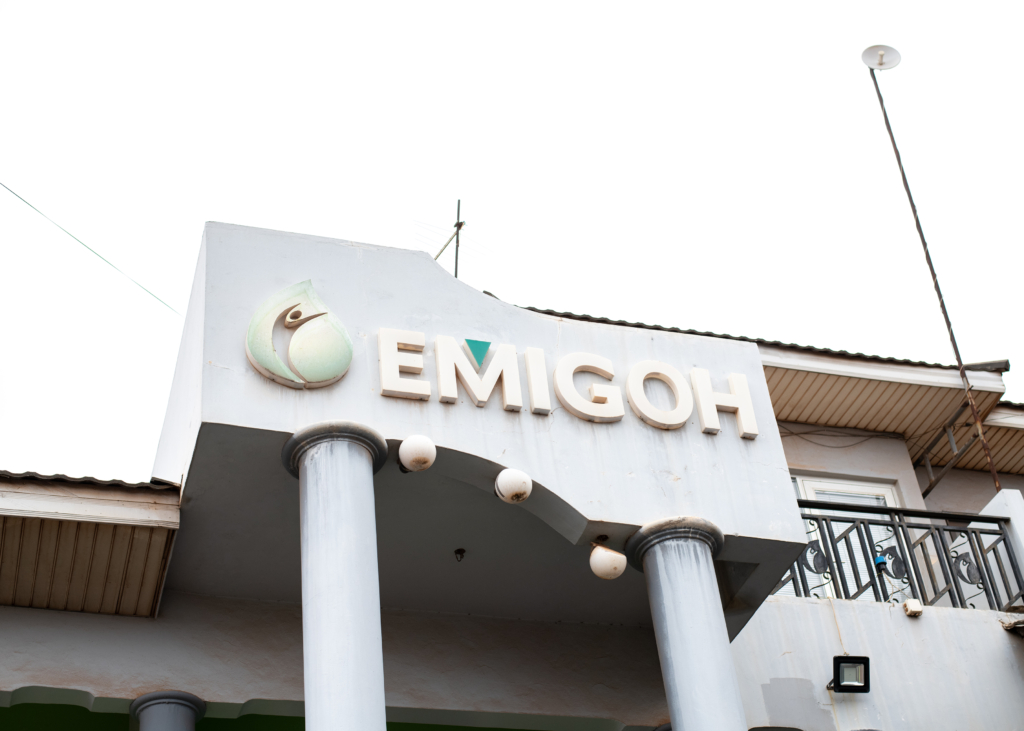
The management team believes the new plant is their answer. Operations Manager Sydney Dodoo framed the automation not as a replacement for people, but as a tool to create more skilled jobs. The goal, he suggested, is to elevate the local workforce to compete on an international level.
The company’s Head of Marketing, Gifty Adjei-Fianko, pointed to quality control from sourcing to production as the key differentiator. It’s a necessary claim in a market where consumers are increasingly discerning.
The immediate impact is being felt in Abokobi. The Human Resource Manager, Nana Ama Koomson, confirmed the plant is already acting as a magnet for talent, promising more job opportunities for the local community.
The launch of the Pantang plant is more than a corporate milestone. It is a case study. Emigoh is betting that a deep understanding of local taste, combined with modern manufacturing and a skilled team, can carve out a huge piece of the food and beverage sector, first in Ghana, and then beyond.
The market will now decide if that bet pays off.
Latest Stories
-
President Mahama ends Resetting Ghana tour of Ahafo Region
2 hours -
African negotiators seek delivery of climate commitments at COP31
2 hours -
BoG develops AI rules for financial sector
2 hours -
‘Big Push’: Government assures contractors of prompt payments
2 hours -
Court fines miner for breaking into gold buying shop
2 hours -
Tarkwa court jails labourer for three years over GH¢123,000 theft
3 hours -
GAEC must retain nuclear scientists for Ghana’s nuclear ambitions – Minister
3 hours -
Man reportedly mistaken for game and shot by hunter dead in forest
3 hours -
19-year-old mason jailed 15 years for defiling seven-year-old pupil
3 hours -
Ghana’s banking sector assets rise 20.47% to GH¢500.2bn – BoG Governor
3 hours -
22 injured as Sprinter bus overturns at Sege after tyre burst
4 hours -
UN housing expert urges Ghana to strengthen Rent Control Department amid housing affordability concerns
4 hours -
Delta-BCI partnership reaches 166,000 people with breast cancer education
4 hours -
Power restoration fault suspected in Kumasi Central Market fire
9 hours -
The 7-foot giant of Ngleshie Amanfro: Seven-foot Ghanaian Ephraim Saawa dreams of joining the national basketball team
10 hours