

Audio By Carbonatix
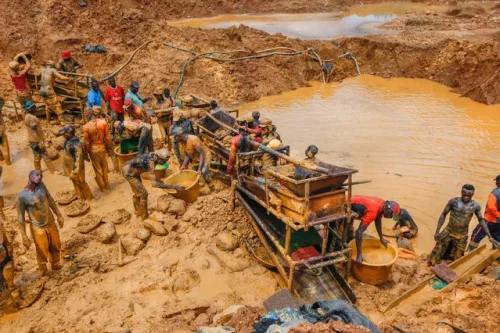
It is quite exciting how the National Anti-Illegal Mining Operations Secretariat (NAIMOS) has been raiding and disrupting galamsey activities in most parts of mining communities in Ghana. In recent months, NAIMOS has intensified its presence across various mining hotspots, deploying coordinated teams to target illegal mining sites. These operations typically involve early unannounced raids, the closure of unauthorised mining pits, and the confiscation of equipment such as excavators, water pumps, and mercury used in processing gold.
The impact of these interventions is being felt in several mining communities. Efforts have led to marginal improvements in illegal mining incidents in some districts, although challenges remain in ensuring long-term compliance and sustainability.
The sustainability of NAIMOS operations is a pressing issue, primarily because their current approach is largely centralised and top-down. While NAIMOS has demonstrated effectiveness in conducting raids and disrupting illegal mining activities, its teams are dispatched from national headquarters and lack permanent structures at the district or community level. This means that once the central teams complete their interventions and depart, there is often a vacuum in ongoing monitoring and enforcement.
Without a sustained local presence, there are huge risks that illegal mining activities resume or adapt, undermining the impact of previous operations. Local authorities may not have the resources, training, or mandate to continue the work initiated by NAIMOS, and the absence of dedicated district-level offices or officers makes it difficult to maintain momentum. Additionally, the lack of institutionalised structures at the local level limits opportunities for ongoing community engagement, education, and surveillance.
It is therefore worrying that the cycle of intervention followed by withdrawal could result in a temporary reduction in illegal mining, rather than lasting change. For long-term success, decentralisation of NAIMOS—establishing district-level offices, empowering local personnel, and integrating anti-illegal mining operations into existing local governance frameworks—would create a more robust and sustainable approach. This could help ensure that enforcement, education, and support for alternative livelihoods continue once the central teams have left, reducing the likelihood of galamsey activities re-emerging.
Addressing these concerns requires a strategic shift from centralised, reactive interventions to a decentralised, proactive model that embeds anti-illegal mining efforts within the fabric of local communities. This would not only improve sustainability but also foster greater collaboration with local stakeholders, leading to more resilient outcomes in the fight against galamsey.
An effective decentralisation will imply more consistent and targeted monitoring by national officers, ensuring that enforcement measures are tailored to the specific context of each locality. It will also help address the long-standing perception that top, influential actors at the central government exert undue influence over interventions at the local level, potentially undermining their credibility and effectiveness. By embedding responsibility within local communities, district-level actors will feel a stronger sense of ownership over anti-galamsey initiatives and will be more likely to actively engage with residents and mobilise support for sustainable change.
Moreover, with local actors at the forefront, there is a greater opportunity for building trust and fostering collaboration between enforcement agencies and community members. This proximity enables local officers to better understand the socio-economic dynamics underpinning galamsey and to devise appropriate strategies for community engagement, education, and provision of alternative livelihoods. Ultimately, such an approach not only strengthens enforcement but also empowers communities to become stewards of their own resources, making anti-illegal mining efforts more resilient and adaptable to future challenges.
Decentralisation will also afford a layered approach to interventions and reinforcement, ensuring that reinforcements are available when there is a shortage of capacity at the local level. This structure allows district-level teams to escalate complex cases or seek additional support from regional or national bodies when local resources are stretched, thereby maintaining continuity and effectiveness. Furthermore, a multi-tiered system of enforcement can help standardise responses across districts while still allowing for flexibility to address unique local challenges, ultimately fostering a more resilient and adaptive framework for tackling galamsey.
Citing recent incidents at Hwidiem, Obuasi and many other areas, where communities have confronted staff from NAIMOS and the Environmental Protection Agency (EPA) during enforcement activities, there is a need for improved community engagement and a highlighted decentralisation approach to enforcement.
Failure to decentralise and embed NAIMOS at the district level will risk repeating the pitfalls encountered during earlier administrations, where initiatives such as Operation Vanguard and Galamstop, though initially impactful, ultimately struggled with sustainability. These operations often experienced a decline in effectiveness once central teams withdrew, largely due to the absence of enduring local structures and ongoing community engagement.
As a result, the gains made were frequently short-lived, with illegal mining activities resurging as soon as enforcement pressure was relaxed. Without addressing these systemic weaknesses through a robust, decentralised approach, current efforts are likely to face similar setbacks, leading to a cycle of temporary disruption rather than lasting progress in combating galamsey.
-
Dr. Paa Kwesi Eduaful Abaidoo
Executive Director
CENS Africa (Centre for Environment, Natural Resources and Sustainability)
Latest Stories
-
T-bills auction: Government exceeds target marginally; yield on 91-day bill remains unchanged
3 hours -
GPL 2026/27: 10-man Aduana hand Kotoko defeat in Kumasi
3 hours -
GPL 2026/27: Medeama ease past Basake Holy Stars
4 hours -
Appiah Adomako writes: Why DVLA must stop treating every expired licence holder as delinquent
4 hours -
Localization must transfer decision-making power, not just project responsibilities
4 hours -
Modernising Ghana’s traditional markets through the 24-Hour Economy markets initiative
4 hours -
New economy will boost local production and create jobs – Finance Minister
4 hours -
Real-Time VAT on cross-border digital services – not a new tax and does not violate double taxation principle
5 hours -
Digitalisation, AI key to Ghana’s tourism transformation – GHATOF
5 hours -
Stronger GTA-private sector partnership needed to grow tourism – GHATOF
5 hours -
Amazon eyes Ghana for broadband expansion after talks with Mahama
6 hours -
National Investment Quiz 2026: Six schools qualify for quarter-finals
6 hours -
‘Do not let Russia pay for its madness with lives of your people’ – Zelensky to Ghana, 46 other countries
6 hours -
6,079 promotion cases fully processed and paid – CAGD says amid nationwide teachers’ strike
7 hours -
Teacher unions to meet government Monday over nationwide strike
7 hours