

Audio By Carbonatix
The Ghana Association of Medical Laboratory Scientists (GAMLS) has urged the government to prioritise purpose-built laboratory infrastructure as Ghana prepares to roll out the Free Primary Healthcare policy.
National President of GAMLS, Dr Eric Kofi Aidoo, said the country’s laboratory system had suffered years of neglect, with some health facilities being designed without adequate laboratory spaces.
He said laboratories were often treated as an afterthought, forcing health facilities to convert existing spaces into laboratories.
“Governments have come and gone, but I think that not much has been done to improve our laboratory system. If you look at most of the facilities that have been built and the ongoing projects, especially the Agenda 111 structures, they have been built without laboratory offices in mind,” he said.
“You will see that after the establishment of the hospital, they will now go and convert some stores and toilets to labs,” he added.
Dr Aidoo said such arrangements could compromise laboratory quality, biosafety, workflow and the accuracy of diagnostic results.
He therefore called for properly designed and equipped laboratories to be incorporated into the architectural planning of all health facilities, particularly at the primary healthcare level.
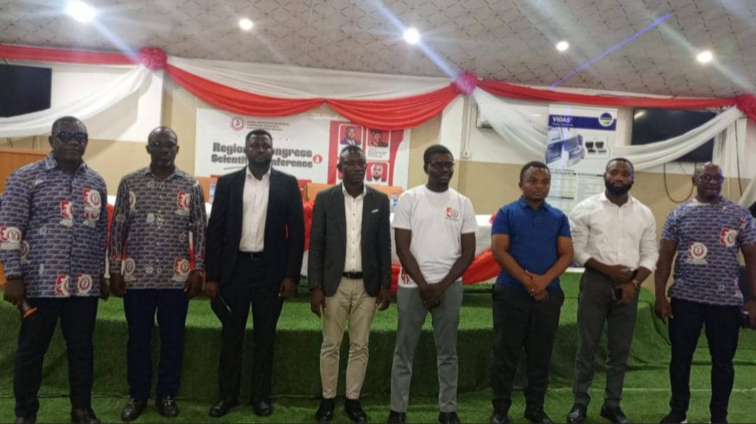
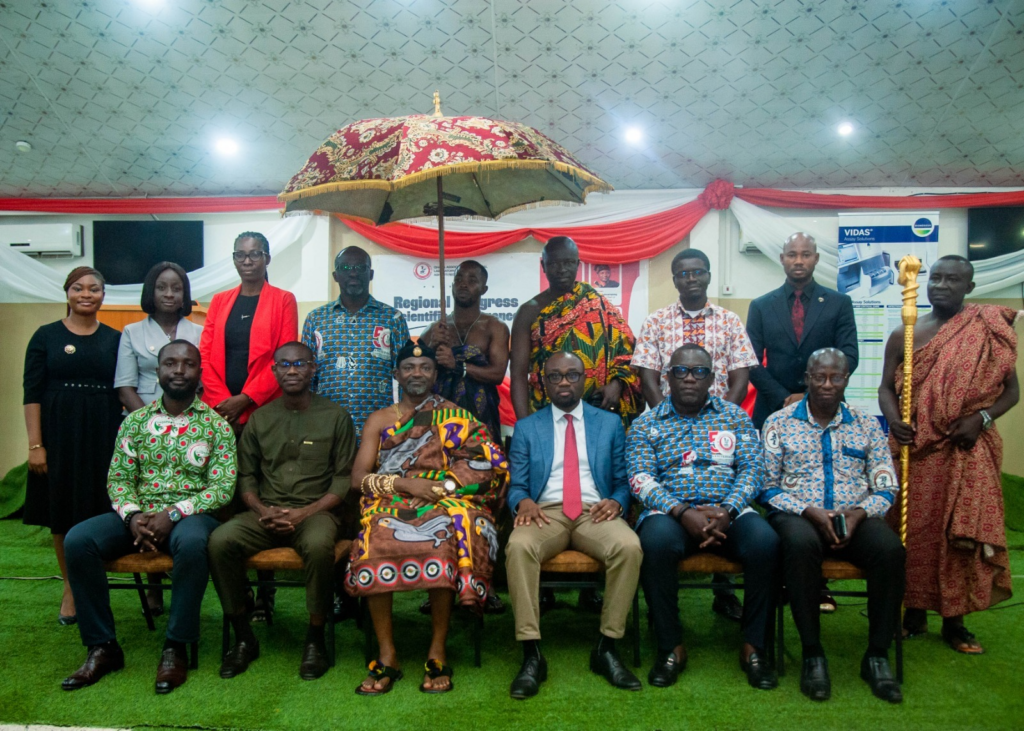
His comments were made at the GAMLS Ashanti Regional Congress and Scientific Conference, held under the theme, “Diagnostics at the Heart of Healthcare: Strengthening Laboratory Systems for Ghana’s Free Primary Healthcare Agenda.”
Call for diagnostic self-sufficiency
Delivering the keynote address, Prof Samuel Asamoah Sakyi of the Department of Molecular Medicine at the Kwame Nkrumah University of Science and Technology (KNUST) said Ghana’s ambition to achieve Universal Health Coverage would remain incomplete without a strong, locally driven diagnostic system.
He called for what he described as “diagnostic sovereignty”—the ability of Ghana to produce, maintain and innovate its own diagnostic solutions without excessive dependence on external supply chains.
“COVID-19 taught the world a powerful lesson. Countries that depend entirely on external supply chains become vulnerable during crises,” Prof Sakyi said.
He urged Ghana to invest in local production of diagnostic reagents and laboratory consumables, equipment servicing and calibration, laboratory information systems, molecular diagnostics and quality-control materials.
“We must begin to ask: Why should every diagnostic solution used in Ghana necessarily be developed somewhere else?” he said.
According to Prof Sakyi, diagnostics accounts for more than 70% of clinical decision-making, making a strong laboratory system essential to the success of the Free Primary Healthcare programme.
He also urged medical laboratory scientists to take a more active role in health policy and decision-making.
“Laboratory scientists must have a voice in health policy. They must be at the table when primary healthcare policies are developed, when diagnostic equipment is procured, when national screening programmes are designed and when health information systems are created,” he said.
The congress brought together medical laboratory scientists, academics, health policy experts and students to discuss ways of strengthening Ghana’s diagnostic systems and positioning laboratory services at the centre of primary healthcare delivery.
Latest Stories
-
AFCON 2027Q: Alexander Djiku ruled out of clash against Gambia
1 minute -
RCI Immanuel Temple donates supplies to Motherly Love Orphanage
47 minutes -
COCOBOD asks investors to fund cocoa purchases, but proceeds may also repay old debt
1 hour -
Gov’t hands over site for construction of 160-bed Savannah Regional Hospital
1 hour -
NCPTA clarifies GH¢200 cap on PTA dues and levies per parent
1 hour -
Asante Kotoko part ways with coach Eric Tinkler
1 hour -
GTA calls for ultra-modern Cocoa Museum in Western North
1 hour -
NPP says concerns over delegates’ register addressed ahead of October 3 polls
1 hour -
PwC Ghana appoints George Arhin as Country Senior Partner
2 hours -
New Economy will turn imports into opportunities for Ghanaian production – Ato Forson
2 hours -
Two Ada SHS students convicted, placed on 12-month good behaviour bond
2 hours -
Samson’s Take: Verify the badge – and verify the story
2 hours -
Treasury bill demand rebounds as investors submit GH¢3.66bn in bids
2 hours -
Listing 10 SOEs will strengthen governance, limit political interference – Mahama
2 hours -
Mahama announces 1,200MW state-owned gas power plant deal by end of 2026
2 hours