

Audio By Carbonatix
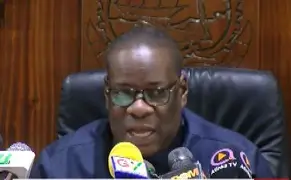
Mr John Kapi, Director of Public Affairs at WAEC, says recent reports on student performance reveal worrying gaps in candidates’ understanding of key subjects, calling for greater attention to teaching methods and exam preparation.
Speaking on JoyNews, Mr Kapi noted that while some issues raised are consistent with previous reports such as minor spelling or terminology errors, there is growing concern over candidates’ ability to apply knowledge in examinations.
“The report shows areas where we expect students to demonstrate understanding, and that’s beginning to spring up as a challenge that needs more attention from teachers,” he said on Friday, March 27.
His comments come as the Minister expressed concern over the ongoing deficits in Mathematics and Science education, stressing that these subjects remain a key priority for the Government.
On the issue of incomplete syllabi, he explained, “It’s not entirely surprising.
Looking at the academic calendars we’ve worked with in previous years, some institutions had to devise means of keeping candidates for longer hours to complete the syllabi.
While we haven’t received any formal complaints from examiners or schools, these gaps are coming to light in the latest report.”
When asked whether the responsibility lies with candidates or teachers, Mr Kapi said direct classroom observation had not been possible. “I haven’t had the opportunity to monitor teaching in the classrooms, so it’s difficult to comment directly on the teachers,” he admitted.
However, he emphasised that candidates’ performance in exam halls highlights clear gaps. “Based on the syllabi, students should have been taught certain topics, and when tested, they are expected to demonstrate proficiency.
When that is not forthcoming, it indicates that students either need to improve their study patterns or require better guidance on how to approach examination questions,” he said.
“We will continue to lean on the examination results to guide interventions, because that is where we deliberately deal with candidates. Addressing these gaps requires a combined effort improving study habits, teaching strategies, and exam techniques" he added.
Mr Kapi concluded that stakeholders, including teachers and students, must work together to ensure the gaps in knowledge do not persist in future assessments.
Latest Stories
-
Trump says he is considering firing US ambassador to Greece
4 hours -
Man City bananas ‘brought fun back’, says Varadi
4 hours -
Meta releases Muse Wonder AI models to challenge Anthropic and OpenAI
4 hours -
Daily Insight for CEOs: The CEO as Chief Decision Maker
4 hours -
Burnham had formal meeting with Man City chair while mayor
4 hours -
Is Ghana producing too many lawyers? What is the best lawyer-to-citizen ratio?
4 hours -
NDC sinking Ghana’s democracy with Emelia Agbenyo’s appointment – Miracles Aboagye
4 hours -
Seedorf back in football as Corinthians head coach
5 hours -
Hincapié and Zubimendi injured in post-match training session
5 hours -
Fridges in French supermarkets hit by cyberattack
5 hours -
Qantas flight grounded after bedbug outbreak
5 hours -
Reality Zone with Vicky Wireko: International Day of the Girl, shaping today’s girl for tomorrow’s future – ZONTA Clubs lead the way
5 hours -
Global health must be led by countries, not designed for them – Mintah Akandoh
6 hours -
Mahama honoured at 2026 World Health Summit in Berlin for global health leadership
6 hours -
Breast cancer is not a death sentence – Besease Kontire Obaapanin, Magmina Foundation lead awareness campaign
7 hours