

Audio By Carbonatix
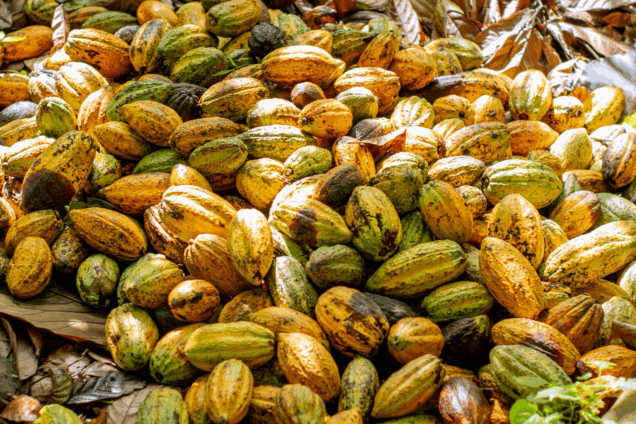
A coalition of Ghanaian cocoa farmers has threatened to bar officers of the national regulator from their farms to protest the newly announced producer price for the upcoming season, which they say could fuel illegal smuggling to Ivory Coast and Togo.
More than 300,000 farmers expressed anger over what they consider inadequate compensation, with some saying they would smuggle their entire harvest to Ivory Coast if they lived near the border, where prices are perceived to be more favorable.
Ghana on August 4 announced a fixed farmgate price of 51,660 cedis ($4,783) per ton for the 2025/2026 season, or 3,228 cedis per 64 kg bag, a modest 4% increase from the previous season.
Theophilus Tamakloe, vice president of the Ghana Cooperative Cocoa Farmers and Marketing Association, said the price falls short of the government's promise to pay 70% of the free-on-board price used in international trade, which should have yielded around 3,800 cedis per bag.
Kwame Alex, named Best Cocoa Farmer at the recent national awards, said there was a price differential of around 700 cedis between the Ghanaian price and the price fetched by Ivorian cocoa. "(That) creates incentives for smuggling," said Alex, who is not part of the coalition.
"If I'm close to the Cote d'Ivoire border, probably all my cocoa beans will go to Cote d'Ivoire because the government has not been fair to us," Tamakloe said.
The farmers' threat to exclude officers working for Ghana's cocoa regulator, COCOBOD, from their farms represents an escalation that could disrupt agricultural support services across cocoa-growing regions.
Extension officers visit farms regularly to check crops and educate farmers.
The standoff highlights growing frustrations in Ghana's cocoa sector, where smuggling has already become a significant problem. The country lost approximately 160,000 tons of cocoa to illegal cross-border trade in the 2023/24 season, according to COCOBOD officials.
Kwame Alex said pricing was particularly inadequate given rising production costs, including insecticides now selling for 150 cedis each and equipment rental fees reaching 100 cedis per day.
Latest Stories
-
MTN set to deploy 5G services after winning spectrum licenses worth US$202m
2 hours -
NPP national elections: 3,000–4,000 police to handle security, traffic in Kumasi – Karbo
4 hours -
Atta Akyea fumes as Manhyia MP is to spend another night in EOCO custody
5 hours -
SSNIT says La Beach clearance was to protect hotel investments, beaches to remain public
5 hours -
APSU congratulates St Augustine’s College after back-to-back National Investment Quiz wins
5 hours -
Renewed flood intervention at Mallam Junction raises hopes among residents, businesses
6 hours -
St Augustine’s College retain National Investment Quiz title after nail-biting grand finale
6 hours -
Education infrastructure investment will drive Banda’s development – Ahmed Ibrahim
6 hours -
Teacher unions strike: Gov’t presents fresh proposals as talks end inconclusively
7 hours -
51,000 teachers’ promotion arrears to be validated for October payment – Education Minister
8 hours -
Kwabena Boamah appointed Board Chair for Impact Investing Ghana
8 hours -
Striking teacher unions to meet Fair Wages and Salaries Commission on October 6
8 hours -
EOCO working with AG to arraign Nana Baffour Awuah before weekend court
8 hours -
Duraplast reassures customers after fire, announces October 5 reopening
8 hours -
Call off strike, gov’t will not renege on promotion arrears pledge – Haruna Iddrisu to teacher unions
8 hours