

Audio By Carbonatix
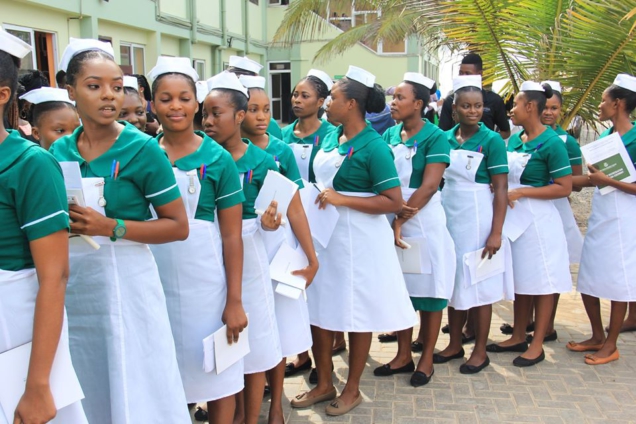
British High Commissioner to Ghana, Harriet Thompson, says Ghana’s population has a surfeit of trained nurses.
This she says is the justification for the ongoing negotiations between Ghana’s Ministry of Health and the UK’s Ministry of Health for trained Ghanaian nurses to be drafted to work in the UK in a controlled manner.
This comes on the back of Ghana being red-listed by the World Health Organisation as part of countries richer states are discouraged to enlist health workers from, due to the lower ratio of health workers to population there.
According to Ms. Thompson, while the UK needs more health workers to serve its ever growing population, it also does not want the situation where poorer countries, like Ghana, are robbed of much needed health workers.
Speaking on JoyNews’ PM Express, she stated that to prevent a mass exodus of trained nurses, in particular, to the UK, the Memorandum of Understanding currently being negotiated will ensure that the migration of nurses from Ghana to the UK is effectively managed to avoid brain drain.
“But in fact, the situation in Ghana is more nuanced. And there is actually in some ways a surfeit of health workers. There are too many trained nurses for the population to warrant it. So we are discussing with Ghana a memorandum of understanding that would allow some of those nurses to come and work in the UK in a managed way.
“So we're not seeing that Exodus that we fear, but they're able to come to the UK in controlled numbers. Were able to provide some of that training and the experience and then some of those nurses would come back to Ghana, and to bring that learning back here. So we're trying to avoid the situation whereby those well trained nurses who are not needed in Ghana are unable to go to the UK. We want those people to be able to go so our NHS, our population, can benefit from those people. Those individuals can benefit from that exposure,” she said.
She added, “But at the same time, we don't want to be one of the causes of Ghana's population, Ghana's people not having the health workers they require. You can imagine it's a sensitive issue. We've got to be sure that we get it right so we're negotiating between Ghana's Ministry of Health and Ghana's health service and our national health service in the UK and our ministry of health. Those negotiations are ongoing, but they're proceeding well there's some good understanding.”
Latest Stories
-
Let The Constitution direct Chieftaincy to deliver “All Development Is Local”
31 minutes -
Ghana explores centre of excellence for hearing, communication and cochlear implant care
2 hours -
Schizophrenia-related disorders lead mental health cases recorded in Ghana
2 hours -
Dutch authorities enlist Ghana in hunt for fugitive drug lord Bolle Jos
3 hours -
Ghana housing finance conference adopts communiqué to improve affordable housing access
7 hours -
Special Initiatives Minister urges Wa Technical Institute to enrol more girls as EU-backed solar training lab opens
8 hours -
In the matter of my first year at the Bar
8 hours -
ActionAid Ghana calls for an end to child marriage, greater investment in girls’ rights
8 hours -
Newsfile to tackle World Cup visa scandal, beach demolitions, education strikes, BRICS bid
8 hours -
UK-Ghana Trade & Investment Summit: Trade Resource Centre to help businesses maximise UK-Ghana trade opportunities
8 hours -
Embassy of Denmark celebrates World Maritime Day
9 hours -
Linking LEAP to productive inclusion could cut extreme poverty by 2030 – UNICEF
10 hours -
Trade Ministry backs use of creative arts to rehabilitate prison inmates
10 hours -
Negotiations with government to continue despite strike suspension – GNAT
10 hours -
‘Ghana cannot afford to waste public resources; every cedi has a job’ – Ato Forson
10 hours