

Audio By Carbonatix
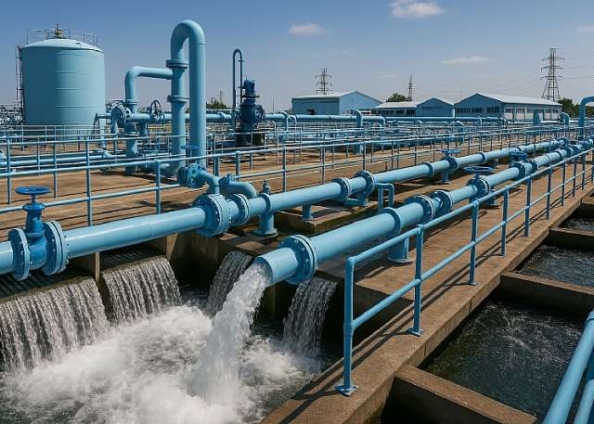
Managing Director of Ghana Water Limited (GWL), Adam Mutawakilu, has disclosed that replacing the country’s ageing water transmission pipelines would cost more than GH₵3.5 billion (US$356 million) — far beyond the company’s current financial capacity.
Speaking on the Joy Super Morning Show, Mr Mutawakilu said most of Ghana’s major transmission lines are old, weak and operating below capacity, posing a significant challenge to effective water distribution.
“Most of this transmission capacity utilisation is low. Most of the transmission lines are weak and need to be replaced, and that is a huge cost,” he said.
“We are talking about 356 million dollars to replace the old pipes and put in new pipes — that’s more than 3.5 billion Ghana cedis.”
He explained that the company’s annual revenue falls well short of what would be required to undertake such a large-scale overhaul.
“For example, we make almost 1.8 billion cedis — that’s about 100 to 150 million dollars for the whole year. This is the whole amount, not taking salaries or maintenance into account,” he said. “So, if you take it, you realise that we are not in good shape.”
His comments come amid recurring water shortages in Accra and parts of the Greater Accra Region, which have sparked public concern and political debate over infrastructure planning and investment.
Mr Mutawakilu noted that the combined impact of ageing treatment plants, deteriorating pipelines and limited revenue has left the utility struggling to meet the rising demand for water driven by population growth.
“The problem is not just the number of plants; it’s the transmission lines connecting them,” he said. “Without replacing these old pipelines, a lot of water is lost, and supply remains inconsistent, especially in urban areas.”
The GWL Managing Director urged policymakers to prioritise capital investment in both water production and distribution infrastructure, warning that further delays could worsen service disruptions and public dissatisfaction.
“Water is essential for life and development,” he said. “We must match infrastructure investment with our population growth, or these challenges will continue to escalate.”
Managing Director of Ghana Water Limited (GWL), Adam Mutawakilu, has disclosed that replacing the country’s ageing water transmission pipelines would cost more than GH₵3.5 billion (US$356 million) — far beyond the company’s current financial capacity.
Speaking on the Joy Super Morning Show, Mr Mutawakilu said most of Ghana’s major transmission lines are old, weak and operating below capacity, posing a significant challenge to effective water distribution.
“Most of this transmission capacity utilisation is low. Most of the transmission lines are weak and need to be replaced, and that is a huge cost,” he said.
“We are talking about 356 million dollars to replace the old pipes and put in new pipes — that’s more than 3.5 billion Ghana cedis.”
He explained that the company’s annual revenue falls well short of what would be required to undertake such a large-scale overhaul.
“For example, we make almost 1.8 billion cedis — that’s about 100 to 150 million dollars for the whole year. This is the whole amount, not taking salaries or maintenance into account,” he said. “So, if you take it, you realise that we are not in good shape.”
His comments come amid recurring water shortages in Accra and parts of the Greater Accra Region, which have sparked public concern and political debate over infrastructure planning and investment.
Mr Mutawakilu noted that the combined impact of ageing treatment plants, deteriorating pipelines and limited revenue has left the utility struggling to meet the rising demand for water driven by population growth.
“The problem is not just the number of plants; it’s the transmission lines connecting them,” he said. “Without replacing these old pipelines, a lot of water is lost, and supply remains inconsistent, especially in urban areas.”
The GWL Managing Director urged policymakers to prioritise capital investment in both water production and distribution infrastructure, warning that further delays could worsen service disruptions and public dissatisfaction.
“Water is essential for life and development,” he said. “We must match infrastructure investment with our population growth, or these challenges will continue to escalate.”
Latest Stories
-
TGMA controversy hasn’t affected my relationship with Diana Hamilton – Piesie Esther
47 seconds -
Cliff Cheqona to take TP Masterclass to Lagos and Abuja in 2027
4 minutes -
Bond market: Turnover rises 77% to GH¢2.76bn
4 minutes -
Be lovers of the environment – Archbishop Kwofie calls for stronger fight against environmental injustice
8 minutes -
BoG declares FX compliance “non-negotiable” as it moves to tighten rules
11 minutes -
Government to prioritise creation of decent jobs – Finance Minister
17 minutes -
Ghana’s ocean is not land under water: Why the Fisheries Commission is right to demand a proper assessment of offshore gold exploration
23 minutes -
Teacher unions maintain strike as FWSC, GES negotiations yield no deal
25 minutes -
Photos: Mahama Ayariga engages World Bank on sustainable cities development
31 minutes -
Foreign Affairs Minister warns embassies over long queues, ‘inhumane’ conditions for visa applicants
33 minutes -
Photos: AMA steps up enforcement to clear traders from BRT shelters
33 minutes -
Shortage of health information officers threatens quality of healthcare data – GHIMA
34 minutes -
Ghana’s National Chess Team, The Golden Knights return from Samarkand with gold and seven new international titles
36 minutes -
Northern Births and Deaths Director to face PAC over GH¢71k withdrawals
44 minutes -
Djokovic claims 102nd title of career with China Open win
48 minutes