

Audio By Carbonatix
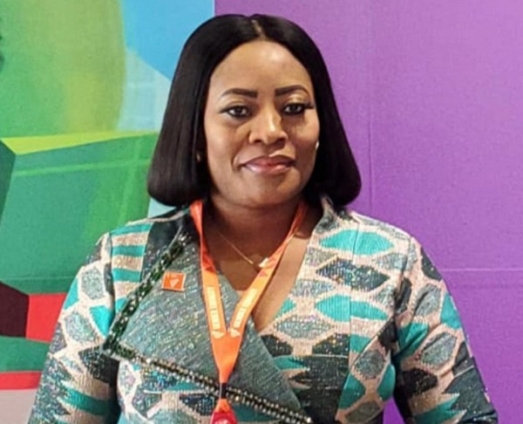
Ghanaian media personality and gender advocate Josephine Oppong-Yeboah has called for stronger access to justice for women and girls to promote inclusive and equitable legal systems.
She said many women and girls worldwide face structural barriers that limit fair and equal access to justice.
Strengthening equitable access to legal systems would help eliminate discriminatory laws, policies and practices that hinder the growth and well-being of women, particularly in the Global South, Ms Oppong-Yeboah said.
She made the remarks in a media interview ahead of this year’s International Women’s Day celebrations on March 8.
This year’s theme, “Give to Gain,” promotes a mindset of generosity and collaboration to advance opportunities for women.
Ms Oppong-Yeboah said the theme highlights the power of reciprocity and collective support.
“When people, organisations and communities give generously, opportunities and support for women increase, helping them to thrive,” she said.
“We can all give our support to gain advancement for women and girls.”
She added that contributions such as donations, knowledge-sharing, resources, infrastructure, advocacy, education, training and mentoring could help create a more supportive and interconnected environment for women’s advancement.
Ms Oppong-Yeboah also noted that many young women in several countries, including the United States and Ghana, face career stagnation due to workplace policies that inadvertently disadvantage women.
Citing data from Fora: Network for Change, a nonprofit focused on gender equity in the workforce, she said 93% of Canadian women and gender-marginalised workers aged 18 to 29 reported seeing no clear pathway to promotion in their workplaces.
She said women often face intersecting barriers to justice, including high legal costs, limited legal aid and systemic biases.
Socioeconomic factors such as poverty, caregiving responsibilities and geographical isolation, particularly for rural women further restrict access to justice, she added.
Ms Oppong-Yeboah said discriminatory legal frameworks, fear of retaliation and insensitive court systems also discourage many women from reporting abuse or seeking redress.
Latest Stories
-
Asha Bhosle: The sound of Bollywood dies aged 92
25 minutes -
Fire destroys section of 4-bedroom apartment at Tantra Hill
27 minutes -
Safe city: Unnoticeable protection
34 minutes -
North East Regional Police Commander raises alarm over burning of checkpoints
43 minutes -
Free Primary Healthcare Programme set for take-off — Health Ministry confirms readiness
59 minutes -
3 co-wives, 5 children perish in canoe disaster – Maritime Authority insists life jackets use mandatory for all water transport
2 hours -
Iran war lands ‘triple blow’ to flood-ravaged Sri Lankans
2 hours -
Gunmen kill at least 11 people at Afghanistan picnic spot
3 hours -
Woman, 25, in court for stealing baby at Bogoso
3 hours -
Trump unveils giant gold-accented victory arch design for US capital
3 hours -
We spoke to the man making viral Lego-style AI videos for Iran. Experts say it’s powerful propaganda
3 hours -
Hungarians vote in big numbers on whether to end Orbán rule and elect rival
3 hours -
At least 30 feared dead in crush at Haitian tourist site
3 hours -
Boxing: Abdul Ahmed wins WBA Africa Cruiserwight title after dispatching Nigeria’s Eradeye
3 hours -
Nearly 2,000 displaced, schools damaged as windstorm wreaks havoc in Gushegu
3 hours