

Audio By Carbonatix
The Principal Investigator at the Merian Institute of Advanced Studies in Africa (MIASA), Dr. Chika Mba, has sparked conversation by highlighting a distinction between academic freedom and what he calls "academic peace" in Ghana.
According to Dr. Mba, while scholars and academics in the country operate in an environment that allows for critique and intellectual discourse, they are limited in their ability to challenge government policies openly and freely.
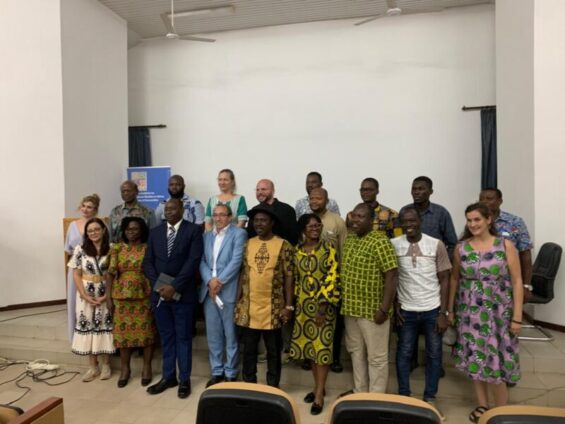
Speaking at a MIASA-MECAM roundtable discussion on “Academic Freedom and Research Ethics: Exploring Dynamics in Ghana, Tunisia, and Germany,” Dr. Mba emphasised that true academic freedom remains elusive in Ghana.
He explained that academics can voice dissenting views, but only within a boundary that avoids direct confrontation with political power.
In his view, this creates an atmosphere of academic peace rather than genuine academic freedom, as scholars tread cautiously in their critiques.
He further pointed out that academic freedom in Ghana is often confused with institutional autonomy, even though the two concepts differ.
Historical events, such as university leadership being tied to government appointments—from Dr. Kwame Nkrumah's era to the structural adjustment policies of the late Jerry John Rawlings—demonstrate that academia in Ghana has faced periods of restricted freedom.

The discussion also brought in perspectives from other regions. Prof. Emma Beitaief, Vice President of the University of Tunis and Principal Investigator at the Merian Centre for Advanced Studies in the Maghreb (MECAM), shared Tunisia’s experience.
She noted that academic freedom was tightly controlled until the 2011 revolution, which led to a more open academic environment.
In contrast, Germany’s MECAM Director, Prof. Rashid Quaissa, called for creativity in research under authoritarian regimes, stressing the need for scholars to simplify complex issues and engage the public through media for societal development.
In Ghana, the debate on academic freedom is especially pertinent as scholars grapple with contentious issues such as illegal mining, commonly known as “galamsey.” Prof. Joseph Awetori Yaro, Provost of the College of Humanities at the University of Ghana, urged academics to prioritise ethical standards in their work.
He questioned whether scholars should remain silent about destructive practices like illegal mining simply because of political affiliations or government appointments.
Ultimately, the roundtable underscored that academic freedom is essential for national development. Scholars must be free not only to pursue intellectual curiosity but also to address real-world problems for the benefit of society.
Latest Stories
-
MTN 30th Anniversary CEO Invitational Golf Tournament set to tee off at Achimota
2 minutes -
Ghana woos Australian investors into critical minerals
15 minutes -
Akufo-Addo’s former legal counsel Kow Essuman, writes to Finance Minister to demand his ex-gratia payment
22 minutes -
NSMQ Final: St Augustine’s get GH¢110,000 motivational package from old boys
39 minutes -
AFCON 2027: Ghana has no business doing football if we can’t beat Somalia and The Gambia to qualify – George Afriyie
57 minutes -
Starlets to face Togo on October 10 in U-17 AFCON qualifying campaign
1 hour -
FIFA U-20 World Cup: Princesses showed character-Head Coach
1 hour -
PBee releases new single ‘Lose My Mind’ featuring SIICIE today
2 hours -
Many have been dismissed – Interior Minister exposes forged WASSCE results in security recruitment
2 hours -
NCA clears MTN, Telecel, Goal for next stage of 5G spectrum licensing
2 hours -
Father demands probe into death of Central University student in motorway crash
2 hours -
Transport Minister orders urgent action to tackle surge in port congestion
2 hours -
NPP national executive election: Here are the ballot positions
2 hours -
Court orders police to file disclosures in Labone robbery case
2 hours -
Central Regional Minister lauds Gomoa Central Assembly for effective utilisation of Common Fund
2 hours