

Audio By Carbonatix
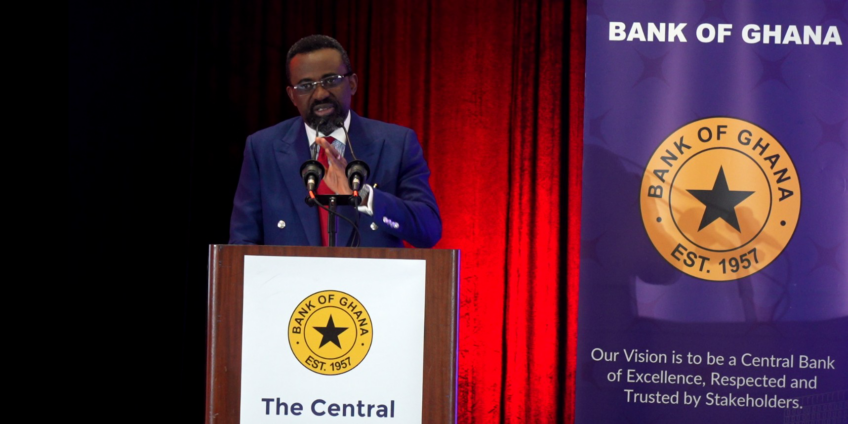
The Governor of the Bank of Ghana, Dr. Johnson Asiama has indicated that the Bank of Ghana has taken a deliberate approach to build a regulatory and market environment for digital financing that supports innovation, while maintaining stability and trust.
According to him, this is reflected in the steps his outfit has taken to strengthen the framework for digital financing.
They include advancing the regulatory regime for virtual assets, issuing guidelines for digital credit, progressing open banking. And cross-border fintech activity support.
Speaking at the 3i Africa Summit, 2026, the Governor said these are not isolated initiatives, but they are part of a coherent effort to ensure that the financial system evolves in a way that is structured, predictable, and capable of supporting innovation at scale.
“However, the work ahead is not only about issuing laws, guidelines and frameworks. It is about strengthening the service infrastructure around regulation”, he explained.
According to, processes must be clear, submissions must be trackable and decisions must be timely. “This is how confidence is built”.
He added that confidence will also depend on the strength of the Central Bank’s digital identity and Known Your Customer frameworks. “Weak authentication increases fraud risk, affects credit quality, and undermines trust in digital financial services”.
He continued that the next phase of digital financing will require stronger coordination across institutions, improved data quality, and more robust identity systems.
“We must also focus on the development of indigenous firms. Africa’s digital finance ecosystem must not only grow. It must mature. Firms with strong potential must have access to the partnerships, capital, and infrastructure required to scale sustainably”.
He also mentioned that a strong financial system is not defined by activity alone, but is defined by discipline, transparency, and competitiveness.
From Conversation to Impact
He stressed that the value of the Summit will not be measured by the conversations participants have, but by the outcomes driven and a stronger alignment across markets, amongst others.
“This requires deliberate action from all of us-regulators, industry, and partners alike. The question before us is straightforward. Will Africa simply adopt the next phase of finance, or will Africa help to shape it? “.
He concluded that Africa has reached a point where participation is no longer the ambition, but rather leadership is the answer.
Latest Stories
-
3rd Republic Bank-JoyNews Habitat Fair Clinic ends on a high note after three days of strong patronage
2 minutes -
Ten climbers missing after avalanche hits Himalayan base camp
38 minutes -
NPP had more permanent fuel relief measures than current GH¢2 diesel cut – Amin Adam
1 hour -
Photos from the 3rd Republic Bank-JoyNews Habitat Fair Clinic
1 hour -
Ethiopia’s army promises restraint amid fears of new civil war
1 hour -
Amin Adam calls for review of fuel taxes as diesel prices remain above GH¢18
2 hours -
World Vision Ghana, Ahafo districts sign MoU for universal WASH coverage
2 hours -
When the gold engine stutters: What Ghana’s Cedi and reserves are telling us about the new economic architecture
3 hours -
Two reportedly die after being trapped in mining pit at Juaboso
3 hours -
Petrosol cleans up Wa Municipal Hospital, to donate medical equipment
3 hours -
‘If NPP was ‘insensitive’ over fuel prices, NDC must accept same description now’ — Amin Adam
3 hours -
KiDi brings the hits to London in sold-out UK headline concert
3 hours -
The last goodbye of Ghanaian shot dead in the US
4 hours -
MCC opens door to Ghana again as MiDA revives development partnership
4 hours -
CSIR moves to turn scientific research into jobs, national growth
4 hours