

Audio By Carbonatix
The Bank of Ghana Governor, Dr. Johnson Asiama, has stated that the 2025 Financial Statement of the Bank will reflect the accounting cost of the stabilisation achieved over the past year.
According to him, the debt restructuring under the Domestic Debt Exchange Programme (DDEP) actually reduced the income of the Bank from its government security portfolio.
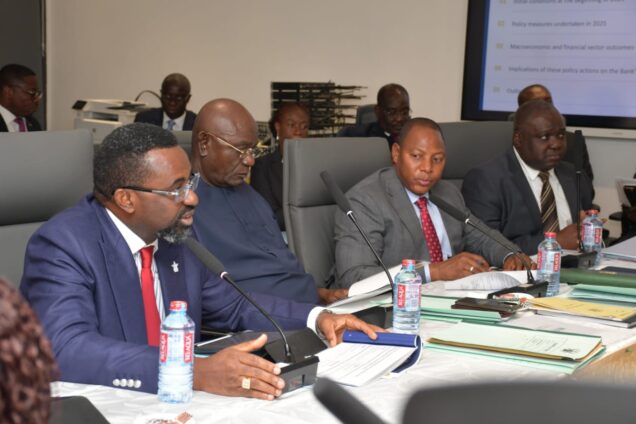
Dr. Asiama disclosed this in a meeting with the Council of State on April 23 2026, at Sheraton Hotel, on the Bank’s operations in 2025 and policy decisions.
In his presentation to the members of the Council, he also explained that the reduction in inflation carried some interest cost to the Bank of Ghana.
“The Gold Programme carried a structural cost that has now been significantly reduced”, the Governor also explained in his presentation to the members.
The Governor also explained to the members that “The exchange rate gap between the gold market rate at which gold is bought and the interbank rate at which it is recorded on BoG’s books, played a role in creating accounting costs”.
“The Cedi appreciation produces a valuation effect on foreign currency assets. None of these affect the Bank's ability to fulfil its mandate”, Dr. Asiama explained.
Some of the issues that came out strongly in the Governor’s presentation were how the Bank of Ghana tightened its Monetary Policy aggressively to help absorb excess liquidity through its open market operations.
The Governor argued that it helped in “rebuilding external reserves through the gold programme and FX [foreign exchange] reforms, and strengthened the banking sector”.
These measures, according to Dr. Asiama helped in reducing inflation significantly to 3.2 % in March 2026, the reserves reaching a record US$14.5 billion, the cedi appreciation by 41% and the banking sector, now better capitalised and extending more credit”.
2026 Outlook
On what to expect this year, the Governor maintained that the global environment has become more uncertain now with crude oil above US$ 100 per barrel.
However, he argued that Ghana “entered the period with stronger buffers than at any point in recent history”.
He also stated that the Bank's focus in 2026 is on credit quality, banking governance, export finance, and sustaining the gains of stabilisation.
Council State Response
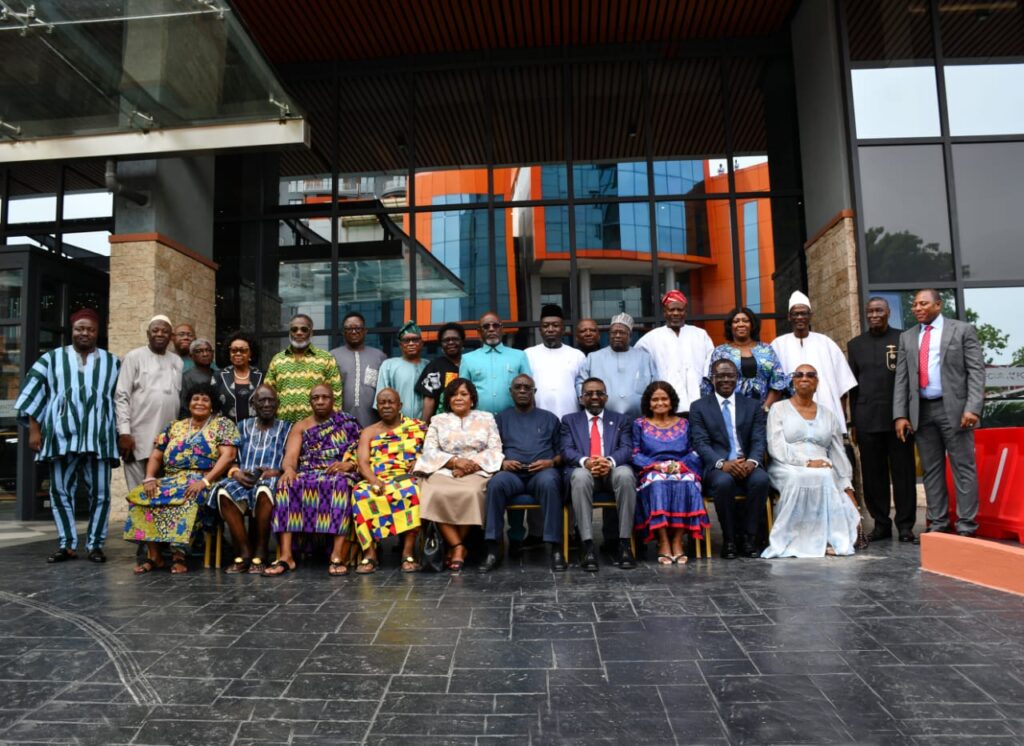
The members of the Council of State, which was led by its Chairman Edward Doe Adjaho, commended the Governor for what they described as “depth and clarity of the presentation and expressing strong encouragement for wider public engagement on the issues covered”.
However, the Council members strongly encouraged the Bank to engage directly with young Ghanaians, to explain the economy in plain terms and to hear their concerns. The view shared was that the data is positive and the public deserves to hear it clearly.
On the exchange rate, the members were also curious about the choice between fixed and managed exchange rate frameworks, and what approach best serves Ghana's economic circumstances.
They also expressed interest in how the Bank intends to manage the growth of virtual assets and digital currencies, and what the regulatory posture will be.
The members also shared concerns about the continued high cost of imported goods and the impact on households, acknowledging this as a key transmission point between macro stability and lived experience.
Latest Stories
-
Organised Labour should seek fair adjustment, not excessive pay rise – Labour consultant
2 minutes -
BoG maintains medium-term inflation forecast of 8 ± 2%
9 minutes -
Sammi Awuku urges NPP Germany to unite ahead of 2028 elections
48 minutes -
The Inconvenient Truth: We cannot pray for the cure while protecting the disease
1 hour -
MTN Ghana trains civil society organisations on artificial intelligence
2 hours -
GoldBod FX framework aims to make dollar supply predictable – Acheampong
3 hours -
How does a Ghanaian team make it to the BAL?
3 hours -
Ghana’s investment climate presents opportunities for industrial growth and job creation.
3 hours -
‘I paid thousands to a company for jobs that never came’
3 hours -
SSNIT intensifies informal sector enrolment drive with Techiman float
3 hours -
Ghana seeks long-term mining investments that benefit local communities – Armah-Kofi Buah
4 hours -
GHATOF demands compensation for 85 businesses affected by La Pleasure Beach demolition
4 hours -
Bono Regional Minister calls for investor education to drive economic growth
4 hours -
Ghana’s Ambassador to China, Kojo Bonsu, presents credentials to Nepalese President
4 hours -
Fairtrade Africa’s Cocoa Hubs Project strengthens rural service centres in cocoa-growing communities
4 hours