

Audio By Carbonatix
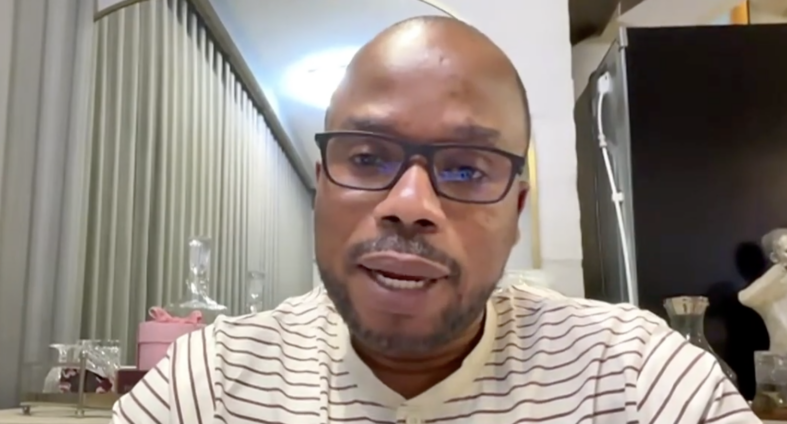
Ghana’s High Commissioner to South Africa, Benjamin Anani Quashie, has revealed growing fear among Ghanaians living in the country following renewed xenophobic tensions.
He said many are now desperate to return home after losing businesses and livelihoods.
Speaking on PM Express on Monday, Mr Quashie said Ghana’s mission in South Africa has already received requests from more than 200 Ghanaians seeking voluntary repatriation.
The development follows the return of Emmanuel Akowuah Asamoah, the Ghanaian national who appeared in a viral video linked to recent xenophobic attacks.
Mr Quashie disclosed that businessman Ibrahim Mahama had offered Mr Asamoah employment.
“Fortunately, Mr Ibrahim Mahama has decided to offer him employment, which he has gladly accepted.”
According to the High Commissioner, Mr Mahama wants the young Ghanaian’s story to inspire others facing hardship abroad.
“Mr Ibrahim indicated to him that he wants him to be an ambassador so that other Ghanaians in other countries can look up to him and say, when they sacked him from one country, he got back to Ghana, and he was helped, and was able to make a difference in his life.”
Mr Quashie said the government is now preparing for a wider repatriation exercise.
“So we’ve been asked by the Minister to gather the names of the Ghanaians. After this evening, we have close to about 200 and something people who want to come back home.”
He said the government would cover travel costs and documentation for those without passports.
“The ministry is going to take up the cost so that we ensure that we bring them back home.”
According to him, the goal is to ensure that no Ghanaian is abandoned in dangerous conditions.
“We don’t want to leave any Ghanaian at the mercy of any other national. Ghanaians are valued in Ghana.”
Mr Quashie warned that the number of people seeking repatriation could rise sharply.
“It will definitely go up more than what we have seen.”
He estimated that nearly 20,000 Ghanaians currently live in South Africa, working across different sectors including mining, healthcare and academia.
“Some of them are doing very well… some are working in the mines. Some are working in hospitals. Some are lecturers here and there.”
But he said many now fear years of hard work could vanish overnight whenever xenophobic violence erupts.
“So these are people who believe that, over the years, they struggle, put up a business. Xenophobic attacks happen. They lose everything.”
He said many now prefer returning home to rebuild their lives.
“So they are saying that this time around, they want to come home and start life all over.”
The High Commissioner said discussions are ongoing with businesses in Ghana to help absorb returnees into jobs and ease their reintegration into society.
Latest Stories
-
Teacher unions strike: Gov’t presents fresh proposals as talks end inconclusively
42 minutes -
51,000 teachers’ promotion arrears to be validated for October payment – Education Minister
1 hour -
Kwabena Boamah appointed Board Chair for Impact Investing Ghana
1 hour -
Striking teacher unions to meet Fair Wages and Salaries Commission on October 6
2 hours -
EOCO working with AG to arraign Nana Baffour Awuah before weekend court
2 hours -
Duraplast reassures customers after fire, announces October 5 reopening
2 hours -
Call off strike, gov’t will not renege on promotion arrears pledge – Haruna Iddrisu appeals to teacher unions
2 hours -
Committee set up to validate teachers eligible for 20% deprived-area allowance – Education Minister
2 hours -
Five-member committee to search for new Black Stars coach after Sports Ministry-GFA meeting
2 hours -
Pinktober: Breast cancer survival exceeds 90% when detected early – Breast Society of Ghana
3 hours -
TCDA to adopt Upper West’s MATCO mango farm as northern prototype, issues warning against felling shea trees
3 hours -
‘Fear delegates’ tag: Afoko touts genuineness among delegates ahead of NPP delegates conference
3 hours -
John Boadu: The leader our party needs at this time – Amb. Edward Akwasi Boateng
3 hours -
Baffour Awuah: EOCO arrested, detained MP after hours of waiting, questioning – Afenyo-Markin
3 hours -
EOCO court warrant authorised search of Baffour Awuah’s law firm, not residence – Afenyo-Markin
3 hours