

Audio By Carbonatix
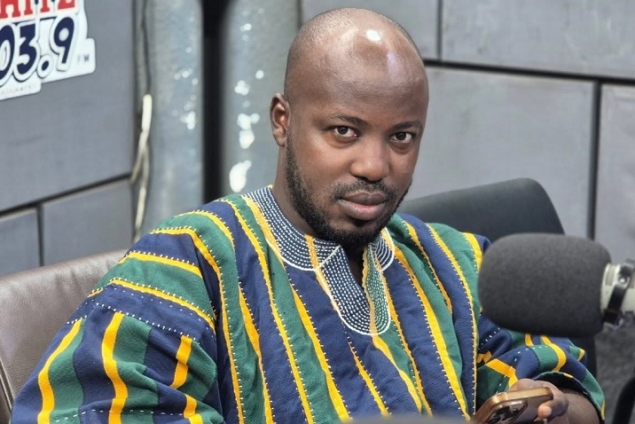
Kojo Akoto Boateng, co-host of Joy FM’s Super Morning Show, has bemoaned the lack of unity and strategic planning within Ghana’s creative sector, attributing much of its stagnation to individualism and short-term political interests.
Speaking on Hitz FM’s Daybreak Hitz with Doreen Avio, Kojo observed that the sector’s most noticeable activity often aligns with election seasons, where personal political alignment takes precedence over long-term development.
“What I’ve noticed about the showbiz space is that we get active during elections and people largely follow their stomachs and we are so divided,” he said, comparing the fragmented approach of creative industry players to that of stakeholders in the agricultural sector, who he believes are more concerned with collective welfare than political affiliation.
His comments came as the United Kingdom announced a £30 million investment package for its music and wider creative industries, forming part of a broader 10-year strategy aimed at unlocking economic growth, nurturing talent and supporting innovation across sectors like fashion, film, gaming, and design. The plan is expected to generate an additional one million jobs and boost the UK economy by £50 billion by 2030.
By contrast, Ghana’s creative industry continues to battle with structural issues such as inadequate funding, weak policy implementation, and limited infrastructure. Despite its wealth of talent, the country has no clear long-term development blueprint for its cultural and creative economy. Attempts to support the sector have often been piecemeal, politicised or short-lived.
Stakeholders have frequently lamented the lack of a national creative fund, minimal training opportunities, poor enforcement of intellectual property laws, and the absence of platforms that allow local talent to scale globally. Major government-led initiatives are rare, and private sector partnerships remain underdeveloped due to high risk and limited incentives.
Kojo Akoto Boateng’s remarks reflect growing frustration among industry insiders who feel the sector is being neglected despite its potential to contribute significantly to national development. He called for creatives to rise above partisanship and work towards a united front that prioritises institutional development, policy engagement and long-term advocacy.
As countries like the UK invest heavily in their creative economies, many believe Ghana risks falling further behind if deliberate action is not taken to professionalise and support its own cultural sectors.
Latest Stories
-
Police blur the line between invitations and arrests – Reindorf Twumasi Ankrah
15 minutes -
Turning invitations into arrests is making citizens reluctant to assist police – Twumasi Ankrah
49 minutes -
The Traffitech-GH SMS spot-fine system: The good, the sad, and the funny – Bright Simons writes
1 hour -
Hawa Koomson pledges experienced and mature leadership of NPP women’s wing
2 hours -
Young woman found dead at Kasoa Peace Town
3 hours -
Playback: The Law examined lawful arrest in Ghana
3 hours -
Mahama urges African governments to treat healthcare as an investment, not budget cost
4 hours -
Bawumia congratulates John Boadu and new NPP executives, pledges support ahead of 2028
4 hours -
Aksa Energy delegation pays courtesy call on GRA Commissioner-General
4 hours -
‘No talent should be left out’ – Bawumia pledges inclusive NPP campaign for 2028
4 hours -
Prof. Mike Oquaye recounts how he blocked the Special Prosecutor’s attempt to arrest Bawku Central MP
4 hours -
Make health sovereignty a priority for Africa – Mahama
4 hours -
Dorimon Naa, Wa West DCE lead massive clean-up exercise; threaten sanctions against recalcitrant residents
5 hours -
Photos from Adom FM Y2K Jam
5 hours -
Praye Tiatia steals the show at Adom FM Y2K Jam [Watch]
5 hours