

Audio By Carbonatix
Dean Adansi, Chief Executive Officer (CEO) of Ghana International Bank (GHIB), has set out a financing blueprint to shift Africa’s commodity trade from raw exports to value-added products, arguing that the current export model is leaving billions of dollars in potential earnings on the table.
He said Africa’s share of global trade remains under three percent, in part because of a persistent trade finance gap that leaves exporters unable to invest in local processing. “Interest rates are significantly higher than in the West in many African countries, making it very difficult for smaller entities with short-track records to obtain the financing they need to export commodities, or even to industrialise locally,” he noted.
Speaking to the BBC on the sidelines of the GHIB CONVERGE 2025 conference in London, Mr. Adansi said the causes were structural; shallow capital markets, expensive working capital, and limited regulatory and infrastructure support. He stressed that for every US$1 of trade, there is a US$1.70 impact on GDP, meaning that closing an US$80 billion trade finance gap in sub-Saharan Africa could generate an additional US$133 billion annually. “The consequences are significant; in jobs, in revenues, and in building the local savings needed to strengthen domestic capital markets,” he said.
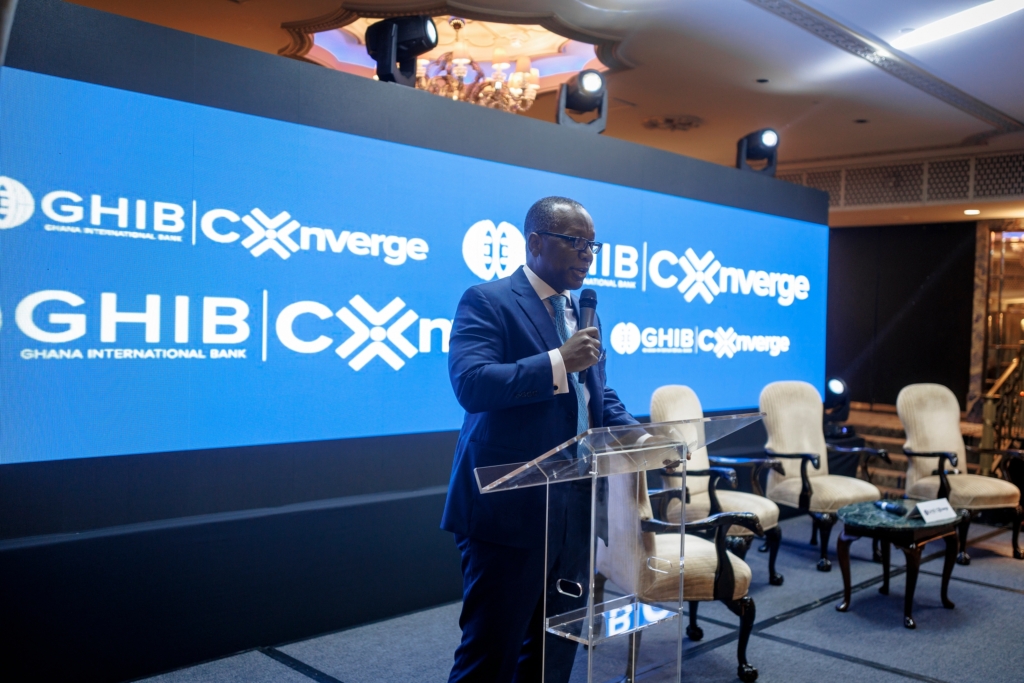
Mr. Adansi added that GHIB, operating from London for the past 65 years, is working with local financial institutions in West Africa to build capacity and make them more attractive to larger international lenders. This, he argued, creates a sustainable cycle in which local banks can then support SMEs and smaller exporters.
GHIB’s data and operational record back the bank’s proposed role in tackling the value-addition gap. Over the past five years, the Ghana-owned bank has facilitated more than US$14 billion in total trade flows, including US$10.6 billion in documentary trade collections and US$2.7 billion in primary trade finance transactions across Sub-Saharan Africa. Downstream payments to West Africa in 2024 alone exceeded US$8.5 billion.
Mr. Adansi stressed that financing remains the main bottleneck to processing. Processing plants need substantial upfront capital, longer repayment periods, and different risk assessments than standard commodity trade deals. “Traditional banking products are rarely designed to support multi-year investment cycles in processing,” he said.
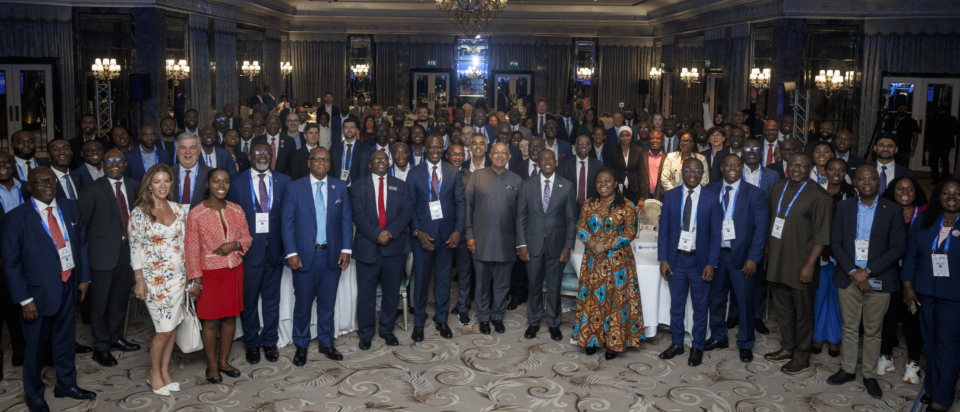
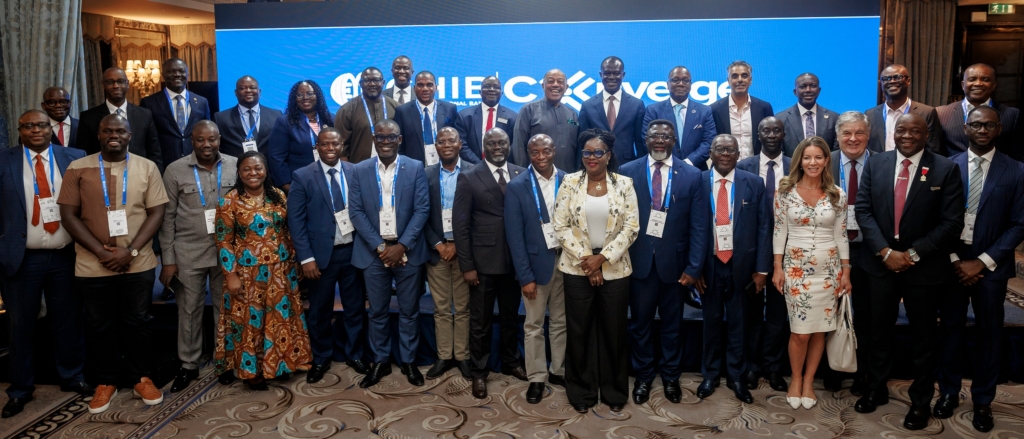
The GHIB CONVERGE 2025 conference, organised by GHIB, heard examples of missed opportunities. In one case, a contract worth more than US$10 million for onions destined for Senegal was fulfilled by European suppliers, despite West African countries having sufficient raw output. The reason: African producers could not secure financing for processing capacity. GHIB’s plan calls for specialized commodity finance instruments such as pre-export financing tied to off-take agreements, inventory financing against stored commodities, and equipment leasing to reduce capital outlays.
According to research presented at the conference, raising Africa’s share of value-added exports from 14 to 25 percent could generate over US$50 billion in extra annual revenue and millions of industrial jobs. Ghana’s own recent gains in cocoa processing — with local capacity rising from negligible levels to roughly 15 percent of output — and investments in gold refining were cited as examples of what targeted finance can achieve.
However, Mr. Adansi warned that processing cannot advance without parallel infrastructure improvements: steady electricity supply, modern transport networks, and skilled technical labour. In many markets, tax regimes and export licensing rules also favour unprocessed exports.
He pointed to the African Continental Free Trade Area (AfCFTA) as a structural opportunity to build regional-scale processing hubs serving multiple countries, while technology and transparency measures could help African processors win better market terms. “Digital platforms can link processors directly with buyers, and blockchain can certify and track goods in ways that command premium prices,” he said.
The GHIB chief also noted that environmental finance could support the shift. “Sustainably processed commodities increasingly earn higher prices,” he told delegates. “With well-regulated carbon markets and environmental finance tools, Africa can attract the capital it needs while meeting global sustainability demands,” he further stated.
GHIB’s proposed approach relies on partnerships rather than direct lending alone, combining resources from commercial banks, development finance institutions, and governments.
Mr. Adansi said pilot projects in selected commodity sectors could demonstrate the financial and development case for scaling up. For GHIB, the metrics of success go beyond profit. Employment creation, industrial capacity, and technology transfer are key goals. “If we can build value chains that keep more of the processing on African soil, the gains will be felt not just in GDP, but in livelihoods,” Mr. Adansi said.
The Interview can be heard at https://www.bbc.co.uk/sounds/play/w172zspr129zw94
(from 32.52)
About CONVERGE
CONVERGE is GHIB’s flagship thought leadership conference specifically designed to harness the bank’s extensive experience and leverage its network of partners, clients, and even competitors. CONVERGE has been structured off the Bank’s acclaimed ‘Summer School’, which has upskilled many West African banking, treasury, and corporate executives over many years Through this platform, the bank aims to initiate a continuous series of roundtables focused on generating, discussing, and implementing new ideas to foster the growth of African trade. For more information about Converge, please visit https://www.linkedin.com/showcase/converge-conference-ghib/
Latest Stories
-
President Mahama is not sincere with Ghanaians on LGBTQ bill matter – Hassan Tampuli
9 minutes -
Gov’t to establish Prison Industrial Hub to equip inmates with income-generating skills – Prison Service boss
28 minutes -
Alhassan Tampuli donates cement, roofing sheets to support storm victims in Gushegu
28 minutes -
Alhassan Tampuli appeals for urgent support for storm victims in Gushegu
31 minutes -
The hypocrisy must stop; pass Anti-LGBTQ+ Bill now – Alhassan Tampuli to Mahama
35 minutes -
Imprisonment should be rehabilitative, not punitive – Ghana Prisons boss at UNGA
57 minutes -
Ga Adangbe traditional priests petition Mahama over McDan aviation licence revocation
1 hour -
Anti-LGBTQ Bill: NDC’s arrogance is worrying – Hassan Tampuli
1 hour -
Let’s give OSP time to mature, not to scrap it – Hassan Tampuli
1 hour -
Nigeria convicts 386 Islamist militants in mass trials
1 hour -
Djibouti president wins election with 97.8% of vote, state media says
2 hours -
We don’t have mandate to deduct tax from rent allowance of security services personnel – Interior Ministry clarifies
2 hours -
Ablakwa receives Presidential Special Envoy on Reparations to advance global agenda
2 hours -
Christina Koch becomes first woman to travel around the moon on Artemis II
2 hours -
Epstein survivors’ calls to meet King Charles and Queen harder to ignore as US visit approaches
2 hours