

Audio By Carbonatix
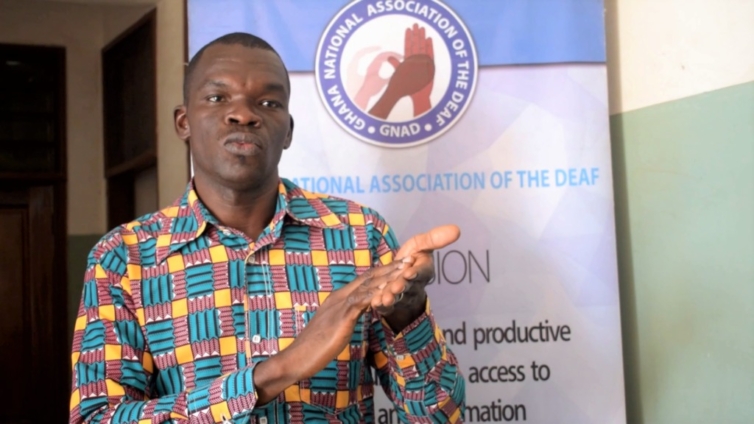
The Ghana National Association of Deaf (GNAD) has urged healthcare providers to prioritise and offer special needs for deaf persons in the country.
The Association’s Director, Juventus Duorinaah, said persons with hearing and speaking impairment face significant challenges and inconveniences in receiving healthcare.
According to him, since most health practitioners do not know how to communicate using sign language, they often do not understand the needs of such individuals.
“The first challenge is language barriers between the deaf and those providing the services. Most of the time the health care workers are not trained in sign language and as such most do not know how to interact with deaf patients. Most of the time when the deaf person appears in the consulting room, the doctor depends on the vitals provided or asks someone to explain the basics to him.
“The lab follows and drugs are prescribed. There is little effort to explain to the deaf patient what is wrong with him or her and what he or she should do to avoid future occurrence of similar problems," he said.
Mr Duorinaah believes that persons living with hearing impairment suffer undue mistreatment.
"Ignorance about deaf people and their special needs on the part of health workers. Some health workers don’t know or have never interacted with a deaf person before so when they see a deaf person for the first time they often don’t know how to go about it.
“An example is deaf women in antenatal care where sometimes some nurses will ask, ‘So who wronged you that way by impregnating you’.”
He further added that their inability to hear and respond to their names when called at the outpatient department (OPD), makes them receive late healthcare at hospitals.
“Is about giving priority to deaf people at healthcare. You see, at OPD sometimes patients have to queue for hours. Sometimes a deaf person is asked to wait and in some cases, they call his name again and again without them knowing they are being called. AT times they end up being last though they arrive first,” he stated.
He made these aggrievements known while addressing the audience at the Evidence and Effectiveness Grants Films screening event held yesterday at Fiesta Royal Hotel in Accra.
To address these challenges, Mr Duorinaah called for health professionals to be trained in sign language and be posted at strategic health delivery departments to handle deaf persons properly.
He also implored healthcare administrators to employ the services of hospital social workers to ensure deaf people who visit the facilities are given priority.
“We recommend that hospital administrators must work with Hospital Social workers to ensure that deaf people who visit the hospital are given priority," he added.
Meanwhile, the Ghana Society of Physically Disabled, has urged the government to expedite the review process of the legislative instrument for persons with disability to ensure their safety.
The Society’s President, Matthew Annor Kodom, said the majority of health facilities are not disability-friendly.
“The physical built environment is not disability friendly, those sitting in wheelchairs and other disabled people cannot access the place,” he said.
Latest Stories
-
2026/2027 GPL: Kelvin Nkrumah strike sends Medeama top of league table
5 minutes -
Emmanuel City crowned champions of maiden Global Game Scouting Tournament
14 minutes -
Thomas Partey loses father Jacob Teye Partey
27 minutes -
Martin Kpebu explains when EOCO can arrest Manhyia South MP after securing court warrant
45 minutes -
EOCO’s reasons for seeking Manhyia South MP arrest warrant not justified – Kpebu
48 minutes -
MTN Ghana warns SMEs against sharing PINs amid digital fraud risks
49 minutes -
Yendi nursing students warn restricted access to skills lab could affect their training
50 minutes -
Minority awaits formal notice of arrest warrant for Manhyia South MP – Annoh-Dompreh
52 minutes -
LTIF announces 2026 Pan-African edition in Accra from October 6-7
53 minutes -
Mfantsipim needs broader funding partnerships to bridge infrastructure gap – Prof Baiden
54 minutes -
MP status must not shield anyone from law enforcement – Kwakye Ofosu
1 hour -
EOCO had tactical team ready to arrest Baffour Awuah – Felix Kwakye Ofosu
1 hour -
Afoko can unite NPP’s factions, says Charles Owusu Juanah
2 hours -
Guardiola backing Man City after guilty verdicts
2 hours -
Annoh-Dompreh questions EOCO’s claim that Manhyia South MP was unavailable for questioning
2 hours