

Audio By Carbonatix
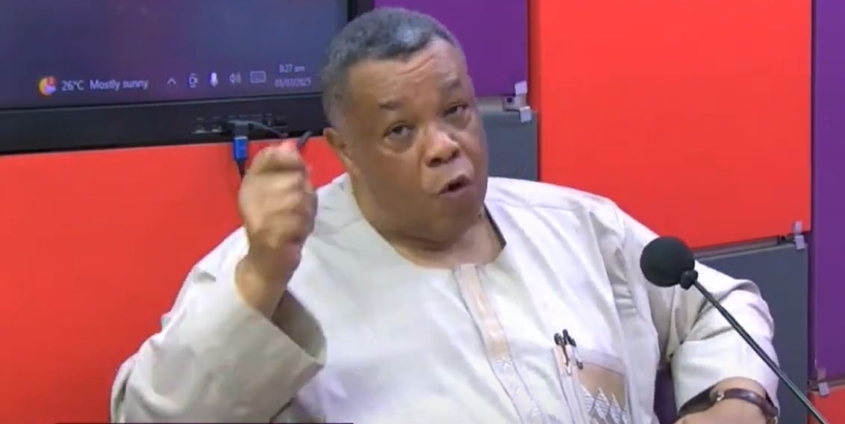
The Volta River will play a critical role in Ghana’s 'Grow 24' strategy under the broader 24-Hour Economy policy, according to Presidential Advisor on the 24-Hour Economy, Mr Goosie Tanoh.
Speaking on Joy FM’s Super Morning Show on Wednesday, July 3, Mr Tanoh said the river was chosen deliberately because of its potential to drive agricultural transformation and reduce the high cost of logistics in the country.
“If you look at the end product of most of our food, what you eat at your table or what goes to the factory as raw material or for export, about 60% of the cost is from logistics,” Mr Tanoh explained. “That's even more than the material you are basically transporting.”
He noted that globally, the average logistics cost as part of total production is around 15%, meaning Ghana is operating at a 45% disadvantage in efficiency.
“If we are able to improve the supply chain, we’re basically bringing down the cost of food, potentially reducing it by 45% just to reach the global average,” he added.
Mr Tanoh explained that using the Volta River for transport is not just environmentally friendly but also economically smarter.
Water transport, he said, has historically been the backbone of industrial and agricultural growth in many countries.
“Look at the Mississippi River, the Thames, the Danube, the Nile, and even the Congo, with all its challenges. Water transport supports both agriculture and industry because it offers power and connectivity,” he said.
According to Mr Tanoh, Ghana’s Volta River has a shoreline of about 3,283 miles, offering a vast natural transport corridor that can connect regions from north to south and east to west at a fraction of the cost of road transport.
“It costs one-eighth of what it takes to transport goods by road. One barge with a tugboat can carry 700 tonnes. To move the same amount from Accra to Tamale by road, you’d need about 15 trucks all emitting fossil fuels and worsening our carbon footprint as a country,” he explained.
He stressed that water transport through the Volta will not only lower logistics costs but also unlock access to fertile arable lands, creating opportunities for both commercial and smallholder farmers.
“We are building an organisational framework that supports large-scale farming but also integrates smallholders through a formalised crop system,” Mr Tanoh said.
Latest Stories
-
Let The Constitution direct Chieftaincy to deliver “All Development Is Local”
22 minutes -
Ghana explores centre of excellence for hearing, communication and cochlear implant care
2 hours -
Schizophrenia-related disorders lead mental health cases recorded in Ghana
2 hours -
Dutch authorities enlist Ghana in hunt for fugitive drug lord Bolle Jos
3 hours -
Ghana housing finance conference adopts communiqué to improve affordable housing access
7 hours -
Special Initiatives Minister urges Wa Technical Institute to enrol more girls as EU-backed solar training lab opens
7 hours -
In the matter of my first year at the Bar
8 hours -
ActionAid Ghana calls for an end to child marriage, greater investment in girls’ rights
8 hours -
Newsfile to tackle World Cup visa scandal, beach demolitions, education strikes, BRICS bid
8 hours -
UK-Ghana Trade & Investment Summit: Trade Resource Centre to help businesses maximise UK-Ghana trade opportunities
8 hours -
Embassy of Denmark celebrates World Maritime Day
8 hours -
Linking LEAP to productive inclusion could cut extreme poverty by 2030 – UNICEF
10 hours -
Trade Ministry backs use of creative arts to rehabilitate prison inmates
10 hours -
Negotiations with government to continue despite strike suspension – GNAT
10 hours -
‘Ghana cannot afford to waste public resources; every cedi has a job’ – Ato Forson
10 hours