

Audio By Carbonatix
The government has moved to give the local film industry a concrete lifeline by creating a Film Fund in the 2026 budget.
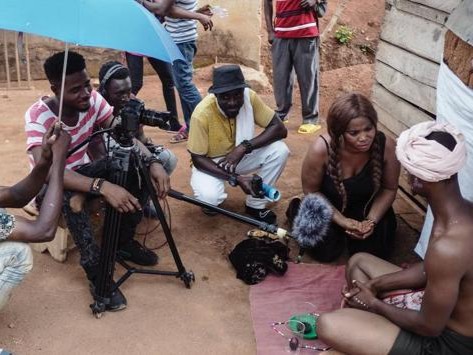
The measure was announced in Parliament as part of a package of creative sector interventions and is aimed squarely at reviving domestic film clusters, including the Kumawood scene that has struggled in recent years.
The finance minister, Dr Cassiel Ato Forson, indicated the fund will receive seed capital to get it started, a visible sign that policymakers want public money to catalyse a turnaround in production, distribution and marketing for Ghanaian films.
Local film clusters like Kumawood remain culturally important but face gaps in finance, professional distribution and modern production capacity.
A dedicated pool of capital can be used in several practical ways. It can underwrite production grants so filmmakers can make higher-quality work.
Beyond direct funding, the new Film Fund is meant to signal a shift in how the state values film as an economic sector.
The budget frames film not only as entertainment but also as a creator of jobs, a draw for cultural tourism and a driver of export earnings when films travel to festivals and stream overseas.
If managed well, the fund could unlock private investment by reducing early-stage risk and by showing that the government will back industry development with predictable, strategic resources.
The plan is not without hurdles. Past interventions in creative industries have sometimes stumbled over weak governance, unclear procurement and short-lived programmes that run out of money.
For the Film Fund to work, it will need strong rules on transparency, clear criteria for who receives support and mechanisms to measure impact on jobs and revenues.
Stakeholders will also say that money alone is not enough. Investment in cinemas, improved copyright enforcement and platforms for marketing are part of the full solution. These complementary needs are already part of public conversations about rebuilding Kumawood and broader Ghanaian film capacity.
What to watch next are the fund rules, the timeline for disbursing the seed capital and the governance arrangements that will determine who sits on the fund board and how projects are chosen.
If those details are spelt out quickly and the seed allocation is released on schedule, the Film Fund could become a turning point for an industry that has long provided unique stories and steady livelihoods across the country.
For filmmakers, producers and audiences, the promise is now public. The test will be whether the promise turns into work, screens and pay for the people who bring Ghanaian cinema to life.
Latest Stories
-
Power restoration fault suspected in Kumasi Central Market fire
42 minutes -
The 7-foot giant of Ngleshie Amanfro: Seven-foot Ghanaian Ephraim Saawa dreams of joining the national basketball team
1 hour -
Government promises support for Kumasi Central Market fire victims
1 hour -
Vibes The Movie: Big Ghun’s Ghanaian film earns five nominations at 2026 REFFA
2 hours -
MamaCare CEO warns unresolved conflicts among health workers could undermine maternal and neonatal care
2 hours -
Health professionals urged to translate medical knowledge into practice to save mothers
2 hours -
Conflicts among care providers linked to maternal, neonatal deaths – Expert
4 hours -
GIS marks 10th TIME conference, champions improved teaching practices
4 hours -
BRICS Or Balance? What Ghana’s bid really means
5 hours -
GPRTU wants full TRAFFITECH-GH implementation to start in 2027
5 hours -
Mahama announces plans to import electric wheelchairs for PWDs
5 hours -
KGL U17 Colts 2026: Western beat Prempeh Elite Academy to set up final final with Greater Accra Region
5 hours -
Late Solanke strike salvages 10-man Spurs draw at Man United
5 hours -
Gender Ministry to monitor welfare of Nana Akua Addo’s children amid domestic violence case
6 hours -
Benedict Okyere Yeboah: Ghana’s football problem goes beyond sacking a coach
6 hours