

Audio By Carbonatix
The government says it is intensifying efforts to unlock the potential of Public-Private Partnerships (PPPs) to close Ghana’s widening infrastructure deficit, estimated at $37 billion annually over the next three decades.
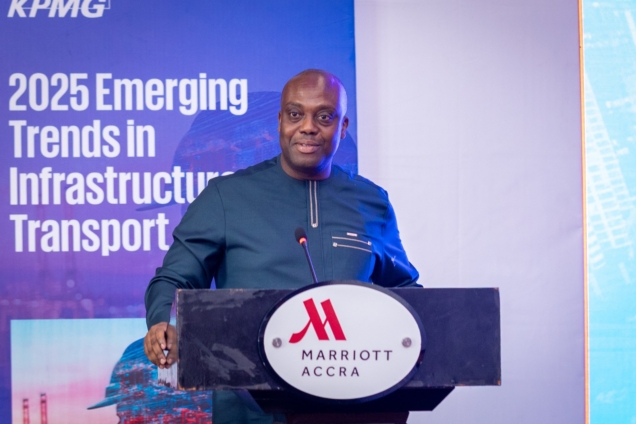
Delivering the keynote address at the KPMG Infrastructure Roadshow in Accra, the Deputy Minister for Finance, Thomas Nyarko Ampem, said traditional financing models alone are no longer sufficient to meet the scale of Ghana’s infrastructure needs, making PPPs indispensable.
“The public purse alone cannot do this. The fiscal space is tight. The demands are huge. The journey is long. PPPs are therefore not just desirable, they are indispensable,” Mr. Ampem stressed.
Infrastructure underperformance
The Deputy Minister painted a sobering picture of Ghana’s infrastructure record. Citing data from the World Bank-supported Global Infrastructure Hub, he noted that Ghana scores 47 out of 100 in infrastructure quality – ten points below the average for lower-middle-income countries.
Additionally, Ghana invests about 5.0 percent of GDP in infrastructure, which falls short of the LMIC average of 5.4 percent. This has translated into a financing gap of 2.8 percent of GDP, far higher than the 1.7 percent average for its peers.
“These figures confirm what citizens feel daily,” he said. “City residents cry for better transport systems, industries require reliable and cheaper energy, farmers need irrigation, and our young people demand the digital highways of tomorrow.”
Big Push initiative
To confront these challenges, Mr. Ampem announced that government has reallocated significant portions of petroleum revenues and mineral royalties under the Big Push Initiative to finance large-scale infrastructure.
He said government plans to invest GH¢13.9 billion into the flagship policy, rising to GH¢21.2 billion by 2028 . This is expected to shift capital expenditure upward by 0.5 percent of GDP during the period, even as the administration pursues fiscal consolidation.
“This is not just a peppering over the cracks. It is an economic reset backed by a US$10 billion Big Push for infrastructure development,” the Deputy Minister declared.
Strengthening systems for value for money
The Deputy Finance Minister also revealed ongoing reforms in Ghana’s Public Financial Management (PFM) system to ensure infrastructure contracts deliver value for money.
He cited an audit by the Ministry of Roads and Highways which found that arrears of GH¢113 million owed to contractors in 2018 had ballooned to GH¢665 million in interest by 2025 due to delays and weak controls.
“Clearly, we were paying more in interest than in actual road construction. This cannot continue,” he said.
To prevent recurrence, he said government through Parliament has amended the Public Procurement Act to ensure that all contracts must have approved budgetary allocations before commencement. He said the Ministry has also set up a PFM Compliance Division to monitor adherence to commitment controls and procurement regulations.
PPPs as a solution
Despite these reforms, Mr. Ampem admitted that public funds alone are inadequate to meet Ghana’s infrastructure demand. He argued that PPPs provide an opportunity to bring in private sector capital, expertise, and efficiency to complement government resources.
By leveraging PPPs, he said, Ghana could improve service quality, spread risks more effectively, and accelerate economic transformation. However, he acknowledged challenges such as low awareness of PPPs, capacity constraints in structuring projects, and regulatory bottlenecks that slow down transactions.
Government, he assured, is committed to addressing these hurdles and creating an enabling environment for private sector participation.
Call to partnership
The Deputy Minister urged both local and international investors to seize the opportunities in energy, transport, digital infrastructure, and urban development to partner government in closing the infrastructure gap.
“The framework is set. The vision is clear. The resolve for further PPP reform is strong. The leadership from President Mahama is committed,” he said. “Your technical expertise, innovation, and capital are not just welcome; they are essential.”
He concluded with a call to collective action, invoking an African proverb “If you want to go fast, go alone; if you want to go far, go together. The journey ahead for Ghana’s infrastructure demands that we go together with strong participation from the private sector.”
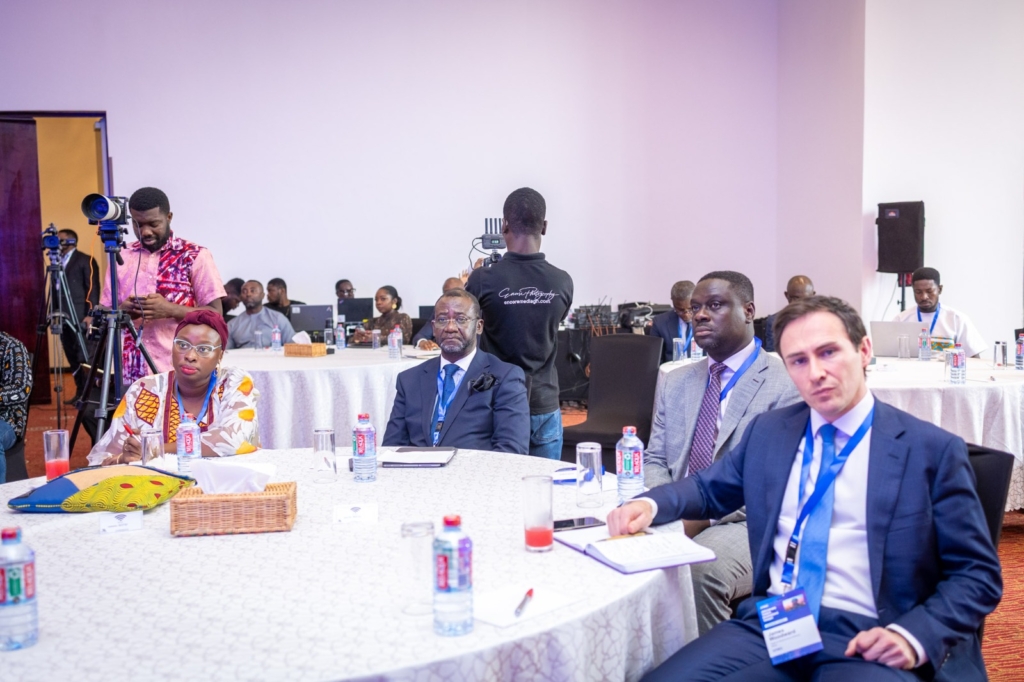
The KPMG Infrastructure Roadshow brought together policymakers, financiers, engineers, and business leaders to deliberate on innovative models for financing Ghana’s infrastructure needs under the theme “Unlocking Ghana’s Public Private Partnership Potential: Bridging Reform and Results.”
Latest Stories
-
Gov’t to establish Prison Industrial Hub to equip inmates with income-generating skills – Prison Service boss
15 minutes -
Alhassan Tampuli donates cement, roofing sheets to support storm victims in Gushegu
16 minutes -
Alhassan Tampuli appeals for urgent support for storm victims in Gushegu
18 minutes -
The hypocrisy must stop; pass Anti-LGBTQ+ Bill now – Alhassan Tampuli to Mahama
22 minutes -
Imprisonment should be rehabilitative, not punitive – Ghana Prisons boss at UNGA
44 minutes -
Ga Adangbe traditional priests petition Mahama over McDan aviation licence revocation
55 minutes -
Anti-LGBTQ Bill: NDC’s arrogance is worrying – Hassan Tampuli
1 hour -
Let’s give OSP time to mature, not to scrap it – Hassan Tampuli
1 hour -
Nigeria convicts 386 Islamist militants in mass trials
1 hour -
Djibouti president wins election with 97.8% of vote, state media says
1 hour -
We don’t have mandate to deduct tax from rent allowance of security services personnel – Interior Ministry clarifies
2 hours -
Ablakwa receives Presidential Special Envoy on Reparations to advance global agenda
2 hours -
Christina Koch becomes first woman to travel around the moon on Artemis II
2 hours -
Epstein survivors’ calls to meet King Charles and Queen harder to ignore as US visit approaches
2 hours -
UN Secretary-General names Ghana’s Anita Kiki Gbeho as South Sudan envoy
2 hours