

Audio By Carbonatix
The Director General of the Ghana Ports and Harbours Authority (GPHA), Mr Michael Luguje, has urged freight forwarders and clearing agents in Ghana to consistently declare the full contents of every cargo they are importing into the country.
According to him, this transparency will foster trust with Customs officials and expedite the clearance process of goods.
He emphasized that when Customs officials trust the accuracy of cargo declarations, there is less need for time-consuming inspections.
“Once Customs trust you that whatever you say you have in there, even if they waste their time opening it, it’s the same; if they scan it, it will be the same. Over time, they will trust you and say maybe forty or fifty per cent of containers will be scanned, while the rest can move out because we believe everything is fine," he said.
Mr Luguje stressed that freight forwarders play a crucial role as intermediaries between cargo owners and consignees, advocating for transparency and trust to improve trade efficiency.
He warned that without this cooperation, even initiatives like the African Continental Free Trade Area (AfCFTA) would struggle to meet their potential.
"AfCFTA may open new markets, but goods won’t cross borders smoothly without the trust and cooperation needed to facilitate trade," he noted.
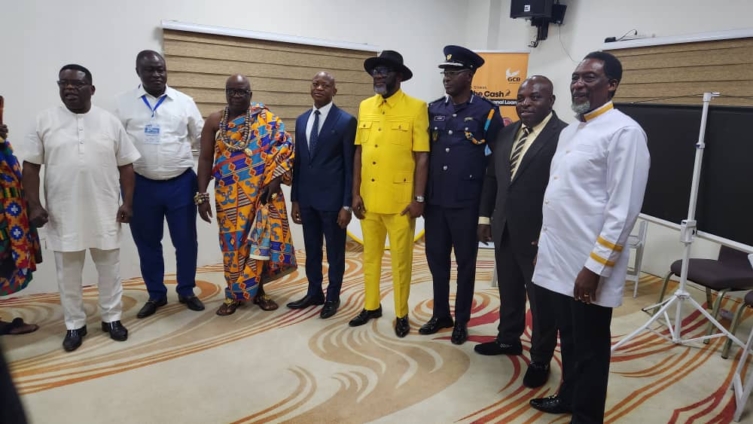
Mr Luguje was speaking during the 27th Annual General Meeting of the Ghana Institute of Freight Forwarders (GIFF) at Ho in the Volta Region, themed "Adapting to Global Trade Dynamics: The Role of Freight Forwarders in African Continental Free Trade Area."
He added his voice to calls for Customs to rely on its risk engine to ensure that not every container is scanned at the ports of Ghana.
He also urged freight forwarders to collaborate with truck owners to ensure that only roadworthy trucks transport cargo to the ports, citing the importance of maintaining a reliable and efficient transport system.
"Without addressing these operational issues, even with the opportunities presented by AfCFTA, producers may struggle to meet demand due to inefficiencies in cargo transportation," he warned.
Mr Luguje highlighted the significant developments at the ports of Tema and Takoradi, noting that the Takoradi Port now has the capacity to handle large vessels like Tema Port. He further revealed plans for a third port in Keta, following the completion of feasibility studies and an environmental impact assessment.
Looking ahead, he announced that early next year, a major commercial partnership campaign will be launched to support ongoing development projects.
He also pointed out that the Tema Port's MPS Terminal 3, with its new investments, has become a key hub for transhipment in the sub-region, benefiting from improved infrastructure and regional connectivity.
As part of government efforts to enhance port access, Mr Luguje mentioned a forthcoming major road project funded by the Port Infrastructure Development Fund. This initiative will improve access to the Port of Tema, boosting efficiency for the growing traffic volume.
"Together, we should look forward to a future of enhanced trade facilitation, economic prosperity, and continental integration," he added.
A private legal practitioner, Dr Emmanuel Kofi Mbiah, called on the Customs Division of the GRA to invoke its sanction regime to deter traders who do not declare the full content of their cargo before arriving at the port. This, when applied, he noted, will serve as a deterrent for other traders.
“In places like Singapore, if ammunition is found in a container and it is discovered that it belongs to you, the sanction regime that is applied is deterrent, and no one will dare do it again,” he averred.
He urged the industry to look at benchmarking and best practices since Ghana is not an island.
“It is only best practices that can carry the industry forward; otherwise, we will only be thinking about the negatives and consequently apply policies that do not give us positive outcomes,” he stated
The President of GIFF, Stephen Adjokatcher, urged members to proactively address the challenges facing the freight forwarding industry.
He encouraged them to stay informed about local and global regulatory changes and the innovations of the fourth industrial revolution to effectively guide clients through complex trade regulations.
"Staying knowledgeable about these evolving dynamics is essential for ensuring compliance, helping clients navigate the trade landscape, and guaranteeing the continued success of our business," Mr Adjokatcher noted.
Latest Stories
-
Landfilling waste management creates no value, it’s an economic waste
9 minutes -
Photos: Speaker Bagbin Commissions MPs constituency office under parliamentary decentralisation programme
25 minutes -
Black Stars technical advisor Winfried Schäfer sacked as GFA shakes up backroom staff
30 minutes -
Wenchi water project almost complete, critical to gov’t agenda – GWL MD
46 minutes -
Anti-LGBTQ+ bill not part of government’s legislative agenda – Inusah Fuseini
48 minutes -
Anti-LGBTQ Bill: Forget the rumour mongers, I’m a man of action, and will pass the bill – Speaker
2 hours -
Women and children among those killed in Sudanese army shelling of wedding celebration
2 hours -
President Mahama is not sincere with Ghanaians on LGBTQ bill matter – Hassan Tampuli
2 hours -
Gov’t to establish Prison Industrial Hub to equip inmates with income-generating skills – Prison Service boss
2 hours -
Alhassan Tampuli donates cement, roofing sheets to support storm victims in Gushegu
2 hours -
Alhassan Tampuli appeals for urgent support for storm victims in Gushegu
2 hours -
The hypocrisy must stop; pass Anti-LGBTQ+ Bill now – Alhassan Tampuli to Mahama
2 hours -
Imprisonment should be rehabilitative, not punitive – Ghana Prisons boss at UNGA
3 hours -
Ga Adangbe traditional priests petition Mahama over McDan aviation licence revocation
3 hours -
Anti-LGBTQ Bill: NDC’s arrogance is worrying – Hassan Tampuli
3 hours