

Audio By Carbonatix
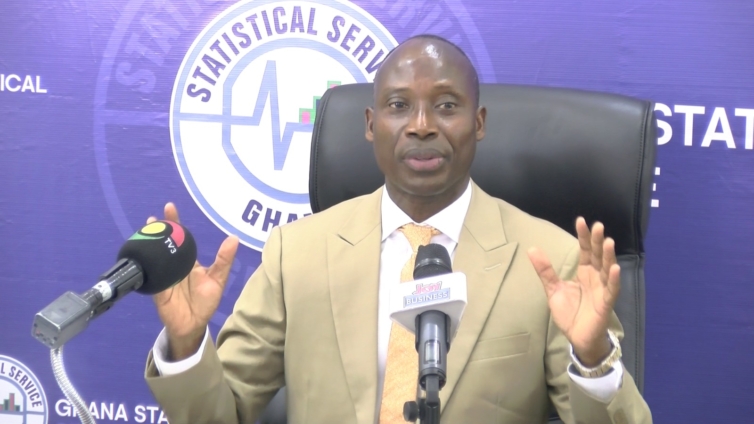
The Ghana Statistical Service (GSS) has revealed that it will begin the production of regional and district economic growth figures in 2026.
This is expected to commence after the completion of the rebasing, which typically recalibrates and incorporates new economic structures and data for efficient modeling of key economic indicators such as the Gross Domestic Product (GDP), inflation and others.
Addressing concerns of the unavailability of sector specific data sets, Government Statistician, Dr. Alhassan Iddrisu said the service is working on reforms, including the amendments of the Statistical Service Act, 2019 (Act 1003) will improve Ghana's data sets.
Speaking at the Africa Business Conversation, a thought leadership series organized by AB and David, Dr. Iddrisu noted that a successful completion of the rebasing will also be crucial in the short term.
“We are very mindful of regional and district data. We are currently embarking on a GDP rebasing exercise. We believe that when we complete that exercise it will provide the opportunity to possibly report GDP at the regional level.”
“Rebasing has started and we should be done by next year. “He emphasised.
On the review of the Act, he explained that; “one of the things we need to actually do to put us in a position to improve our services is to ensure we look at the review of our laws. This will give us the power to ensure that we get data from institutions that need to share data.”
He continued that the review of the law will enable a sustainable collection, which will make the GSS a world class data provision institution.
Stressing on the need for businesses to make use of the data provided by the Service, Senior Partner at AB and David, David Ofosu-Dorte, charged Ghanaian businesses to collaborate with the service.
He explained that data-backed decision making will enhance strategic decisions and improve business development.
“We must give credit to the GSS, there are a lot of what they publish which businesses ought to pay attention to. It turns out that they have quite a lot of data that either businesses are not aware of or they have failed to highlight in their presentations.”
“Some of these data can be used by businesses in their corporate strategy.”
While admonishing lecturers to use data from institutions such as the GSS in teaching, Prof. Godfried Bokpin, a lecturer at the University of Ghana Business School and panelist at the Africa Business Conversation, also highlighted the need for academia to reshape existing curricula to suit current industry demands.
“Just like the AB and David Crystal Ball, the Africa Business Conversation seeks to bring together business leaders, strategists, and policymakers to discuss pertinent issues affecting businesses and the economy as a whole”, he said.
Latest Stories
-
Anthropic seeks rehearing of case over Pentagon’s security risk branding
13 minutes -
NDC Deputy National Organizer Aspirant Hamza Umar targets grassroots mobilisation
57 minutes -
‘This cycle is not going to be broken any soon’ – Osae-Kwapong on partisan appointments
2 hours -
Partisan appointments won’t help restore trust in EC – Osae-Kwapong
3 hours -
Villarreal fight back to beat Napoli and end losing run
3 hours -
Tresoldi nets hat-trick as Club Brugge win Inter thriller
3 hours -
PSG’s Luis Enrique hopes Man City avoid sanctions
3 hours -
Lisandro Martinez issues scathing attack on Man Utd board – has he made things worse?
3 hours -
Saka responds to Arteta’s challenge with ‘huge impact’
4 hours -
Viking hold Bayern in thriller as Kane breaks Messi record
4 hours -
Gordon scores as Barcelona beats Galatasaray
4 hours -
Bumble bought for $1.3bn in ‘bet on the future of humanity’
4 hours -
Imagination Africa, Mentors Chess Academy to host second African Genius Chess Championship at Ghud Park
4 hours -
Paradigm Initiative steps up calls over digital rights, internet freedom in Africa
4 hours -
Saudi man charged with planting ‘sophisticated’ recording device in OpenAI office
4 hours