

Audio By Carbonatix
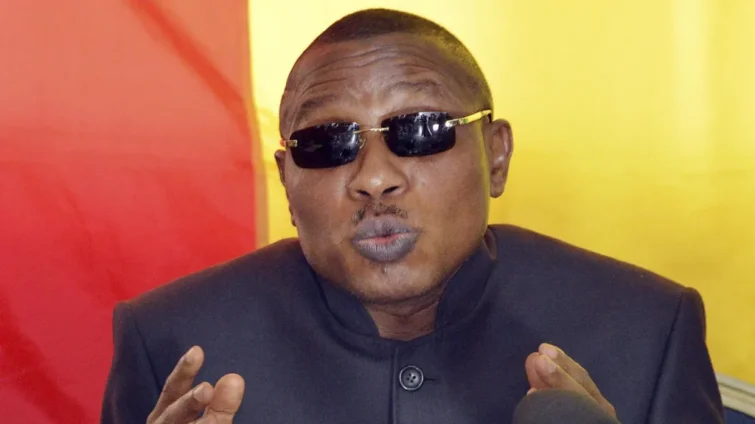
Guinea's ruling junta has pardoned former military leader Moussa Dadis Camara, less than a year into a 20-year sentence for crimes against humanity linked to one of the country's worst massacres.
A decree read on state TV said the pardon had been granted for health reasons.
In 2009, troops under his command opened fire during a rally calling for a return to civilian rule, killing more than 150 people. Scores of women were also raped.
Camara seized power when long-time President Lansana Conté died in 2008. He fled following an assassination attempt not long after the massacre, but returned in 2022 to face justice, insisting he was innocent.
Camara, 61, was a virtually unknown army captain when he led the coup. He was convicted along with seven of his military commanders in July 2024 after a 22-month trial.
His pardon comes in the wake of an announcement earlier in the week that the current military government intends to pay compensation to the victims of the massacre - which Camara and the others convicted had been ordered by the court to cover.
According to Justice Info, a website reporting on international justice, the estimated breakdown of the payouts is:
- $173,000 (£134,000) - per rape victim
- $115,500 - per death or disappearance
- $57,000 - per case of looting
- $23,000 - per case of torture.
The massacre took place in September 2009, when tens of thousands gathered at a stadium in the capital, Conakry, to press Camara not to stand in a presidential election.
Many were shot, stabbed, beaten, or crushed in a stampede as security forces fired tear gas and charged into the stadium. At least 109 girls and women were raped.
It is not clear what health problems Camara faces. His younger brother, Jean Dadis Camara, told AFP: "Everyone is happy. We thank the president."
When Camara fled Guinea after being shot in the head, he was treated for six weeks in Morocco before taking up residence in Burkina Faso for 12 years.
His deputy went on to organise an election in 2010 that ushered in a decade of civilian rule, which brought Alpha Condé to power as president.
He was overthrown in a coup in September 2021 in the wake of protests over his controversial third term.
Latest Stories
-
‘I never said I’ll declare a state of emergency’ – President Mahama on galamsey
13 minutes -
Bobby Banson condemns EOCO’s attempted arrest of Nana Agyei Baffour Awuah
39 minutes -
When Kumasi begins to look like somebody is in charge
39 minutes -
Parliamentary probe into cocaine seizure would be a waste of time – Inusah Fuseini
45 minutes -
Cocaine seizure: Focus on Ghana’s reputation, not partisan blame – Osae-Kwapong
51 minutes -
Two Invitations, Three Interrogations: Did Baffour Awuah tell the whole story?
1 hour -
Drug cartels may be seeing Ghana as easy route – Lenin Anane Agyei
2 hours -
Ghana risks gaining notoriety as drug-trafficking hub – Bobby Banson
2 hours -
Government dismissed my drug trafficking warning, then tried to arrest me – Ntim Fordjour
2 hours -
Day Two: 3rd Republic Bank-JoyNews Habitat Fair Clinic underway at Junction Mall
2 hours -
NACOC addressing inherited gaps in fight against drug trafficking – Deputy Director-General
2 hours -
Taekwondo goes to school as GTF launches five-region youth campaign
2 hours -
The issues Mourinho is struggling to fix at Real Madrid
2 hours -
Hundreds throng EducationUSA College Fair in Kumasi in pursuit of abroad studies
2 hours -
Drug bust: NACOC should be part of port inspection team – Twum-Barimah
3 hours