

Audio By Carbonatix
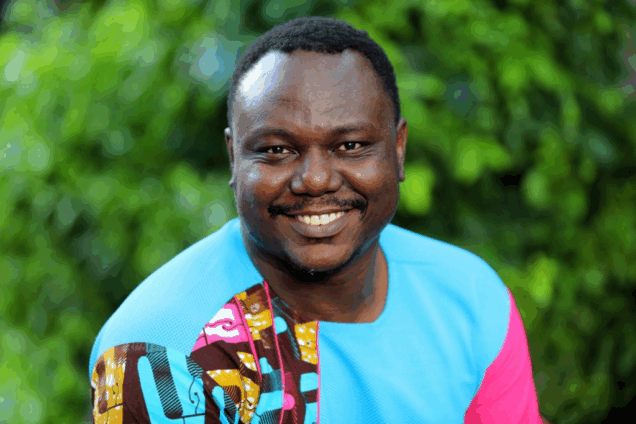
Vice President of IMANI Africa, Selorm Branttie, has said that while the Ghana Water Company Limited (GWCL) has valid reasons for seeking a tariff increment, the same cannot be said for the Electricity Company of Ghana (ECG).
Speaking on Joy FM’s Super Morning Show during discussions on the tariff proposals submitted by ECG and GWCL, Mr Branttie agreed that GWCL’s rising cost of water treatment made their demand for a tariff review necessary, but ECG’s request was “not fair to the people.”
On ECG’s proposed 225% increment, Mr Branttie said that consumers were already paying higher prices for electricity compared to some neighbouring countries and should not be burdened further.
“When it comes to the electricity, I think that we are all paying the brunt for mismanagement or some sort of lack of cohesive policy around how we have been handling the collection side of electricity,” he said.
“I still believe that there are quite a lot of leakages and the easiest approach is to ask for a hike in tariffs.”
Comparing regional costs, he said: “If you even look at our surrounding countries, what we pay now per kilowatt hour of electricity is at par or slightly more than what the Ivory Coast pays, slightly less than what Togo pays, and also slightly less than what Burkina Faso pays. So what is it that should make it justified that we should multiply it by almost a factor of three just so that we can be in the green?”
Mr Branttie said that ECG’s proposal would not be fair to consumers. “If we want to go by this particular proposal, then we are looking at a situation where we are going to pay about three times what all our neighbours are paying. That shows that there’s a very big problem with us in terms of the generation cost as well as the cost that has to be passed on to the consumer.”
Mr Branttie said the justification for water tariffs was “valid,” particularly because of the effect of illegal mining.
“I share very much the sentiments about the fact that the cost of treatment is going high and untenable,” he said, warning that Ghana risked serious water shortages in the near future if the situation was not addressed.
“Well, there are quite a few valid points for justification of the tariffs, especially in the case of the water,” he explained. “Sadly, we have just treated the issue about how we preserve the catchment areas of our rivers very trivially, and it’s just been a top shop.”
He said he was disappointed with how Ghana is dealing with galamsey, especially the damage to rivers.
“For me, it should be a matter of paramount national security. If we really are going to have clean water sources over the next five years or so, then we have to decide whether we want to begin to import water or we would want to put a hold on galamsey.”
According to him, Ghana should not be facing water shortages given the number of rivers and water bodies in the country.
“We should have had an abundance of water and not a situation where the water sources are rather diminishing and there is far more increased turbidity in our rivers, which is really the main cause of us not being able to process the water very well.”
Latest Stories
-
Ghana Psychological Association calls for greater involvement of people with lived experience in mental health care
12 minutes -
Ablakwa says Ghana could evacuate more citizens from South Africa if the situation worsens
40 minutes -
Violence against girls must be tackled through individual responsibility – Gender advocate
44 minutes -
Ghana’s BRICS bid must be guided by national interest – International Affairs Analyst
56 minutes -
Journalists look back on a decade of breast cancer reporting in Ghana
2 hours -
President Mahama ends Resetting Ghana tour of Ahafo Region
3 hours -
African negotiators seek delivery of climate commitments at COP31
3 hours -
BoG develops AI rules for financial sector
4 hours -
‘Big Push’: Government assures contractors of prompt payments
4 hours -
Court fines miner for breaking into gold buying shop
4 hours -
Tarkwa court jails labourer for three years over GH¢123,000 theft
5 hours -
GAEC must retain nuclear scientists for Ghana’s nuclear ambitions – Minister
5 hours -
Man reportedly mistaken for game and shot by hunter dead in forest
5 hours -
19-year-old mason jailed 15 years for defiling seven-year-old pupil
5 hours -
Ghana’s banking sector assets rise 20.47% to GH¢500.2bn – BoG Governor
5 hours