

Audio By Carbonatix
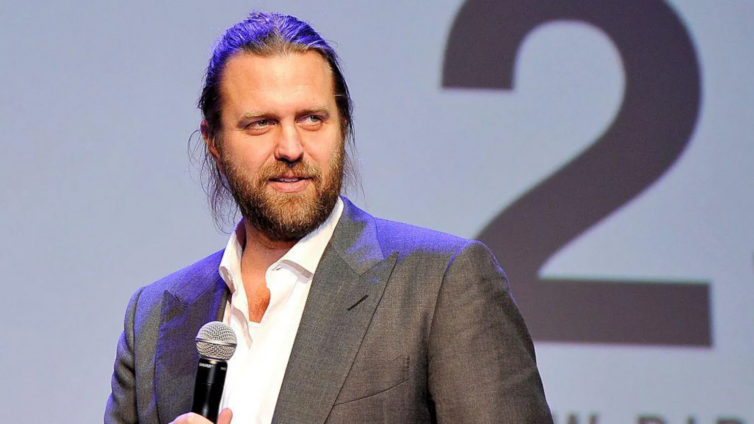
A Hollywood director has been arrested and accused of using studio funds intended to complete a sci-fi series to buy luxury cars, cryptocurrency and fancy bedding for himself.
Carl Erik Rinsch, 47, is charged with federal fraud and money laundering related to $11m (£8.5m) he was given by Netflix to create a series called White Horse.
Mr Rinsch, who is best known for the 2013 film 47 Ronin, declined to enter a plea when appearing in a Los Angeles court on Tuesday.
The indictment does not name Netflix, referring to a "subscription video-on-demand streaming service", but Mr Rinsch's long-running dispute with Netflix over the failed series has been previously publicised in US media reports.
Netflix has declined to comment on his arrest.
Between 2018 to 2019, the streaming giant gave Mr Rinsch an initial budget of $44m to film the show, which depicts artificial human clones, but he allegedly never completed a single episode.
In March 2020, Netflix sent him another $11m after he argued that the initial budget was "not sufficient", according to prosecutors.
But instead of using the funds for the series, he allegedly transferred them to his personal bank accounts and used it to invest in several risky financial ventures, the US Justice Department said.
"Carl Erik Rinsch orchestrated a scheme to steal millions by soliciting a large investment from a video streaming service, claiming that money would be used to finance a television show that he was creating," prosecutor Matthew Podolsky said in a statement on Tuesday.
"But that was fiction."
Only two months after receiving the $11m, about half of it had already been spent, the indictment says.
While he "was in the process of losing" the money, Mr Rinsch allegedly informed Netflix that the show was "awesome and moving forward really well", according to the indictment.
He allegedly used the remaining funds to speculate on cryptocurrency, and on personal expenses and luxury items for himself, including a fleet of Rolls-Royces and a Ferrari, court documents state.
The spending spree also included $1.8m for credit card bills, $3.7m on furniture and antiques and $933,000 on mattresses and luxury bedding, the Justice Department states.
The indictment also alleges that $1m of the cash was sent to lawyers to sue Netflix in hopes of receiving more funds, and for a divorce.
A profile of the dispute published by the New York Times in 2023 reported that friends and colleagues had described Mr Rinsch of growing increasingly erratic shortly after he signed the Netflix deal.
The newspaper reports that he believed he could predict lightning strikes and volcanic eruptions and knew about a "secret transmission mechanism" for Covid-19.
According to the Associated Press, Mr Rinsch made an initial court appearance on Tuesday. When asked by the judge whether he had read the 12-page indictment, he reportedly responded, "Not cover to cover".
He was released on a $100,000 bail, and he is expected to attend trial in New York at a later date. If found guilty, he faces 20 years in prison.
Latest Stories
-
Renewed flood intervention at Mallam Junction raises hopes among residents, businesses
40 seconds -
St Augustine’s College retain National Investment Quiz title after nail biting grand finale
10 minutes -
Education infrastructure investment will drive Banda’s development – Ahmed Ibrahim
17 minutes -
Teacher unions strike: Gov’t presents fresh proposals as talks end inconclusively
59 minutes -
51,000 teachers’ promotion arrears to be validated for October payment – Education Minister
1 hour -
Kwabena Boamah appointed Board Chair for Impact Investing Ghana
2 hours -
Striking teacher unions to meet Fair Wages and Salaries Commission on October 6
2 hours -
EOCO working with AG to arraign Nana Baffour Awuah before weekend court
2 hours -
Duraplast reassures customers after fire, announces October 5 reopening
2 hours -
Call off strike, gov’t will not renege on promotion arrears pledge – Haruna Iddrisu appeals to teacher unions
2 hours -
Committee set up to validate teachers eligible for 20% deprived-area allowance – Education Minister
2 hours -
Five-member committee to search for new Black Stars coach after Sports Ministry-GFA meeting
3 hours -
Pinktober: Breast cancer survival exceeds 90% when detected early – Breast Society of Ghana
3 hours -
TCDA to adopt Upper West’s MATCO mango farm as northern prototype, issues warning against felling shea trees
3 hours -
‘Fear delegates’ tag: Afoko touts genuineness among delegates ahead of NPP delegates conference
3 hours