

Audio By Carbonatix
Global tech company, Huawei believes information and communication technologies (ICT) has the potential to reduce global carbon emissions by 20% over the next decade.
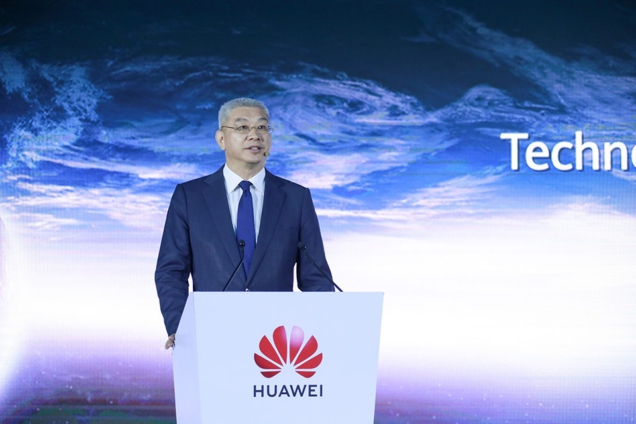
William Xu, Director of the Board and President of Huawei's Institute of Strategic Research, recently said energy sustainability was a daunting challenge that faced all countries over the next decade.
“Global energy consumption is growing at an annual rate of 1.7%. Currently 85% of energy comes from fossil fuels. Energy sustainability is a daunting challenge that faces all of us. By empowering a wide range of industries, ICT technology has the potential to reduce global carbon emissions by 20% over the next decade,” said Xu.
He added that as many countries commit to carbon neutrality and lower emissions, the push for renewable energy has increased, and this is where ICT adds new opportunities in electricity generation, storage, and consumption.
“For energy consumption, we must promote integrated smart energy to build energy management systems for households, buildings, and factories, and to create zero-carbon communities, campuses, and cities,” said Xu.
Huawei recently announced that it will focus on innovating new technologies to help industries reduce their energy consumption for a low-carbon world.
In Africa too, many countries are increasingly embracing renewable energy to leapfrog to a sustainable energy future.
With its grid connectivity algorithm powered by AI, Huawei has provided over 200 power grid models for more than 30 countries and regions. This has helped power plants stably connect to grids in all scenarios and has gradually made PV a high-quality, mainstream energy source.
In solar power alone, Africa has made great progress over the recent years, with more than 6,200 largescale, commercial and industrial (C&I) and mini-grid projects identified across the continent.
In addition, nine more African nations, apart from South Africa and Egypt, are on their way to joining the ‘Gigawatt Club’, an unofficial tag for the group of countries with installed capacity to produce one GW of solar power.
Huang Su, Director of Huawei Southern Africa Digital Power Business pointed out that nearly half the world’s population without access to electricity live in sub-Saharan Africa.
“So there is a strong and urgent need to accelerate the growth of renewable energy across the region to ensure sufficient, affordable, reliable energy for all Africans and for countries to reap the benefits of a green economy,” he says.
Huawei has harnessed over 30 years of expertise and experience in digital technologies to make solar power generation and consumption more efficient and reliable with optimal cost.
Latest Stories
-
Turning invitations into arrests is making citizens reluctant to assist police – Twumasi Ankrah
14 minutes -
The Traffitech-GH SMS spot-fine system: The good, the sad, and the funny – Bright Simons writes
25 minutes -
Hawa Koomson pledges experienced and mature leadership of NPP women’s wing
2 hours -
Young woman found dead at Kasoa Peace Town
2 hours -
Playback: The Law examined lawful arrest in Ghana
3 hours -
Mahama urges African governments to treat healthcare as an investment, not budget cost
3 hours -
Bawumia congratulates John Boadu and new NPP executives, pledges support ahead of 2028
3 hours -
Aksa Energy delegation pays courtesy call on GRA Commissioner-General
3 hours -
‘No talent should be left out’ – Bawumia pledges inclusive NPP campaign for 2028
3 hours -
Prof. Mike Oquaye recounts how he blocked the Special Prosecutor’s attempt to arrest Bawku Central MP
3 hours -
Make health sovereignty a priority for Africa – Mahama
4 hours -
Dorimon Naa, Wa West DCE lead massive clean-up exercise; threaten sanctions against recalcitrant residents
4 hours -
Photos from Adom FM Y2K Jam
4 hours -
Praye Tiatia steals the show at Adom FM Y2K Jam [Watch]
4 hours -
Boakye Agyarko congratulates John Boadu, pledges support for NPP leadership
4 hours