

Audio By Carbonatix
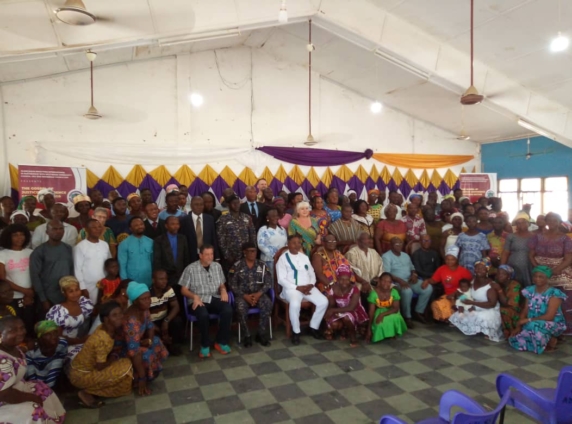
At a one-day conference on child slavery held in Adidome in the Volta Region, organized by Globeserve Ministries International in collaboration with Westwood Community Church, USA, and Wooddalle Church, USA, the General Overseer of Globeserve Ministries, Rev. Samuel A. K. Dunya, delivered a compelling speech addressing the severe issue of human trafficking and child slavery in Ghana.
Rev. Dunya highlighted the global scale of human trafficking, noting that it affects every country, including Ghana, which serves as a source, transit, and destination for men, women, and children subjected to forced labour and sex trafficking.

The trafficking of children within Ghana’s borders remains a critical challenge, particularly in the fishing industry on Lake Volta, where many trafficked children work in hazardous conditions.
According to the Human Trafficking and Child’s Rights Index, 22% of children in Ghana are involved in child labour, with nearly 60% of those trafficked working on Lake Volta.
Lake Volta, one of the world's largest man-made lakes, spans 3,282 square miles and is a major site for child trafficking due to its significant fishing industry. Children trafficked to the lake are forced into hard labour, deprived of education, and subjected to inhumane living conditions.

Rev. Dunya emphasized the four root causes of child trafficking in Ghana:
Poverty: Traffickers exploit vulnerable families, promising education and financial stability for their children, only to force them into labour.
Naivety and Ignorance: Many families are unaware of the dangers of trafficking, often mistaking the relocation of their children to extended family members as a norm rather than exploitation.
Family Separation and Single Parenting: The lack of legal protection in traditional marriages leaves many single mothers vulnerable to traffickers who prey on their desperation.
Weak Law Enforcement: While Ghana has laws against human trafficking, enforcement remains a significant challenge.
The statistics are alarming. According to UNICEF, nearly 28% of children aged 5-17 in Ghana engage in child labour, with 21% working in hazardous conditions.

The Ghana Living Standards Survey (2017) reported that 78% of these children work in the agriculture, forestry, and fishing sectors, highlighting the widespread nature of child exploitation.
Rev. Dunya underscored the moral and ethical implications of child trafficking, pointing out that it goes against the basic principles of justice and love. "We are people of reason, made in the image of our creator to give and receive love," he stated, emphasizing that exploitation for personal gain is the ultimate form of injustice.
He referenced scripture to reinforce his message, citing Micah 6:8, which calls believers to "act justly, love mercy, and walk humbly." He reminded the audience that their faith demands them to fight against injustice, not only through words but also through action. “We cannot turn a blind eye to the suffering of these children,” he said. “If you see something, say something.”

The speech highlighted the specific plight of children in areas like the Tongu Districts and parts of the Central Region, identified as key source points for trafficking, with Afram Plains and Yeji serving as primary destinations.
Many parents, driven by poverty and a lack of understanding, unwittingly hand over their children, believing it will lead to better opportunities, only to find them trapped in dangerous conditions on the lake.
Rev. Dunya stressed the urgent need for collective action, urging community members, local leaders, and international partners to work together to protect vulnerable children. “The future leaders of our nation, the next president, MP, or pastor, could be among these children,” he cautioned. “We must act now to prevent Ghana’s future from being squandered.”
The conference concluded with a call to action, reminding all present that standing up against child trafficking is not just a legal or social duty but a moral imperative. By echoing the words, “If you see something, say something,” Rev. Dunya empowered participants to take a stand and be the voice for the voiceless, advocating for justice, empathy, and love in their communities.
The fight against child slavery and trafficking is a shared responsibility, and the conference in Adidome served as a stark reminder of the ongoing battle to protect the future of Ghana’s children.
Latest Stories
-
Livestream: The Law discusses Supreme Court @150
31 minutes -
MTN Momo staff walk to promote wellness and fitness
47 minutes -
Assafuah: Sedina Attionu’s return from Nevada will test government’s commitment to accountability
52 minutes -
How GRA’s Modified Taxation Scheme is boosting revenue compliance & SMEs competitiveness
1 hour -
Stonebwoy Can Do It: A call to unite behind 2026 BHIM Fest
2 hours -
World Shea Expo returns to Tamale for 2026 edition
2 hours -
Prioritise cocoa sector with better prices, timely payments-Annoh-Dompreh urges NDC
2 hours -
Lands and Mines Watch Ghana endorses Heath Goldfields’ mining capacity
2 hours -
Gbintiri residents protest alleged diversion of 24-hour market project
3 hours -
Justin Bieber headlines Coachella with nostalgia-fuelled set
3 hours -
Ukraine and Russia accuse each other of hundreds of ceasefire violations
3 hours -
Asha Bhosle: The sound of Bollywood dies aged 92
3 hours -
Fire destroys section of 4-bedroom apartment at Tantra Hill
3 hours -
Safe city: Unnoticeable protection
3 hours -
North East Regional Police Commander raises alarm over burning of checkpoints
4 hours