

Audio By Carbonatix
The International Finance Corporation (IFC), a member of the World Bank Group, has convened development partners working across Ghana's environmental, social and governance (ESG) ecosystem to strengthen collaboration, improve coordination and accelerate the adoption of sustainable business practices that support private sector growth and long-term development.
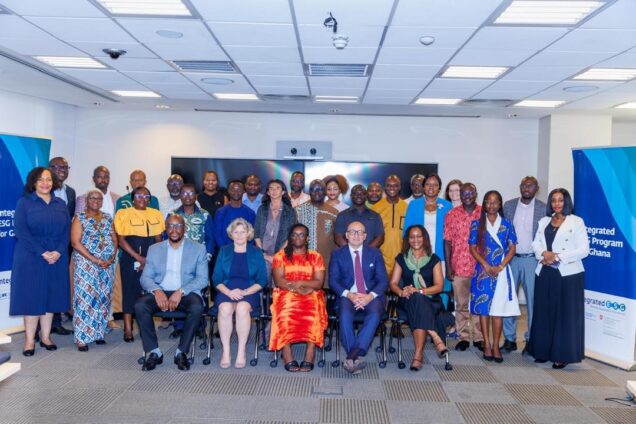
The ESG Roundtable for Development Partners brought together key representatives from the World Bank Group, GIZ, KfW, the United Nations Development Programme (UNDP), the Swiss State Secretariat for Economic Affairs (SECO), and other organisations to exchange insights on ongoing ESG initiatives, identify areas of complementarity and explore opportunities for deeper partnership.
Opening the roundtable, IFC Senior Country Officer for Ghana, Yewande Giwa, stated that ESG considerations are increasingly central to business competitiveness, investment readiness and sustainable economic development. “Environmental, social and governance considerations are becoming ever more important. For IFC, ESG is not a parallel agenda but an integral part of the work that we do and an essential part of private-sector development,” she said.
She noted that IFC's sustainability framework and corporate governance methodology help businesses improve operational performance, strengthen transparency and accountability, engage effectively with communities, manage risks and deliver stronger development outcomes.
According to Ms. Giwa, the roundtable was convened to create a practical platform for development partners to share knowledge, align efforts and enhance the effectiveness of ESG interventions across Ghana. “We all have the same goal, but we are implementing different activities. There is a clear opportunity for coordination, improved visibility of our efforts and stronger collaboration so that together we can make a greater impact,” she added.
Discussions during the roundtable highlighted the growing recognition that environmental, social and governance risks are increasingly business risks that must be integrated into decision-making, risk management and investment strategies.
Damilola Sobo Smith, Environmental and Social Risk Management Specialist at IFC, highlighted the importance of proactively managing ESG risks to strengthen business resilience and long-term performance. “Environmental and social risks do translate into business risks,” she said, citing environmental compliance failures, waste management incidents and operational disruptions among the factors that can affect profitability, reputation and business continuity.
She noted that IFC's Integrated ESG Programme is supporting private sector firms in adopting international environmental and social best practices while working with the Bank of Ghana to strengthen implementation of the Ghana Sustainable Banking Principles. The programme aims to help financial institutions integrate environmental and social risk management into their operations, governance structures and lending practices.
Ms. Smith added that Ghana continues to demonstrate leadership in the region through regulatory reforms and frameworks that promote responsible business conduct and sustainable finance.
The roundtable also put the spotlight on the role of long-standing partnerships in advancing ESG integration across Ghana's financial sector and broader economy.
Magdalena Wüst, Deputy Head of Cooperation at the Swiss Embassy, stressed the importance of a strong and sustainable financial sector in fostering investment, business growth and job creation. She noted that SECO has partnered with IFC in Ghana for more than a decade to strengthen environmental and social risk management practices, support regulatory reforms and build the capacity of financial institutions to implement sustainable banking standards. “Advancing sustainable finance requires collaboration, and partnerships like ours with IFC help strengthen institutions and create lasting impact,” she said
Participants concluded the roundtable with a shared commitment to deepen coordination, leverage complementary expertise and strengthen collective action to address emerging ESG challenges and opportunities in Ghana.
Latest Stories
-
Drug money allegedly finances Ghana’s political parties and real estate – Global Organised Crime Index
3 minutes -
NSA outlines seven steps for successful posting and validation of national service personnel
4 minutes -
GPRTU taskforce clamps down on unapproved fares at Kasoa
5 minutes -
Prime Insight: Making room for meaningful national conversations on Joy Prime
16 minutes -
FABAG commends Ato Forson’s over removal of 20% excise duty on locally manufactured fruit juices
23 minutes -
HIV stigma discourages testing, prevention and treatment in Ghana – Ghana AIDS Commission
26 minutes -
Blocking cocaine probe lends weight to claims of political protection for traffickers – Assin South MP
29 minutes -
NPP Vice Chair race: I may be the youngest, but most experienced – Nana B
31 minutes -
Last UK and US troops leave Iraq as anti-Islamic State mission ends
31 minutes -
Don’t stay home idle, embrace entrepreneurship while awaiting posting – Unemployed nurses urged
43 minutes -
Aayalolo buses not speeding on contra-flow lanes – GAPTE assures commuters
46 minutes -
Effia MP calls for Kurt Okraku’s removal, overhaul of Ghana football structure
47 minutes -
CAS hearing on AFCON final appeal by Senegalese Football Federation set for October 8
47 minutes -
STC fares to go up by up to 8% this week – Deputy MD
49 minutes -
Photos: Accra-Kumasi bypasses get new lease of life as contractors return to site
49 minutes