

Audio By Carbonatix
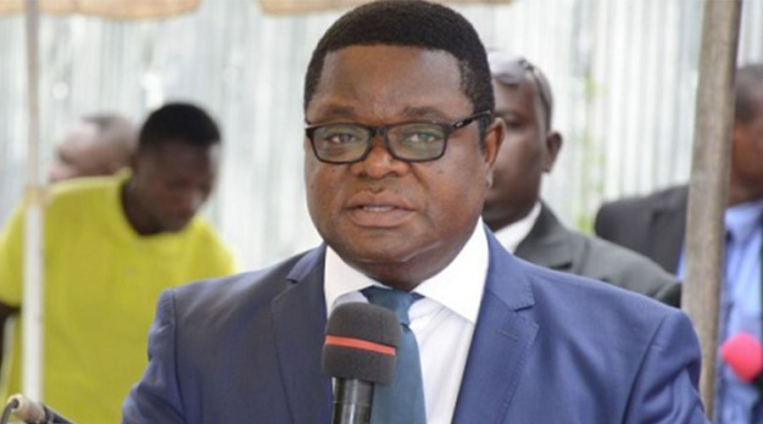
The Director of the Institute of Statistical, Social and Economic Research (ISSER) at the University of Ghana has called on the government to assiduously work to meet the IMF bailout conditions after the approval of Ghana’s $3 billion request.
Speaking on Top Story on Joy FM, Prof Peter Quartey explained that the bailout is not just about receiving funds from the IMF to temporarily restore some stability in the economy but also taking advantage of the programme’s details to raise revenue among others and limit reliance on external sources of funding.
“There are other areas as well that the program is going to support to ensure that we reset the economy. Revenue is one major area and our expenditure, getting value for money in terms of spending and ensuring growth, and stability in all its aspect. I think the programme is quite comprehensive.”
Prof Quartey added that “the real challenge starts when we receive the money. We need to ensure that whatever is stated in the programme we work assiduously to achieve them. Otherwise, come the next review if we are not able to meet them, the release of the tranche might not come.”
He noted that this will affect many aspects of the economy going forward.
On Wednesday, the International Monetary Fund (IMF) finally approved Ghana’s request seeking a $3 billion Balance of Payment support to stabilize the economy.
The Governor of the Bank of Ghana (BoG) Ernest Kwamina Yedu Addison, on Thursday, revealed that the first tranche of $600 million from the $3 Billion credit facility, will hit the bank’s account on Friday, May 19, 2023.
The second tranche of disbursement would be expected by December 2023. This is however subject to meeting some conditions under the programme.
The remaining amount will be disbursed in tranches of $360 million every six months, subject to meeting the IMF programme conditions.
Ghana is expecting about $3 billion spread over three years under the IMF Programme.
Meanwhile, Prof Quartey stated that going through the IMF programme will have some advantages but also some disadvantages as well.
“As we are witnessing now, the exchange rate is appreciating. If it's stable, then you will not see an automatic adjustment. So it is something that will bring some hardships in some areas but benefits as well,” he said.
Prof Quartey added that taxes need to be increased in some areas to help with local revenue mobilisation as the IMF has suggested. This he said would affect many Ghanaians and businesses going forward.
“We are basically doing well when it comes to income tax except that it is only a few people who are overburdened. Where the challenge is, is VAT. If you look at our VAT receipts compared to what is within the sub-region, we are way off the target. That is one area that may be increased and with the effect of increasing VAT, it might bring challenges” he noted.
Latest Stories
-
The 7-foot giant of Ngleshie Amanfro: Seven-foot Ghanaian Ephraim Saawa dreams of joining the national basketball team
31 minutes -
Government promises support for Kumasi Central Market fire victims
37 minutes -
Vibes The Movie: Big Ghun’s Ghanaian film earns five nominations at 2026 REFFA
1 hour -
MamaCare CEO warns unresolved conflicts among health workers could undermine maternal and neonatal care
2 hours -
Health professionals urged to translate medical knowledge into practice to save mothers
2 hours -
Conflicts among care providers linked to maternal, neonatal deaths – Expert
3 hours -
GIS marks 10th TIME conference, champions improved teaching practices
3 hours -
BRICS Or Balance? What Ghana’s bid really means
4 hours -
GPRTU wants full TRAFFITECH-GH implementation to start in 2027
4 hours -
Mahama announces plans to import electric wheelchairs for PWDs
4 hours -
KGL U17 Colts 2026: Western beat Prempeh Elite Academy to set up final final with Greater Accra Region
4 hours -
Late Solanke strike salvages 10-man Spurs draw at Man United
5 hours -
Gender Ministry to monitor welfare of Nana Akua Addo’s children amid domestic violence case
5 hours -
Benedict Okyere Yeboah: Ghana’s football problem goes beyond sacking a coach
5 hours -
GPL 2026/27: Darkwah Wiafe’s winner sees All Blacks beat Kotoko
5 hours