

Audio By Carbonatix
Ghana’s state-owned banks are set to complete their recapitalisation by the end of 2025 under a new IMF-backed financial stability plan.
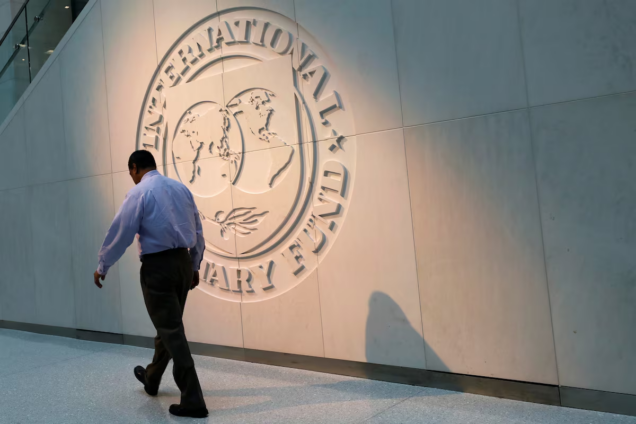
The International Monetary Fund announced the deadline after a staff mission to Ghana from September 29 to October 10, 2025, led by Mission Chief Ruben Atoyan.
The team assessed the country’s performance under the Extended Credit Facility, which provides Ghana with about US$3.2 billion over three years.
In a statement at the end of the mission, Mr Atoyan said, “The authorities have taken strong actions to support financial stability, including by implementing the strategy to restructure and reform state-owned banks, addressing gaps in the crisis management and resolution framework, and implementing a multi-pronged strategy to address non-performing loans.
"The recapitalisation of state-owned banks is expected to be completed by end-2025.”
The IMF said the move is part of broader efforts to stabilise the financial sector following recent economic turbulence.
It follows the government’s commitment to strengthen governance, improve transparency, and enhance the performance of state-owned enterprises in sectors such as gold, cocoa, and energy.
The Fund confirmed it had reached a staff-level agreement with Ghana on the fifth review of the IMF programme.
Once approved by the IMF Executive Board, Ghana will access about $385 million, bringing total disbursements since May 2023 to roughly $2.8 billion.
According to Mr Atoyan, macroeconomic stability is “taking root,” with stronger growth, robust exports, and improving foreign reserves. Inflation has also fallen within the Bank of Ghana’s target band, allowing for gradual monetary easing.
He noted that Ghana’s debt restructuring efforts are “progressing well,” with bilateral agreements concluded with several countries and negotiations continuing with commercial creditors.
On the fiscal front, the IMF reported a primary surplus of 1.1 per cent of GDP for the first eight months of 2025, keeping Ghana on track to meet its 1.5 per cent year-end target.
The government is also working on a 2026 budget consistent with a 1.5 per cent primary surplus under a new Fiscal Responsibility Framework.
The IMF mission also commended progress in the energy sector, citing renegotiated power purchase agreements, improved payments through the Cash Waterfall Mechanism, and quarterly tariff adjustments to reflect costs.
Mr Atoyan added that Ghana’s medium-term outlook remains positive, with growth projected at 4.8 per cent in 2026, supported by continued reforms and fiscal discipline.
The mission met with Finance Minister, Dr Ato Forson; Bank of Ghana Governor, Dr Johnson Asiama, and other senior officials.
The IMF expressed gratitude to the authorities for what it described as “warm hospitality and continued open and constructive engagement.”
Latest Stories
-
The 7-foot giant of Ngleshie Amanfro: Seven-foot Ghanaian Ephraim Saawa dreams of joining the national basketball team
30 minutes -
Government promises support for Kumasi Central Market fire victims
36 minutes -
Vibes The Movie: Big Ghun’s Ghanaian film earns five nominations at 2026 REFFA
1 hour -
MamaCare CEO warns unresolved conflicts among health workers could undermine maternal and neonatal care
2 hours -
Health professionals urged to translate medical knowledge into practice to save mothers
2 hours -
Conflicts among care providers linked to maternal, neonatal deaths – Expert
3 hours -
GIS marks 10th TIME conference, champions improved teaching practices
3 hours -
BRICS Or Balance? What Ghana’s bid really means
4 hours -
GPRTU wants full TRAFFITECH-GH implementation to start in 2027
4 hours -
Mahama announces plans to import electric wheelchairs for PWDs
4 hours -
KGL U17 Colts 2026: Western beat Prempeh Elite Academy to set up final final with Greater Accra Region
4 hours -
Late Solanke strike salvages 10-man Spurs draw at Man United
5 hours -
Gender Ministry to monitor welfare of Nana Akua Addo’s children amid domestic violence case
5 hours -
Benedict Okyere Yeboah: Ghana’s football problem goes beyond sacking a coach
5 hours -
GPL 2026/27: Darkwah Wiafe’s winner sees All Blacks beat Kotoko
5 hours