

Audio By Carbonatix
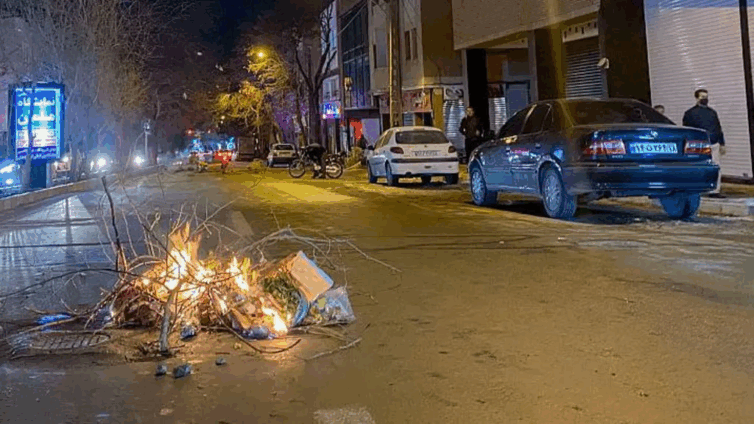
Vast crowds of Iranians have taken to the streets of the capital, Tehran, and several other cities, calling for an end to the Islamic Republic and in many places for the restoration of the monarchy.
Young and old, rich and poor, Iranians across the country and from all walks of life are now demonstrating their fury at the clerical establishment which has ruled them for close to half a century.
One young woman in Tehran told the BBC she was protesting because her dreams had been "stolen" and she wanted the regime to know that "we still have a voice to shout, a fist to punch them in the face".
Another spoke of the despair and hopelessness that is driving the protests.
"We're living in limbo," she said. "I feel like I'm hanging in the air with neither wings to migrate nor hope to pursue my goals here. Life here has become unbearable."
Day after day, since late December, protests in Iran have been spreading and building momentum, fuelled by deep-seated economic and political frustration.
"People are becoming bolder now," 29-year old Sina told the BBC on Thursday by text message from the city of Karaj, west of the capital Tehran. "I went to buy some groceries and people were speaking out loud against the regime in the daylight! I was thinking that the protests will stop but it hasn't lost its momentum."
It is hard to know the full picture of what is taking place because independent media are not allowed to operate freely in Iran, many people are fearful to speak publicly, and now the internet has been severely restricted. The BBC spoke to people before the near blackout.
But there is no disguising the extent of discontent, and the size of some of the protests filmed and posted on social media.
Iranians have a multitude of grievances against their government – from the absence of political freedoms to corruption and the state of the economy which has resulted in crippling price rises.
The last major protests in Iran were sparked, in 2022, by the death in custody of a young woman, Mahsa Amini, who was accused of not wearing the compulsory hijab properly.
This time it was a strike by shopkeepers at Tehran's historic grand bazaar on 28 December over the plummeting value of the Iranian currency which lit the match of a new crisis of legitimacy for the Islamic Republic.
Protests at universities followed. The institutions were swiftly ordered shut by the authorities, ostensibly because of cold weather. But by then, the spark had ignited a wider fire in the country, with clashes in many small towns and cities, particularly in the west of Iran.
Some of the chants heard on the streets over the past few days have been familiar. "Death to the Dictator" is a reference to the 86-year old Supreme Leader Ayatollah Ali Khamenei. "Azadi, Azadi", or "Freedom, Freedom" is a common refrain.
Another popular chant: "This homeland won't be a homeland until the mullahs are buried."
New to these latest protests, however, is the chant: "Pahlavi will return," a reference to Reza Pahlavi, the son of the late Shah of Iran who was overthrown in 1979. It was he who called for people to turn out on the streets on Thursday night.
The protests of the last few days have seen increasing chants for the return of the monarchy.
"Personally I think he's the only way out of this," 26-year old Sara from Tehran told the BBC.
Other Iranians say that they see expressions of support for the monarchy as a sign of desperation to be rid of the current regime, and a lack of alternatives.
"I'm not the biggest fan of Reza Pahlavi. But to be honest my personal opinion is not important now," 27-year old Maryam from Tehran told the BBC. "Being and staying united is more important. It's a different vibe from the Woman Life Freedom protests [of 2022]."
She says they were characterised by grief for Mahsa Amini.
"But people seem more angry and determined now."
Another woman, in the western town of Ilam near the border with Iraq, described people raiding a supermarket linked to the regime, and throwing the produce away to show their disgust at the authorities.
She told the BBC she even knows young people from families affiliated with the regime who have been taking part in protests: "My friend and her three sisters, whose father is a well-known figure in the intelligence services, are joining without their father knowing."
This is an extraordinary moment in the country. And no one knows exactly where it will lead.
Latest Stories
-
Stronger GTA-private sector partnership needed to grow tourism – GHATOF
9 minutes -
Amazon eyes Ghana for broadband expansion after talks with Mahama
53 minutes -
National Investment Quiz 2026: Six schools qualify for quarter-finals
1 hour -
‘Do not let Russia pay for its madness with lives of your people’ – Zelensky to Ghana, 46 other countries
1 hour -
6,079 promotion cases fully processed and paid – CAGD says amid nationwide teachers’ strike
2 hours -
Teacher unions to meet government Monday over nationwide strike
2 hours -
Photo story: Republic Bank-JoyNews Habitat Fair clinic wraps up after three days of housing solutions, expert engagement
2 hours -
National Peace Council urges investment in youth to sustain Ghana’s peace
2 hours -
Afenyo-Markin urges youth to speak up against injustice
3 hours -
CAF annuls Edo Queens victory, orders WAFU B final to resume from extra time
3 hours -
Interior Minister urges traditional authorities to enforce anti-bushfire bye-laws
3 hours -
3rd Republic Bank-JoyNews Habitat Fair Clinic ends on a high note after three days of strong patronage
3 hours -
Ten climbers missing after avalanche hits Himalayan base camp
4 hours -
NPP had more permanent fuel relief measures than current GH¢2 diesel cut – Amin Adam
4 hours -
Photos from the 3rd Republic Bank-JoyNews Habitat Fair Clinic
4 hours