

Audio By Carbonatix
For a brief and memorable moment, Ghana discovered that global attention travels faster than paperwork—and that satire does not require parliamentary approval.
It began innocently enough. A popular American streamer, IShowSpeed, arrived in Ghana, camera in hand, curiosity fully charged. Social media did what it does best: amplified the visit, replayed the laughter, and exported Ghanaian energy to millions of screens abroad. The nation smiled. Tourism agencies relaxed their shoulders. This was good publicity—organic, youthful, and loud.
Then Ghana did something remarkable.
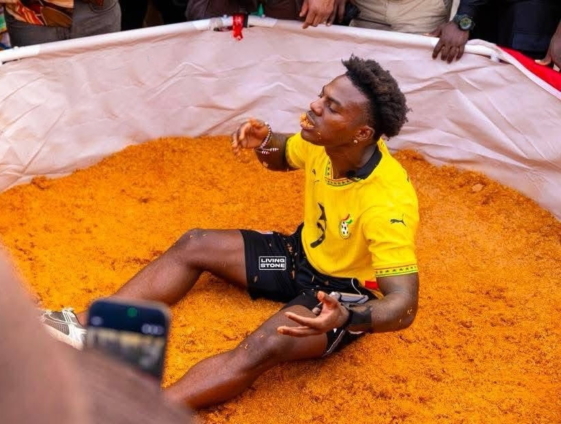
Somewhere between livestreams and landmarks, the visitor was reportedly issued a Ghanaian passport. No queue footage surfaced. No appointment slip leaked. No citizen was spotted sighing behind a barricade. The document simply appeared, efficient and symbolic, like a proverb that arrives before its explanation.
For some, the gesture was pure Ghanaian warmth: when a guest enters your house, you offer him a stool before asking his name. For others, it raised quiet but persistent questions. In a country where citizens often negotiate with time, systems, and fate to renew documents, the speed of the gesture felt… educational. It taught us that urgency, like rain, sometimes falls where clouds gather attention.
But the passport was only the prologue.
Soon after, the new Ghanaian-by-document committed what many would consider a far more delicate act. In the spirit of casual honesty—or youthful bravery—he reportedly declared a preference for Nigerian jollof rice over the Ghanaian version. It was said lightly. It landed heavily.
Now, West Africans know this truth: borders may be colonial, but jollof is ancestral. You may joke about many things, but rice carries memory. Suddenly, the public conversation shifted from citizenship to seasoning. The passport became quiet. The jollof spoke loudly.
The reactions followed a familiar pattern. Some laughed. Some sighed. Some began drafting imaginary amendments to the Immigration Act. How, they asked, does one reconcile official belonging with culinary dissent? Is citizenship a matter of paperwork, participation, or palate? And should taste buds be granted diplomatic immunity?
Social media obliged by turning into a national symposium. WhatsApp groups summoned elders. Facebook produced philosophers. X (formerly Twitter) appointed prosecutors. Nigeria, ever attentive to jollof affairs, observed confidently from the sidelines, amused by the spectacle.
Yet beneath the humour lay an instructive moment. The episode revealed how symbols now operate in a digital age. A passport is no longer just a document; it is a message. A food preference is no longer casual; it is interpretive. Attention accelerates meaning, and gestures—however well-intended—are read with magnifying glasses.
In the end, this was never truly about a streamer, a passport, or a plate of rice. It was about how modern societies negotiate belonging under the glare of virality; how warmth, pride, and symbolism must sometimes share a room with reflection.
The visitor will leave. The jokes will fade. The passport will remain laminated. And the jollof debate—faithful, stubborn, and undefeated—will continue to simmer.
For in this part of the world, identity is layered, hospitality is generous, and rice, once cooked, is never neutral.
Disclaimer
This article is a work of satire. Any resemblance to real passports, real jollof rice, real immigration procedures, or real emotional reactions is entirely intentional.
No passports were revoked in the writing of this piece.
No jollof was harmed—only debated.
Readers are advised to chew calmly and laugh responsibly.
About the Author
Jimmy Aglah writes from the Republic of Uncommon Sense, where public affairs are observed with humour, irony, and a deep affection for Ghanaian life. A media executive and satirist, he uses wit and anecdote to explore culture, politics, and everyday contradictions—believing firmly that laughter remains one of society’s most honest mirrors.
Latest Stories
-
Kojo Bamba, Henry Nana Boakye and Nana Akomea elected NPP Vice Chairmen
20 minutes -
From Delta Force to NPP First Vice Chairman – Kojo Bamba’s political journey
24 minutes -
Police restore calm at Larteh following Odwira festival disturbance
1 hour -
‘All the camps will dissolve’ – Bawumia demands one NPP for 2028
1 hour -
There is no time to waste – Bawumia orders NPP to begin 2028 work
1 hour -
Sarkodie visits MobileMoney Fintech LTD
1 hour -
John Boadu unveils new NPP strategy to win back youth and modernise party
2 hours -
Hawa Koomson elected NPP National Women’s Organiser
2 hours -
John Boadu begins NPP rebuild from grassroots ahead of 2028 election
2 hours -
Titus Glover wins NPP National Organiser race on second attempt
2 hours -
Winning 2028 election won’t be easy; we must work harder – Bawumia
2 hours -
You’ll be part of 2028 campaign; there’s enough work for all of us – Bawumia to NPP aspirants
2 hours -
John Boadu moves to unite NPP after heated leadership contest
2 hours -
Today is not a day of victory but a day of responsibility and great unity – John Boadu
2 hours -
Let us choose unity over division – John Boadu to NPP
2 hours