

Audio By Carbonatix
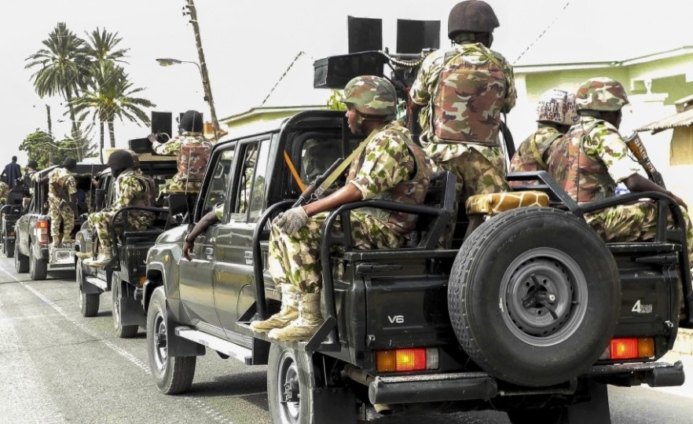
Militants linked to al Qaeda and Islamic State are rapidly increasing their attacks on the borderlands between Niger, Benin and Nigeria, turning remote transit corridors into active conflict zones, according to a crisis monitoring group.
Violent incidents involving Islamist groups in the tri‑border area rose 90% between 2024 and 2025 and deaths more than doubled to over 1,000 as attacks intensified, the Armed Conflict Location & Event Data (ACLED) project said in a report published on Thursday.
The findings underscore the accelerating spread of jihadist groups in West Africa, where governments and foreign militaries have struggled for more than a decade to contain their advance.
The report said fighters aligned with al Qaeda and Islamic State have deepened their presence in Benin’s Alibori and Borgou departments, Niger’s Dosso region, and Nigeria’s Sokoto, Kebbi, Niger and Kwara states. Their operations now reflect "continued spread, growing lethality, and rising risks to civilians," it added.
The Nigerian military and Niger and Benin governments did not respond to requests for comment.
MILITANTS EXPAND IN NORTHWEST NIGERIA
Nigeria has battled Islamist insurgents for over 15 years - mainly Boko Haram and Islamic State West Africa Province (ISWAP)in the northeast. But al Qaeda‑ and Islamic State‑affiliated cells have become more active in the northwest, where vast forests and weak state presence have created favourable terrain.
West Africa hosts a patchwork of jihadist factions, many operating under the umbrellas of al Qaeda‑linked Jama'at Nusrat al‑Islam wal‑Muslimin (JNIM) or Islamic State in the Sahel Province (ISSP).
Their expansion has fuelled political instability across the region. Militaries in Mali, Burkina Faso and Niger have seized power since 2020, citing the failure of elected governments to stem the violence. Soldiers behind a failed coup attempt in Benin in December also blamed insecurity.
The U.S. carried out air strikes in northwestern Nigeria in December and has begun deploying a small number of troops to train Nigerian forces confronting militants.
Regional coordination has weakened in recent years as Niger, Burkina Faso and Mali—now governed by military juntas—have withdrawn from regional blocs, hampering joint security operations.
ACLED said jihadist groups have stepped up communication about their activities in the tri‑border zone, which could signal competition between rival factions. Such "outbidding," the report said, is likely to drive further escalation.
Sparse governance and porous borders have long made frontier regions across the Sahel and coastal West Africa targets for Islamist groups seeking to evade security forces, resupply fighters and establish control over communities.
Latest Stories
-
At least 30 feared dead in crush at Haitian tourist site
59 minutes -
Four arrested over murder of Scottish businessman in Kenya
1 hour -
New Mainoo deal closer, says Man Utd boss Carrick
1 hour -
Sinner beats Alcaraz to return to world top spot
1 hour -
An inappropriate joke nearly ended his career. Now he’s back with more humour
2 hours -
GPL 2025/26: Dreams FC stage stunning comeback to hammer Eleven Wonders
3 hours -
Livestream: The Probe examines Kumasi’s looming water crisis
3 hours -
MTN Ghana gears up to lead Africa’s AI revolution
3 hours -
Philanthropist Alhaji FuZak donates Da’wah bus to Ambariya Sunni community
3 hours -
GUTA calls for suspension of Publican AI system over trade disruptions
3 hours -
TTAG raises alarm over proposed recruitment of 7,000 teachers, demands national posting roadmap
4 hours -
Civilians feared killed after reports of air strike on Nigerian market
4 hours -
Bishop Simon Kofi Appiah installed as new Jasikan Diocese Bishop
4 hours -
Trump’s Strait of Hormuz blockade threat raises risks and leaves predicaments unchanged
4 hours -
US Court backs extradition of former MASLOC CEO Sedina Tamakloe-Attionu to Ghana
4 hours