

Audio By Carbonatix
Ghana has widened access to medicines in recent years, but everyday obstacles still blunt results for patients prices can be high, supply lines leak, and not every dose reaches people when they need it. Studies of Ghana’s medicine reforms show progress alongside persistent gaps in pricing, financing, and supply chains, especially outside major cities [1, 2, 3].
There is also a quiet threat: poor-quality or fake medicines slipping into the system. The World Health Organization has warned for years that substandard and falsified drugs often antibiotics and antimalarials remain a serious risk across low and middle-income settings, including parts of Africa [4, 5, 6].
Amid these pressures, a new set of tools is moving from lab talk to practical help: artificial intelligence (AI) for drug delivery. This isn’t only about inventing new drugs. The evidence shows AI can help with three very down to earth goals: make dosage forms that work better in real life, keep quality and supply on track, and support people to stick with treatment.
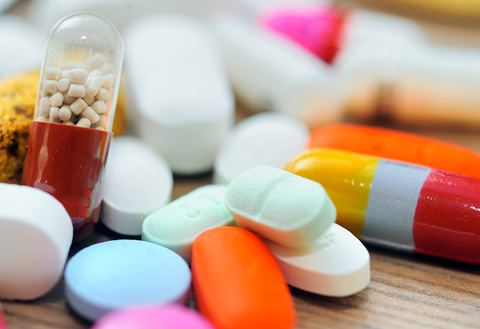
First, AI can help design tablets and capsules that release medicine at the right speed in the body cutting side effects and waste while improving effectiveness. Recent reviews describe how machine learning can speed up choosing ingredients, particle sizes, and release profiles so medicines are easier to take and more reliable in everyday conditions [7, 8, 9].
A related area is 3D printing of “personalized” pills, including combined “polypills” for people who currently juggle several medications a day. While not a cure-all, the literature points to steady progress toward simpler, patient-friendly dosing that can be made closer to the point of care [10, 11].
Second, AI can strengthen quality and supply. The same pattern-spotting methods that flag fraud in finance can flag anomalies in medicine orders, shipping records, or reported side effects. When paired with barcodes and serialization, these tools can help regulators and large buyers catch suspect batches early matching WHO’s “prevent, detect, respond” approach to substandard and falsified products [4, 5].
Third, AI can make adherence support smarter without expensive gadgets. In northern Ghana, a randomized study found that simple text reminders helped people finish antimalarial treatment [12, 13, 14]. AI can build on that low cost base by tailoring message timing and content to those most at risk of stopping early, and by connecting alerts to community health workers when extra support is needed.
What this looks like in practice for Ghana’s top health burdens:
• Malaria: pair heat-stable, affordable formulations with text-message support that’s tuned to the local context. Measure what matters in clinics: symptoms, side effects, and treatment completion [10, 12, 13, 14].
• HIV: adapt the same playbook simpler dosing where possible, targeted reminders for those at risk of missing doses, and fast feedback loops into care teams [7, 8, 9].
• Chronic conditions and cancer care: use AI-aided formulation and, where feasible, 3D-printed personalized doses to reduce pill burden and improve consistency of treatment [10, 11].
A practical playbook emerging from the literature looks like this: aim AI at Ghana’s biggest needs first; build the “data pipes” so tools can learn from routine care; tighten quality control across the supply chain with serialization plus anomaly detection; and work in coalitions so universities, the health service, regulators, and local manufacturers move in the same direction and keep innovations affordable under national insurance [1, 2, 3, 4, 5, 7, 8, 10].
The bottom line from the research is simple: smarter delivery makes existing medicines more effective. AI helps design dosage forms that fit everyday life, supports people to stay on treatment, and strengthens the guardrails that keep bad products out of the system. Combined with Ghana’s ongoing reforms, this is a realistic path to care that is more effective, safer, and more affordable from the biggest city hospital to the most remote clinic.
References
- Koduah A, et al. “Implementation of Medicines Pricing Policies in Ghana.” International Journal of Health Policy and Management. 2023. https://pubmed.ncbi.nlm.nih.gov/38618785/
- Koduah A, et al. “How and why pharmaceutical reforms contribute to universal health coverage in Ghana.” Frontiers in Public Health. 2023. https://www.frontiersin.org/articles/10.3389/fpubh.2023.1163342/full
- Koduah A, et al. “Implementation of medicines pricing policies in sub-Saharan Africa: a systematic review.” Systematic Reviews. 2022. https://systematicreviewsjournal.biomedcentral.com/articles/10.1186/s13643-022-02114-z
- World Health Organization. “Substandard and falsified medical products” (Fact sheet). Updated 2024. https://www.who.int/news-room/fact-sheets/detail/substandard-and-falsified-medical-products
- World Health Organization. “1 in 10 medical products in developing countries is substandard or falsified.” 2017. https://www.who.int/news/item/28-11-2017-1-in-10-medical-products-in-developing-countries-is-substandard-or-falsified
- Mekonnen BA, et al. “Prevalence of substandard, falsified, unlicensed and unregistered medicines in Africa: a systematic review.” 2024. https://pmc.ncbi.nlm.nih.gov/articles/PMC11251437/
- Vora LK, et al. “Artificial Intelligence in Pharmaceutical Technology and Drug Delivery.” Pharmaceutics. 2023. https://pmc.ncbi.nlm.nih.gov/articles/PMC10385763/
- Gholap AD, et al. “Advances in artificial intelligence for drug delivery and development.” Computers in Biology and Medicine. 2024. https://www.sciencedirect.com/science/article/pii/S001048252400787X
- Serrano DR, et al. “Artificial Intelligence (AI) Applications in Drug Discovery and Development.” Pharmaceutics. 2024. https://pmc.ncbi.nlm.nih.gov/articles/PMC11510778/
- Yasin H, et al. “Fabrication of Polypill Pharmaceutical Dosage Forms by Fused Deposition Modelling 3D Printing.” 2024. https://pmc.ncbi.nlm.nih.gov/articles/PMC11510916/
- Kapoor DU, et al. “Innovative applications of 3D printing in personalized drug delivery.” iScience. 2025. https://www.cell.com/iscience/fulltext/S2589-0042(25)01766-3
- Raifman JRG, et al. “The Impact of Text Message Reminders on Adherence to Antimalarial Treatment in Northern Ghana: A Randomized Trial.” PLOS ONE. 2014. https://journals.plos.org/plosone/article?id=10.1371/journal.pone.0109032
- ClinicalTrials.gov. NCT01722734. “Text Reminders to Increase Adherence to ACT Treatment in Northern Ghana.” https://clinicaltrials.gov/study/NCT01722734
- Harvard Dataverse. “The Impact of Text Message Reminders on Adherence to Antimalarial Treatment in Northern Ghana: A Randomized Trial” (dataset). https://dataverse.harvard.edu/dataset.xhtml?persistentId=doi:10.7910/DVN/M4LY6C
Latest Stories
-
Sam George cautions ministers against reading unverified AI-generated speeches
34 seconds -
Ghanaian entrepreneur Mary Nyamekye Asamoah wins Africa Travel 100 award
4 minutes -
Obuasi SHTS abuse: Sanction all officials who failed to act – Moving Masculinity
9 minutes -
Lucy Agyepong honoured for excellence in engineering education at maiden GAAS Women’s Awards
11 minutes -
Harriet Afia Konadu Asiedu
18 minutes -
AFCON 2027: Sports Minister ‘convinced’ Black Stars will qualify despite losing opening two games
20 minutes -
CUTS welcomes VAT collection on cross-border digital services, urges fair treatment of Distance Learning students on overseas programmes
24 minutes -
Leave the Chiefs and fix the Galamsey Problem: Dr Solomon Owusu Advises President Mahama
27 minutes -
Pay attention to teachers and give them what is due – Ho District GNAT tells government
30 minutes -
Authorities knew of abuse allegations against Obuasi headmaster months before suspension – JoyNews investigation
35 minutes -
US teenager appears in court over alleged Hindu temple shooting plot
37 minutes -
Academic City donates paediatric rehabilitation staircase to Ga East Hospital
41 minutes -
Services drive 7.4% expansion in Ghana’s economic activity
53 minutes -
‘I don’t make music for awards, I make it to connect people’ – Rocky Dawuni
1 hour -
Farmer jailed for three months over assault on wife in viral video
1 hour