

Audio By Carbonatix
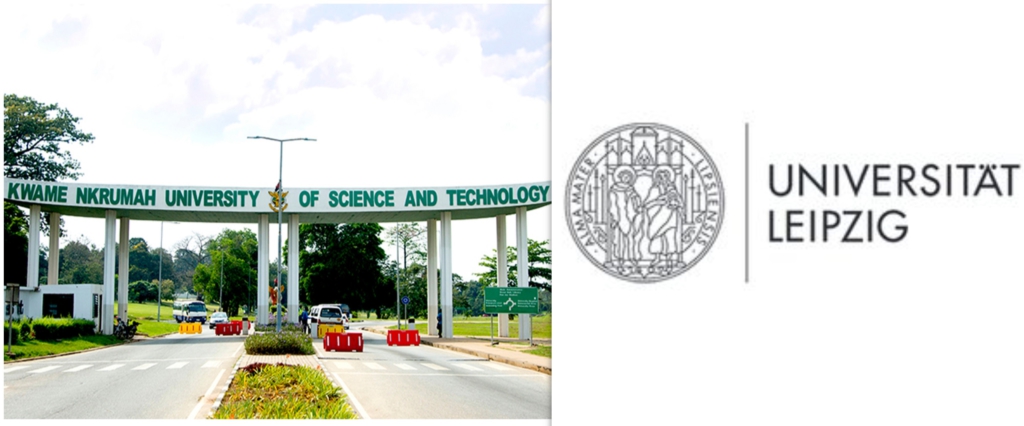
The Kwame Nkrumah University of Science and Technology (KNUST) has partnered the University of Leipzig in Germany to implement an Africa Centre for Career Enhancement and Skills Support (ACCESS) program.
The initiative is being spearheaded through the International SEPT Program, of the University of Leipzig in Germany.
Ghana through KNUST is among six other countries benefiting from the five years ACCESS program across Africa which ends in 2024 with a funding component of €3.8 million from DAAD with the support of BMZ of Germany.
ACCESS is organized as a predominantly virtual network (because of COVID-19), the partners plan to bundle existing cooperation projects between African partner universities and Leipzig University in order to create a practice-oriented collaboration interface for African.
The project is expected to integrate all its partners to foster programs and activities that will enhance the employability of university graduates.
The initiative is meant to empower the university graduates with the skills-set
ACCESS is a follow-up to earlier projects where KNUST successfully partnered the University of LEIPZIG to implement over the years. Some of the successful partnership include the Intelligent for Innovation (iN4iN) which span 2012 to 2016 and African German Entrepreneurship Academy (AGEA) which lasted 2017 to 2020.
The AGEA project provided capacity building for eighteen tertiary institutions in Ghana to promote entrepreneurship and establishment of Business Incubators.
All these were aimed at enhancing graduate employability and SME capacity building. The AGEA Project with its wide network in Ghana is being built upon with ACCESS.
Under ACCESS, KNUST is hoping to introduce new teaching methods in consultation with industry by integrating job-relevant, hands-on innovative learning approaches into the curriculum to enhance graduate employability.
Meanwhile, the Association of Ghana Industries (AGI) has already shown interest in supporting the project.
KNUST with its local network of Higher Education Institutions, together with the other African partner universities and Leipzig University, hopes to draw a strong network to successfully implement the ACCESS goals.
Speaking to the Global Director, Prof. Dr. Utz Dornberger, he expressed the view that with the successful implementation of the goals of ACCESS, graduate unemployment and underemployment will be reduced.
Ghana Country Coordinator, Ralph Nyadu-Addo, indicated that in 2020, two (2) PhD scholarships were awarded for two Ghanaians in Germany. Again four (4) Post Doctorate and six (6) Masters short-term research scholarships were provided.
Meanwhile, other equipment and audio-visual gadgets have been purchased to enhance the smooth delivery of the project.
Latest Stories
-
Republic Bank JoyNews Habitat Fair to connect prospective homeowners with exhibitors in Ho from October 16 to 18
10 minutes -
Obaasima Summit: ‘AI is not a spiritual attack’ — Rev. Dr. Ofori-Boateng urges young women to embrace technology
19 minutes -
GHS to distribute 80,000 pairs of locally-made protective footwear to health workers
26 minutes -
GoldBod boosts local jobs as 90% of gold undergoes refining in Ghana – Sammy Gyamfi
29 minutes -
The search for the politically unblemished: Are we asking the impossible of public appointees?
30 minutes -
Ghana seeks climate finance access for debt-restructuring countries
40 minutes -
Afenyo-Markin urges stronger media scrutiny of public institutions
41 minutes -
GoldBod recovers GH¢38.7m in legacy PMMC debts, targets remaining arrears
43 minutes -
62 out of every 100 commercial meters inspected missing from Ghana Water database – MD
43 minutes -
GoldBod gets BoG authorisation to sell forex, Sammy Gyamfi tells PAC
46 minutes -
Ghana Water revenue mobilisation below 50% of potential – MD
53 minutes -
Ghana’s democracy must accommodate dissent and constructive criticism – Haruna Iddrisu
53 minutes -
Fact check: Trump posts fake quote of Denzel Washington supposedly praising him
54 minutes -
UPSA students lament high fees at private hostels, call for government intervention
1 hour -
We will upgrade Ghana’s credit ratings if government maintains fiscal discipline, policy effectiveness – Moody’s
1 hour