

Audio By Carbonatix
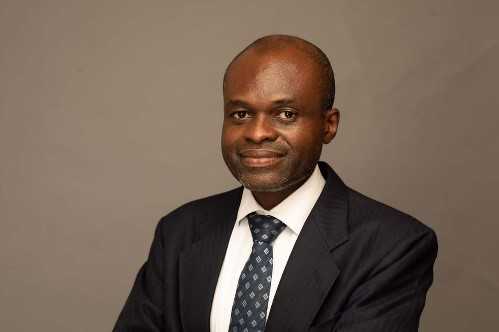
Private legal practitioner Martin Kpebu has described a recent High Court ruling involving the Office of the Special Prosecutor (OSP) as a positive development, while warning that it exposes deeper concerns about expectations placed on the leadership of anti-corruption institutions in Ghana.
His comments follow a ruling by the Accra High Court, which held that the OSP does not have independent authority to prosecute criminal cases and must refer such matters to the Attorney-General’s Department. The decision has triggered national debate over the scope and effectiveness of the anti-corruption body.
Speaking on JoyNews, Mr Kpebu said the ruling, while not final, reflects an important legal direction that will ultimately be subject to interpretation by the Supreme Court.
“So for me, because of what I’ve heard about the undercurrent, the decision is sweet even though it’s not the final position. It’s the Supreme Court that will finally decide,” he said.
He added that the final interpretation could also take into account broader policy implications, particularly in relation to Ghana’s anti-corruption framework.
Mr Kpebu, however, stressed that while he supports the existence of the OSP, public expectations about the office and its leadership may have been unrealistic from the outset.
“We all support the office… but where we got it wrong is that we thought that by creating that office automatically, everybody who comes to head that office will be an angel. That is where our problem is,” he said.
He argued that the assumption that any appointee to the office would act without bias or conflict of interest has proven problematic in practice, pointing to broader concerns about governance and institutional design.
According to him, the idea that the mere establishment of the OSP would automatically guarantee strong and independent anti-corruption enforcement was flawed.
“We thought by seeing Office of the Special Prosecutor, any person we choose… even when there are glaring conflicts of interest… we just think that once he enters the office, he can face them,” he noted.
The High Court ruling has effectively placed uncertainty over ongoing prosecutions initiated by the OSP, with legal observers indicating that its cases may require further clarification on whether they can proceed without the Attorney-General’s involvement.
As the matter moves toward a potential Supreme Court determination, the debate over the mandate, independence, and leadership expectations of the OSP continues to intensify within Ghana’s legal and governance circles.
Latest Stories
-
Five-member committee to search for new Black Stars coach after Sports Ministry-GFA meeting
21 minutes -
Pinktober: Breast cancer survival exceeds 90% when detected early – Breast Society of Ghana
28 minutes -
TCDA to adopt Upper West’s MATCO mango farm as northern prototype, issues warning against felling shea trees
39 minutes -
Fear delegates tag: Afoko touts genuineness among delegates ahead of NPP delegates conference
41 minutes -
John Boadu: The leader our party needs at this time – Amb. Edward Akwasi Boateng
47 minutes -
Baffour Awuah: EOCO effected an arrest, detained MP after hours of waiting, questioning – Afenyo-Markin
1 hour -
EOCO court warrant authorised search of Baffour Awuah’s law firm, not residence – Afenyo-Markin
1 hour -
NPP delegates conference: 3,000 to 4,000 police personnel deployed for security in Kumasi – Anthony Karbo
1 hour -
KGL Foundation commits $200,000 to support juvenile football for the next two years
2 hours -
UNDP invites Mahama Ayariga to Northern Peace Conference in Tamale
2 hours -
Afoko can give NPP ‘new identity’ ahead of 2028 to overcome NDC – Political scientist, Dr Amakye-Boateng
2 hours -
2 injured amid gunshots during raid at Nawara Mining office at Nsuapemso
2 hours -
St Augustine’s College retains 2026 National Investment Quiz title
2 hours -
KNUST Nursing and Midwifery School staff recognised at 2026 Health Ministry Excellence Awards
2 hours -
JoyNews’ Esther Esi Nkrumah selected for UK Media Excellence for Emerging Technology Fellowship
2 hours