

Audio By Carbonatix
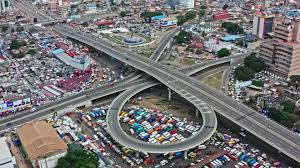
It is one of Accra’s busiest and most recognisable landmarks. But for many who pass through it daily, Kwame Nkrumah Circle has also become a symbol of fear, vulnerability, and criminal impunity.
From stolen phones and wallets to scams involving fake electronic goods, the area, once intended as a symbol of modern transport infrastructure and economic centre, has now become a hotspot for criminal activity.
And it’s not just anecdotal; countless Ghanaians have shared similar stories of being duped, robbed, or harassed at Circle.
What is particularly alarming is that many of these crimes are committed by young people—teenagers and youth in their early twenties—some of whom have turned to theft, fraud, and extortion as a means of survival.
Without intervention, an entire generation is at risk of being lost to a life of petty and organised crime.
I, too, have not been spared.
Back in 2014, I visited Circle with a friend to purchase a phone. After what seemed like a successful transaction, the seller asked to remove his SIM card from the device—an innocent request, I thought. But the moment I handed the phone back, he bolted, disappearing into the crowd with both phone and cash in hand. We were left stunned.
Years later, on Wednesday, 30th April 2025, I found myself once again at Circle. I had alighted from a trotro, Accra’s popular public transport system, at the Fire Service area and began my usual walk towards the Lapaz stretch.
The area was already bustling with early-morning commuters and trotro conductors loudly calling out destinations.
This route is my daily commute to JoyNews at Kokomlemle, and I know the risks. I always hold my bag carefully, especially when navigating the crowd.
Yet on this day, despite my caution, I felt a familiar pang of loss. My bag had been unzipped. My Apple phone and a sum of money were gone. I was stunned, again.
What made it more disheartening was the fact that I had been walking right beside a uniformed police officer. Perhaps that gave me a false sense of security.
Ironically, she held her bag at her side, not on her back, which is the usual way your bag can be safe while walking through circle. Who knows? Perhaps she, too, was unaware she could be a target.
My frustration goes far beyond the stolen items. As a journalist, I carry sensitive information, contacts, and documents on my devices. My biggest concern now is the possibility of my privacy being violated and confidential data falling into the wrong hands.
But I am not alone. I am one of thousands of Ghanaians who use Circle each day. It is a vital transport and commercial hub, pulsing with life, opportunity, and chaos.
The economic significance of this location cannot be overstated. And yet, authorities seem to have abandoned it to criminals who operate with disturbing confidence.
Read also: Kwame Nkrumah Circle: A memorial of honour or dishonour?
What can be done?
Circle does not need to be a crime haven. With political will and coordinated action, it can be transformed into a safer, more functional space for all. Here are a few policy and enforcement suggestions:
- Increased police visibility: There must be a strong and constant presence of uniformed officers at key points. In addition, plain-clothes national security operatives should be deployed to monitor criminal behaviour discreetly and intervene where necessary.
- Decongestion and youth empowerment: Many of the individuals perpetrating crimes at Circle are young and economically disenfranchised. Government programmes like Adwumawura should be expanded to provide skills training, startup support, and apprenticeships. Investing in youth empowerment is not just a social responsibility—it is a security necessity.
- Remove illegal structures: The interchange is not a residential zone. Authorities should dismantle all unauthorised structures that have been turned into makeshift homes or criminal hideouts. The space should serve only its intended commercial and transit purposes.
- Targeted crackdowns on hideouts: Frequent police operations targeting known ghettos and gang-controlled zones should be instituted. Law enforcement must work to identify criminal ringleaders—often young men leading organised theft rings—and dismantle their networks.
- Mobile police units: Establish a rapid response unit stationed within the Circle area to attend to emergencies immediately. This would restore public confidence and reduce the window of criminal activity.
- Community partnerships: Collaboration between local traders, transport operators, and law enforcement could give rise to a community watch network. With proper training and support, locals could act as the first line of alert for suspicious behaviour.
- Better lighting and sanitation: Criminals thrive in darkness and disorder. Improving lighting in poorly lit areas, particularly at night, and implementing regular clean-up exercises would enhance security and make the environment more welcoming.
A call to action
Kwame Nkrumah Circle is more than just a busy hub, it is the beating heart of Accra’s public transport system and a hub of economic activity for thousands.
To allow it to fall deeper into lawlessness is to jeopardise the safety, dignity, and livelihoods of the very citizens who depend on it.
What’s worse is that the young people committing these crimes are not beyond redemption. With targeted support, they could become the very entrepreneurs, artisans, and leaders who will help transform the city.
The time for urgent action is now. Authorities must recognise that crime at Circle is not just a law enforcement issue; I don't want to say it is a governance failure, maybe government officials are not aware of this.
It demands immediate, strategic, and sustained intervention; the people of Accra deserve better. And so does Circle.
Latest Stories
-
Ablakwa says Ghana could evacuate more citizens from South Africa if the situation worsens
28 minutes -
Violence against girls must be tackled through individual responsibility – Gender advocate
32 minutes -
Ghana’s BRICS bid must be guided by national interest – International Affairs Analyst
45 minutes -
Journalists look back on a decade of breast cancer reporting in Ghana
1 hour -
President Mahama ends Resetting Ghana tour of Ahafo Region
3 hours -
African negotiators seek delivery of climate commitments at COP31
3 hours -
BoG develops AI rules for financial sector
3 hours -
‘Big Push’: Government assures contractors of prompt payments
3 hours -
Court fines miner for breaking into gold buying shop
4 hours -
Tarkwa court jails labourer for three years over GH¢123,000 theft
4 hours -
GAEC must retain nuclear scientists for Ghana’s nuclear ambitions – Minister
5 hours -
Man reportedly mistaken for game and shot by hunter dead in forest
5 hours -
19-year-old mason jailed 15 years for defiling seven-year-old pupil
5 hours -
Ghana’s banking sector assets rise 20.47% to GH¢500.2bn – BoG Governor
5 hours -
22 injured as Sprinter bus overturns at Sege after tyre burst
5 hours