

Audio By Carbonatix
I recently listened to Dr Mensah Otabil, one of Ghana’s most eloquent preachers, speak about the debate on the use of Ghanaian languages in our classrooms. His argument, though intellectually stimulating, was deeply troubling. He suggested that English is now a global language and that languages rise and fall through history; that Latin once dominated and disappeared, and therefore we should be thankful that our own inherited tongue, English, happens to be the one the world now speaks.
He gave the example of Portuguese-speaking African countries whose isolation, he argued, shows the disadvantage of non-global languages. He even challenged his congregation to write a book in Dagaare or any Ghanaian language and see who would read it. These remarks, while rhetorically sharp, reflect a misunderstanding of what language truly represents and why the debate on mother-tongue education is not about global popularity, but about identity, power, and the liberation of the African mind.
The argument that English is global is true, but it is not profound. It tells us about history, not destiny. English became dominant not because it is inherently superior, but because it rode on the back of empire, conquest, and commerce. To celebrate this dominance as a blessing is to confuse survival with success. When a Ghanaian child is taught entirely in English, he or she learns to think through borrowed metaphors and imagine the world through foreign eyes. This is not empowerment; it is dependency. It produces generations fluent in the language of their colonisers but mute in the language of their own souls. Language, in an Afrocentric sense, is not merely a tool of communication; it is a vessel of being. Every word carries within it a people’s history, their moral rhythm, and their spiritual memory. To strip education of indigenous languages is to strip learning of identity and meaning.
Dr. Otabil’s comparison between English and Latin also misses the point. Latin did not die because it was weak; it evolved into Italian, Spanish, and French, languages that still carry its essence. The Romans never abandoned their linguistic heritage; they transformed it. If Ghana followed the same logic, we would be developing Twi, Ewe, Ga, Dagbani, Nzema, and Dagaare as academic and technological languages, allowing them to grow and modernise rather than decay from neglect. Languages die not because they lack beauty or structure, but because states abandon them. To call their death inevitable is to absolve ourselves of the responsibility to preserve our own voice.
Language also carries within it the pride of not living in another’s shadow. It is the quiet declaration that we do not need permission to exist, to think, or to name our own reality. People who abandon their language surrender not only their grammar but their dignity; they begin to borrow voices to express their pain and names to describe their dreams. No nation that speaks only in another’s language ever truly speaks for itself. When we glorify English as our fortune, we unwittingly thank history for our own dispossession. A confident nation does not measure its worth by how fluently it imitates others, but by how boldly it speaks in its own tongue.
You do not want your children to grow and become less assertive, folding inward like an octopus retreating into its shell. Already, there is a global fragmentation over who a true English speaker is. Some call theirs the original version, whether British, American, or Australian, and others who speak it with local colour or accent are dismissed as secondary speakers. That alone should tell us that language can make one subconsciously subservient. To constantly measure your voice by someone else’s standard is to live permanently in a state of apology. True liberation is when we no longer need linguistic permission to be confident.
Language is not just an academic concern; it is a moral and psychological question. In African cosmology, words are sacred because they embody spirit. To name something is to give it life. When we abandon the languages that shaped our ancestors’ prayers and philosophies, we disconnect from the moral rhythm that once ordered our communities. The crisis of self-doubt in postcolonial Africa is not genetic; it is linguistic. A child who is taught that his first language is backward will carry that shame into adulthood. Yet a nation that teaches its children in their own languages cultivates confidence, creativity, and belonging. This is why countries such as Japan, Korea, and Finland educate in their native languages yet lead the world in science and innovation. They understand that true development begins with self-understanding. They use English as a bridge, not as a throne.
The real issue is not English versus Twi or English versus Ewe; it is authentic thinking versus imitation thinking. When people are forced to think in a language that does not emerge from their cultural experience, they think for others rather than for themselves. Mother-tongue education does not isolate us from the world; it grounds us so we can meet the world as equals. English should remain a bridge to global discourse, but the foundation must be our own linguistic and cultural soil. A bridge without roots connects nothing; it floats in borrowed air.
Dr Otabil’s sermon reveals something deeper than theology; it reveals how thoroughly the African elite have internalised the logic of colonial modernity. We reject colonialism politically yet continue to defend it linguistically. To argue that we should be grateful for English is to confuse the chains for the crown. The decolonisation of the African mind cannot happen while we continue to think, dream, and define success in the vocabulary of our colonisers. To restore our languages in the classroom is not to turn backwards; it is to move forward on our own terms. It is to tell our children that their thoughts matter, that their grandmother’s language is capable of philosophy, and that the tongue that first called them by name is worthy of teaching science, law, and literature.
Language is the highest form of cultural sovereignty. People who cannot teach their children in their own language will always learn the world through another’s shadow. Our task is not to replace English with Akan or Ewe but to place English in its rightful position, a tool, not a teacher, a bridge, not a throne. The day Ghana rediscovers the pride and poetry of its own languages will be the day we stop apologising for our existence. For as long as we borrow words to name ourselves, we will remain a borrowed people. The freedom we seek is already in our tongue.
-
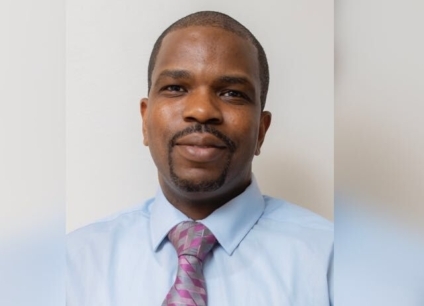
By Dr Manaseh Mawufemor Mintah
Environmental Policy Scholar | Writer | Afrocentric Student
Latest Stories
-
T-bills auction: Government exceeds target marginally; yield on 91-day bill remains unchanged
2 hours -
GPL 2026/27: 10-man Aduana hand Kotoko defeat in Kumasi
2 hours -
GPL 2026/27: Medeama ease past Basake Holy Stars
3 hours -
Appiah Adomako writes: Why DVLA must stop treating every expired licence holder as delinquent
3 hours -
Localization must transfer decision-making power, not just project responsibilities
3 hours -
Modernising Ghana’s traditional markets through the 24-Hour Economy markets initiative
3 hours -
New economy will boost local production and create jobs – Finance Minister
3 hours -
Real-Time VAT on cross-border digital services – not a new tax and does not violate double taxation principle
4 hours -
Digitalisation, AI key to Ghana’s tourism transformation – GHATOF
4 hours -
Stronger GTA-private sector partnership needed to grow tourism – GHATOF
4 hours -
Amazon eyes Ghana for broadband expansion after talks with Mahama
5 hours -
National Investment Quiz 2026: Six schools qualify for quarter-finals
5 hours -
‘Do not let Russia pay for its madness with lives of your people’ – Zelensky to Ghana, 46 other countries
5 hours -
6,079 promotion cases fully processed and paid – CAGD says amid nationwide teachers’ strike
6 hours -
Teacher unions to meet government Monday over nationwide strike
6 hours