

Audio By Carbonatix
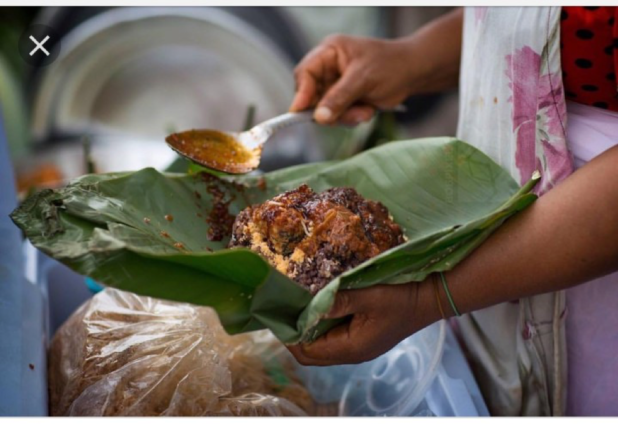
Many consumers have been wondering why they are spending more on their favourite meals; waakye and Hausa koko, these days.
That feeling of hurt and disappointment is the state of many lovers of waakye and Hausa koko, following the sharp rise in the cost of these two breakfast options.
Each and every morning, hungry stomachs queue at various food joints to choose between these two dishes.
However, vendors say they can no longer cushion customers due to the skyrocketing prices of food on the market – consumers have had to either pump in more money or adjust to what they are served.
In this edition of the JoyNews Living Standard Series, it was found that although it costs more for people to get these meals, nothing stops them from enjoying it.

As early as 7:00am, Auntie Bebe had already started serving.
Her food is popular among residents of Accra Newtown and many other residents of Accra also visit her food joint - they include workers in the formal and informal sectors and even children.
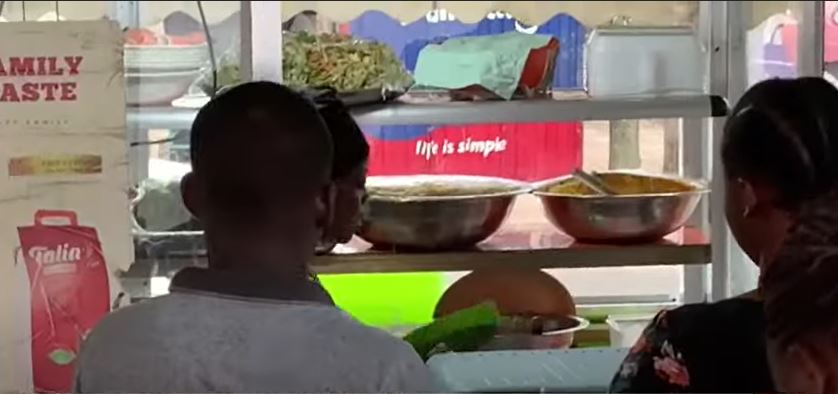
However, Auntie Bebe, like owners of many other food businesses, is experiencing difficulties as the cost of ingredients has risen dramatically.
She has been compelled to increase her prices, and now sells a ladle of waakye for GH¢2.00.
Be mindful that you have to pay separately for the gari or spaghetti. You will need at least GH¢10.00 for a fairly decent plate of waakye.

Her assistant, Benedicta explained that, “If you come with GH¢20.00, you can get waakye GH¢5.00, spaghetti GH¢1.00, gari [cassava flakes] GH¢1.00; then, we would give your small salad and add a fish. If you come with just GH¢5.00, you will get waakye and gari, and we will manage to give you small spaghetti.”
Customers are now altering their breakfast budgets.

Baba has been a regular customer of Auntie Bebe for about eight years - the price of waakye has increased but he loves waakye too much to stay away from the meal.
“Now due to the economic situation, things have gone up. Previously, I was spending like GH¢5.00, but now I have to spend GH¢10.00 for breakfast alone. Because spend like this, I mostly run out of money by the 24th day of every month.

“When it happens like that, I have no option than return to koko [porridge] until I am financially capable of coming back to waakye,” he said.
Patrick Okrah buys about twice a week. He spends at least GH¢15.00 for a meal.
“I seriously enjoy waakye. I bought waakye GH¢5.00, leaves, spaghetti, gari and fish, all in pack. So, everything cost GH¢15.00…in the morning,” he said.

Hausa Koko is a cheaper breakfast option. Prince visits Ayishatu’s koko joint almost every day.
“It depends on what I feel to eat in the morning. Sometimes, I go in for porridge; sometimes, I go in for plain rice and other stuff. For porridge, I can spend less than GH¢7.00 because if I buy the porridge for GH¢2.00, with milk or groundnut, it will be GH¢4.00.
“I can buy bread GH¢2.00 in addition, and I am good with that,” he said.

Elvis Kofi says he has to spend more on millet porridge.
He shared his frustration; “Look at kose, I got the leftovers because I couldn’t afford GH¢2.00. The economic conditions are very harsh for some of us. We need the government to do something.”

Ayishatu and her family have been operating this business for over 20 years. Prices have reached an all-time high, and they can no longer cushion customers.
A cup of Koko now sells from GH¢2.00 and above.
“Koko is now GH¢2.00, kose now costs GH¢1.00 per one; bread is form GH¢2.00 upwards. If someone cannot afford, we sometimes ‘dash’ them the koko and they buy the bread and the kose.”

Although it costs more to get these favourite foods, it doesn’t stop many from enjoying their breakfast.
However, some people have been forced to reduce their meal portions and skip either lunch or dinner.

All they require are higher living standards.
Latest Stories
-
MamaCare CEO warns unresolved conflicts among health workers could undermine maternal and neonatal care
5 minutes -
Health professionals urged to translate medical knowledge into practice to save mothers
12 minutes -
Conflicts among care providers linked to maternal, neonatal deaths – Expert
2 hours -
GIS marks 10th TIME conference, champions improved teaching practices
2 hours -
BRICS Or Balance? What Ghana’s bid really means
2 hours -
GPRTU wants full TRAFFITECH-GH implementation to start in 2027
3 hours -
Mahama announces plans to import electric wheelchairs for PWDs
3 hours -
KGL U17 Colts 2026: Western beat Prempeh Elite Academy to set up final final with Greater Accra Region
3 hours -
Late Solanke strike salvages 10-man Spurs draw at Man United
3 hours -
Gender Ministry to monitor welfare of Nana Akua Addo’s children amid domestic violence case
3 hours -
Benedict Okyere Yeboah: Ghana’s football problem goes beyond sacking a coach
3 hours -
GPL 2026/27: Darkwah Wiafe’s winner sees All Blacks beat Kotoko
4 hours -
ITF World Tour : Patel Wins Boys’ Singles Final at J100 Accra
4 hours -
Ghana must pursue BRICS partnership if it brings economic benefits – Kpebu
4 hours -
Success and Wright Claims J100 Accra Girls’ Doubles Championship
4 hours