

Audio By Carbonatix
A political scientist at the University of Ghana, Dr Kwame Asah Asante, says Ghana's persistent low voter turnout in by-elections will not be solved by a single good election and that parties, electoral officials, and the state must all take deliberate steps to change the culture around civic participation.
Dr Kwame Asah Asante made the remarks on Joy FM's AM Show following the conclusion of the Ayawaso East parliamentary by-election held on March 3, 2026, in which NDC candidate Alhaji Mohammed Baba Jamal Ahmed comfortably retained the seat for the ruling party.
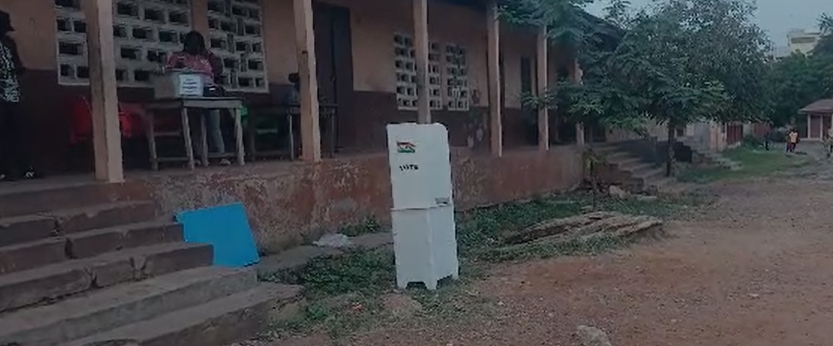
Despite the peaceful conduct of the election, fewer than 18,000 of the constituency's nearly 50,000 registered voters turned up to cast their ballots, a turnout figure that Dr Asante said was symptomatic of a much broader national problem.
Dr Asante was direct about where part of the blame lies. He argued that political parties, particularly those in government, must do more to demonstrate tangible development in communities if they expect voters to show up.
"We need to up our game, especially the parties when you win power, we want to see evidence on the ground. That is your record," he said.
His point cuts to the heart of a long-standing frustration among Ghanaian voters: that electoral participation often feels disconnected from real change in their daily lives.
When communities see little difference between one government and the next, the motivation to vote, especially in a by-election with no presidential stakes, can quickly evaporate.
Beyond party performance, Dr Asante also pointed to the history of violence in Ghanaian by-elections as a factor that quietly discourages voters from going to the polls.
He noted that when residents weigh whether to vote, the question of whether an election might turn violent is never far from their minds.
Historically, by-elections in Ghana have been more prone to clashes, intimidation, and the deployment of party foot soldiers than general elections and that reputation lingers.
The political scientist also raised the issue of electoral inducement, the practice of parties and candidates offering cash, food, or gifts in exchange for votes, as a double-edged problem that paradoxically suppresses turnout.
He observed that in areas where voters have come to expect some form of material benefit for showing up, low or absent inducement can itself become a reason to stay home.
When people calculate that "not much will be gained" from the process in material terms, disengagement becomes the rational choice.
Latest Stories
-
The Ghanaian prophet and the mysterious death of his scottish wife Charmain Speirs
8 minutes -
Nearly 400 sentenced in Nigeria for links to militant Islamists
29 minutes -
Ghana’s recovery supported by gold strength despite global oil price pressures – Standard Bank Research
36 minutes -
Kwaku Azar writes: A-G vs OSP
1 hour -
Mfantsipim–Adisadel rivalry built excellence, not division – Sam Jonah
2 hours -
Vice President launches Mfantsipim’s 150 years of shaping Ghana’s greatest mind
2 hours -
I assure Otumfuo, Mahama will join him to commission KNUST Teaching Hospital by end of this year – Haruna Iddrisu
3 hours -
Barcelona dominate derby to extend La Liga lead
3 hours -
Gov’t to roll out free special education for persons with disabilities from July 1 – Education Minister
3 hours -
Importers and Exporters Association declares full support for Publican AI port system
3 hours -
“We used it to test our officiating officials’ readiness” – Bawah Fuseini after CAA Athletics event
3 hours -
Volleyball emerges as Ghana’s fastest rising sport
3 hours -
National Sports Fund needs strong leadership from the top – Administrator David Wuaku
4 hours -
JoySports Exclusive: Steve McLaren in talks with GFA after expressing interest in Black Stars job
4 hours -
Fire guts auto parts warehouse at Bubuashie, one fire officer injured
4 hours