

Audio By Carbonatix
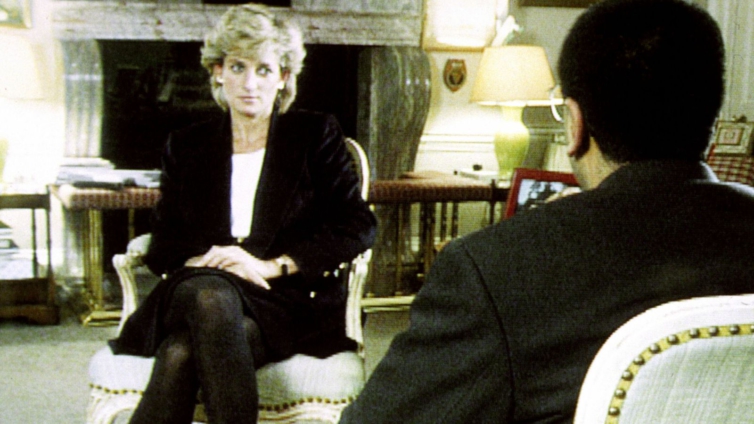
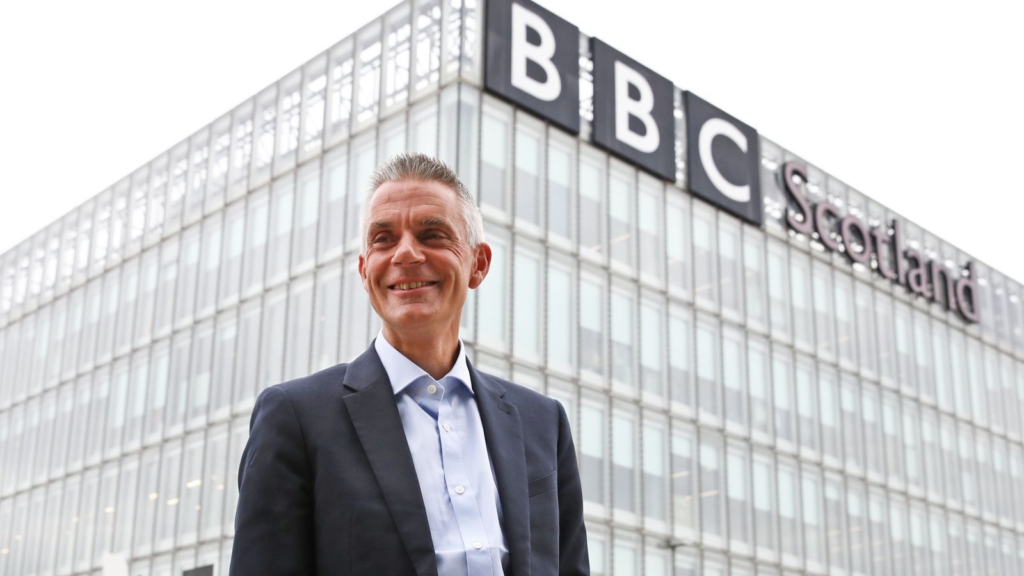
The director-general of the BBC has written to staff saying lessons must be learnt following the damning report into the circumstances surrounding the Panorama interview with Princess Diana.
In an internal email, Tim Davie said people across the BBC felt "deeply let down" by the contents of Lord Dyson's 127-page report, which found the corporation covered up "deceitful behaviour" used by journalist Martin Bashir to secure what was described as the "scoop of the decade" in 1995.
He said the findings were "particularly upsetting" given the BBC's commitment to fair and honest journalism.
Mr Davie took over as director-general last year from Lord Hall, who led a 1996 internal inquiry into the interview. He was director of news and current affairs at the time.
Both are facing questions over why Bashir was rehired by the BBC in 2016. The reporter - who became a household name after the Diana interview - left the BBC for ITV in 1999, but returned 17 years later to become religious affairs correspondent and then religion editor.
Mr Davie told staff: "Personally, I am deeply proud of the BBC that I run today, as I know you all are. We should all take pride in continuing to work for the world's leading public service broadcaster.
"Right now, the best way to build and preserve our reputation is to keep delivering outstanding work across the organisation, earning the trust of audiences. Thanks to all of you for continuing to achieve this as we go through this demanding period.
"We have much to reflect on. I know that we now have significantly stronger processes and governance in place to ensure that an event like this doesn't happen again.
"However, we must also learn lessons and keep improving."
His comments come as Prince William made his first public appearance - at a football club in Edinburgh - since both he and his brother, the Duke of Sussex, issued scathing statements regarding the report.
William, the Duke of Cambridge, said the interview had fuelled his mother's "fear, paranoia and isolation" in the final years of her life and damaged her relationship with his father, the Prince of Wales.
Harry also hit out at the corporation, saying: "The ripple effect of a culture of exploitation and unethical practices ultimately took her life."
During a visit to Portsmouth on Friday, Prime Minister Boris Johnson said he was "obviously concerned" by the inquiry's findings", adding: "I can only imagine the feelings of the Royal Family and I hope very much that the BBC will be taking every possible step to make sure nothing like this ever happens again."
Former director of BBC News James Harding, who held the post when Bashir was rehired in 2016, apologised on Friday and said responsibility for the journalist returning to the corporation "sits with me".
Speaking to BBC News, he also sidestepped questions on whether Lord Hall had any role in the rehiring.
Digital, Culture, Media and Sport Committee chairman Julian Knight said he was writing to Mr Davie to ask why Bashir had been allowed to return.
He added: "I want to know how the BBC can reassure the committee that there could be no repeat of the serious failings that have been highlighted by the Dyson report. Now more than ever the BBC must show transparency and honesty in its response. We, the committee, will be discussing these issues when we meet in a private session."
On Friday, former BBC executive Tim Suter, who was part of the 1996 internal investigation, stepped down from his current board role with media watchdog Ofcom.
He had previously been managing editor of weekly programmes in BBC News and current affairs.
Dame Melanie Dawes, Ofcom's chief executive, confirmed he'd stepped down "by mutual agreement" and that the regulator would be entering discussions with the BBC "to ensure that this situation can never be repeated".
Meanwhile, the graphic designer who was tasked with mocking up fake bank documents to help Bashir secure his interview has accused the BBC of "turning their back" on him.
Matt Wiessler said concerns he raised about the way the interview was secured at the time were ignored by bosses.
"It was like I was the guy that pointed out the flaw in something really beautiful, which is a scoop, and I pointed out that something wasn't right," he told Sky News.
Latest Stories
-
Gender Ministry supports Harriet Amuzu in ongoing abuse case
12 minutes -
AG joins plaintiff to scrap OSP ?: We should be mindful of the mischief in this – Bobby Banson
19 minutes -
Samson Lardy Anyenini questions willingness of Attorneys-General to prosecute political colleagues
21 minutes -
It is only fair the OSP is heard in Supreme Court case – Bobby Banson
27 minutes -
Asiedu Nketia resumes Ashanti tour, second leg kicks off on Sunday
35 minutes -
NLA denies salary cut claims, threatens legal action over reports
39 minutes -
BoG Governor honoured for stabilising cedi, improve inflation
42 minutes -
Kyebi Easter Homecoming 2026: A resounding success!
1 hour -
Trade Minister applauds GUTA as a pillar of economic growth; Prez Mahama honoured
2 hours -
President’s brother’s takeover of Damang Mines is ‘untidy’ – Alhassan Tampuli
2 hours -
It’s not true that gov’t decided not to renew the lease for Gold Fields – Bobby Banson
2 hours -
Ghana to boost tomato production with 60-hectare irrigated farms and processing initiatives
2 hours -
E&P’s takeover process of Damang Mines was very clean – Inusah Fuseini
2 hours -
Damang takeover: There is not going to be any job loss; it is a lease change – Bobby Banson
3 hours -
Gold Fields didn’t stop mining at Damang mines; such claims are untrue – Bobby Banson
3 hours