


Audio By Carbonatix
A Midwifery Officer at the Greater Accra Regional Hospital (GARH) – Ridge Hospital’s Obstetrics and Gynecology Department, Racheal Hesse Matey, has encouraged men to muster the courage to undergo fertility testing when experiencing difficulties conceiving with their spouses.
Speaking at her annual health sensitisation event themed “Infertility and its related obstetrical issues,” Ms. Matey emphasised that in many scenarios, especially in some African cultures, masculinity is closely tied to fertility and the ability to father children, which makes men feel that undergoing fertility test would be a blow to their masculinity or reputation.

“Infertility is not only a woman’s problem, because a woman cannot get pregnant. The woman needs a man to get her pregnant, so when there is a problem, it could either be the fault of the man or the woman,” she said.
She emphasised that most often, when there is such a problem, the woman is pressured as the main cause of the problem.
“We will see the woman moving from corner to corner, taking medications to help solve the infertility problem. Meanwhile, if you probe further, the man has not conducted any tests to prove if he has viable sperm that will fertilise the woman’s eggs. In some cases, it is the men who have an infertility problem,” she disclosed.
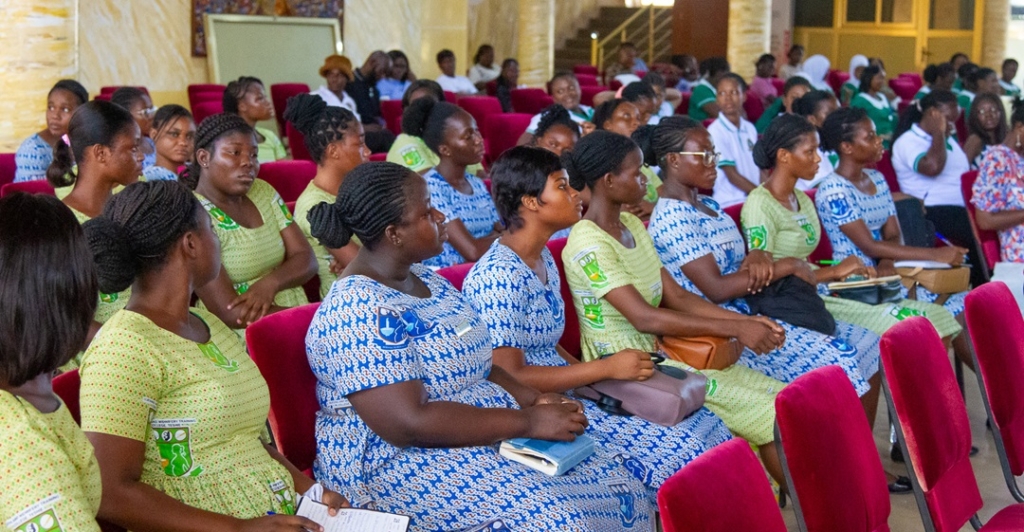
Ms. Matey attributes this to infertility stigma and fear of being blamed or shamed for any fertility issues, emphasising that her call to action aims to promote men's involvement in reproductive health and address potential fertility issues.
She also touched on categories of infertility, stating that primary infertility occurs when a couple has not conceived at all, while secondary infertility occurs when a couple has had one or more children but faces difficulty conceiving again.
“Having one or two children does not guarantee future fertility. Each pregnancy is unique, and challenges may arise when trying to conceive again. Understanding these fertility types can help individuals seek medical help when needed,” she added.
Addressing the myth that the size of a penis determines the viability of the semen, Head of Obstetrics and Gynecology, Midway Hospital, Dr. Gifty Quarshie Ngissah dismissed the analogy, stating that the size of the penis does not determine the viability of the semen.
She added that sperm quality and fertility are determined by sperm count, sperm motility (movement), sperm morphology (shape and structure), and volume, while emphasising that a man's fertility is determined by the quality of his sperm, not the size of his penis.
She also addressed the issues of commercialisation of fertility drugs, lamenting the increasing sale of unapproved fertility drugs in the country.
“This commercialisation issue is a big deal because many women in their pursuit of children get to take some drugs, which end up damaging their system,” she added.
Latest Stories
-
Work begins on 160-bed Western North Regional Referral Hospital – Kwakye Ofosu
45 seconds -
GPRTU says non-member commercial vehicles pose challenge to road safety enforcement
1 minute -
Fuel transport licensing gaps could enable abuse and diversion – Transparency International Ghana
3 minutes -
Former Youth and Sports Minister questions Carlos Queiroz appointment process, alleges possible corruption
4 minutes -
NHIA targets 80% population coverage under 2026–2028 strategic plan
7 minutes -
MTTD must intensify enforcement against unregulated drivers – NRSA
7 minutes -
NRSA proposes separate registration and number plates for Okada riders
8 minutes -
National PTA backs striking teacher unions, urges Mahama to intervene
13 minutes -
Israel-bound flight diverted after fight between pilots
19 minutes -
EchoWave earns praise for sound quality at 10th Women in Worship
29 minutes -
Crackdown on South Africa’s unsafe streets ordered by president to keep women safe
40 minutes -
Banks are responding to improved monetary policy conditions – John Awuah
59 minutes -
Judges’ conference forces further adjournment of Salomey Baffoe case to Oct. 5
1 hour -
Chorkor community joins AC4NCA clean-up to tackle marine and coastal pollution
1 hour -
GRA assures Tullow of collaboration to settle $393m tax liability without disrupting its petroleum operations
2 hours