

Audio By Carbonatix
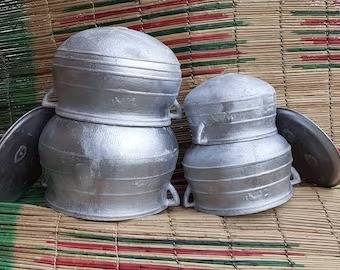
A new study on nearly 200 consumer products and food samples across four regions in Ghana has revealed worrying levels of lead contamination in the popular metal cookware, 'dades3n'.
The Global Rapid Market screening study which happens to be the largest of its kind highlights alarming levels of lead in consumer goods and food produced in low and middle-income countries including Ghana with far-reaching global consequences.
The study conducted by the environmental NGO, Pure Earth’s Blacksmith Initiative revealed that there are high levels of lead contamination in the following: Metal cookware (Dades3n) is 55%, ceramic cookware has 18%, toys for kids has 14%, and cosmetics (local mascara) has 7% of lead.
According to a report launched by the World Bank recently, the levels of lead exposure are extremely high which leads to a decrease in IQ.
“Children under 5 years old worldwide lost 765 million IQ points, those living in low and middle-income countries lost 729 million IQ points.”
“There is an average loss of 5.9 IQ points per child and this IQ points loss is 80% greater than the previous estimate,” the report stated.
Country Director for Pure Earth, Esmond Wisdom Quansah also reiterated that eating from these metallic cookwares puts individuals at a high risk of lead poisoning.
According to him, the experiment was conducted six times and the results were the same hence the institution wants to create public awareness so that other alternatives may be considered to avoid further damage.

“What this points to is that we are not safe, if you happen to be eating from any of these metallic or ‘dades3n’ cookware we are at risk of lead poisoning.”
“We’ve grown a step further, our scientists have conducted what we call the leach test to determine the percentage of leach of this lead concentration in this metallic or aluminium cooking pot into the food and we were surprised by the findings of the scientists.”
"52% of the pots tested leached lead in concentrations greater than our reference level of 10 ug/L. The repeated leaching “boils” in pots in general resulted in lower lead in leachate, although lead remained above the 10 ug/L reference level in most cases, so that is a cause for concern for everyone and that is why we are putting this information in the public,” he explained.
Latest Stories
-
Philanthropist Alhaji FuZak donates Da’wah bus to Ambariya Sunni community
4 minutes -
GUTA calls for suspension of Publican AI system over trade disruptions, demands temporary halt in import activities
7 minutes -
TTAG raises alarm over proposed recruitment of 7,000 teachers, demands national posting roadmap
40 minutes -
Civilians feared killed after reports of air strike on Nigerian market
50 minutes -
Bishop Simon Kofi Appiah installed as new Jasikan Diocese Bishop
51 minutes -
Trump’s Strait of Hormuz blockade threat raises risks and leaves predicaments unchanged
53 minutes -
US Court backs extradiction of former MASLOC CEO Sedina Tamakloe-Attionu’s to Ghana
1 hour -
Seven arrested as NAIMOS dismantles illegal mining camp, seizes firearms at Boin River
1 hour -
Fire erupts at Madina Ritz Junction, destroys multiple wooden structures and containers
1 hour -
Daniel-Kofi Kyereh returns from long-term injury, registers assist for Freiburg U23
2 hours -
Knifeman calling himself ‘Lucifer’ slashes three at NYC’s Grand Central
2 hours -
Brands are built from within to without
2 hours -
Matriculants urged to pursue excellence as gov’t reaffirms support for Maritime education
2 hours -
See the areas that will be affected by ECG’s planned maintenance on Monday, April 13, 2026
2 hours -
GPL 2025/26: Salim Adams double fires Medeama back to summit after Kotoko rout
2 hours