

Audio By Carbonatix
The Chief Executive Officer of the Minerals Commission, Isaac Andrews Tandoh, has reaffirmed the government’s commitment to strengthening mineral resource governance through evidence-based policymaking, transparency and strategic partnerships.
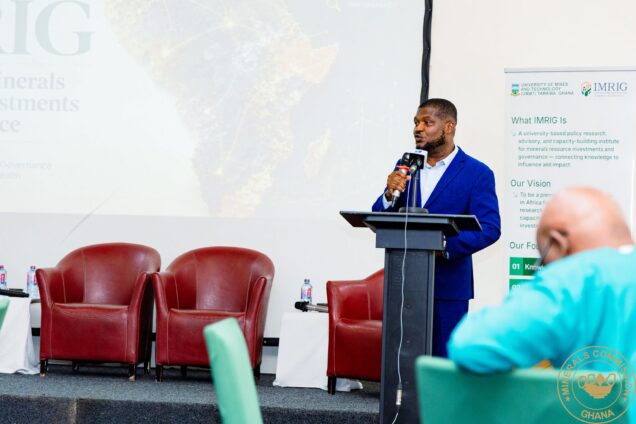
Mr Tandoh made the remarks at the inauguration of the Institute for Mineral Resources Investment and Governance (IMRIG) at the University of Mines and Technology (UMaT), describing the establishment of the institute as a significant milestone for Ghana’s extractive sector.
He congratulated UMaT for its leadership in creating IMRIG, noting that the institute comes at a critical time when Ghana’s mining industry is transforming the global energy transition and increasing demand for critical minerals.
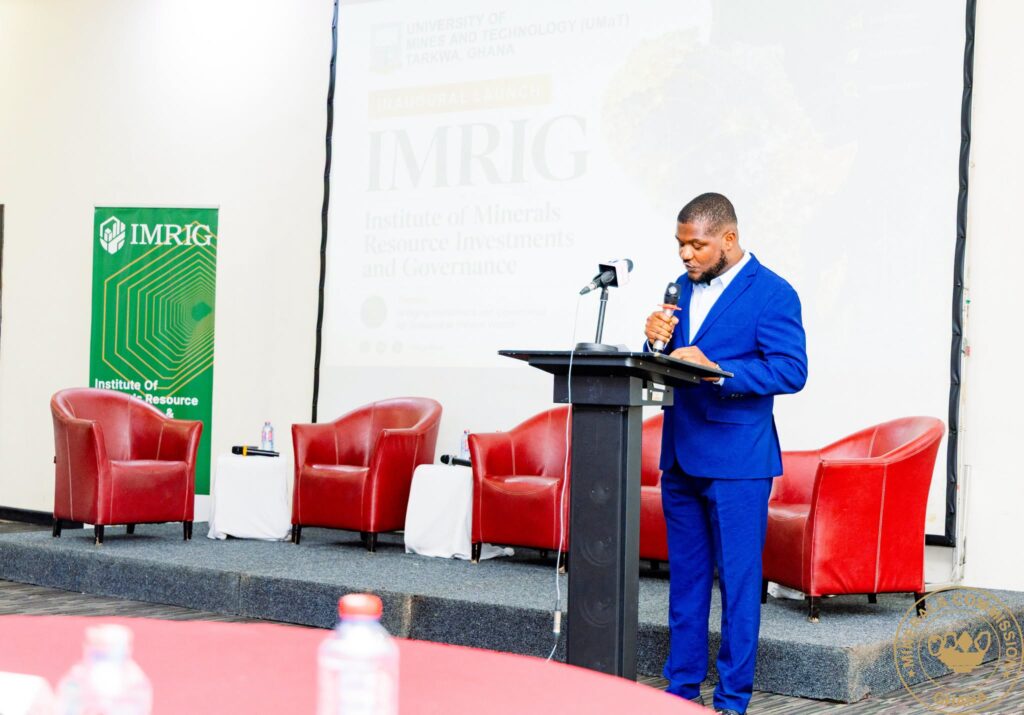
The Minerals Commission CEO said while Ghana remains one of Africa’s leading mining investment destinations, the future success of the sector will depend on strong governance systems, effective policy frameworks and collaboration among government, academia, industry, civil society and development partners.
Mr Tandoh highlighted ongoing government reforms, including the review of the Minerals and Mining Act, 2006 (Act 703), revision of the 2014 Minerals and Mining Policy, introduction of a progressive Minerals (Royalties) Pricing Schedule Regulation, and measures to strengthen fiscal and regulatory frameworks.
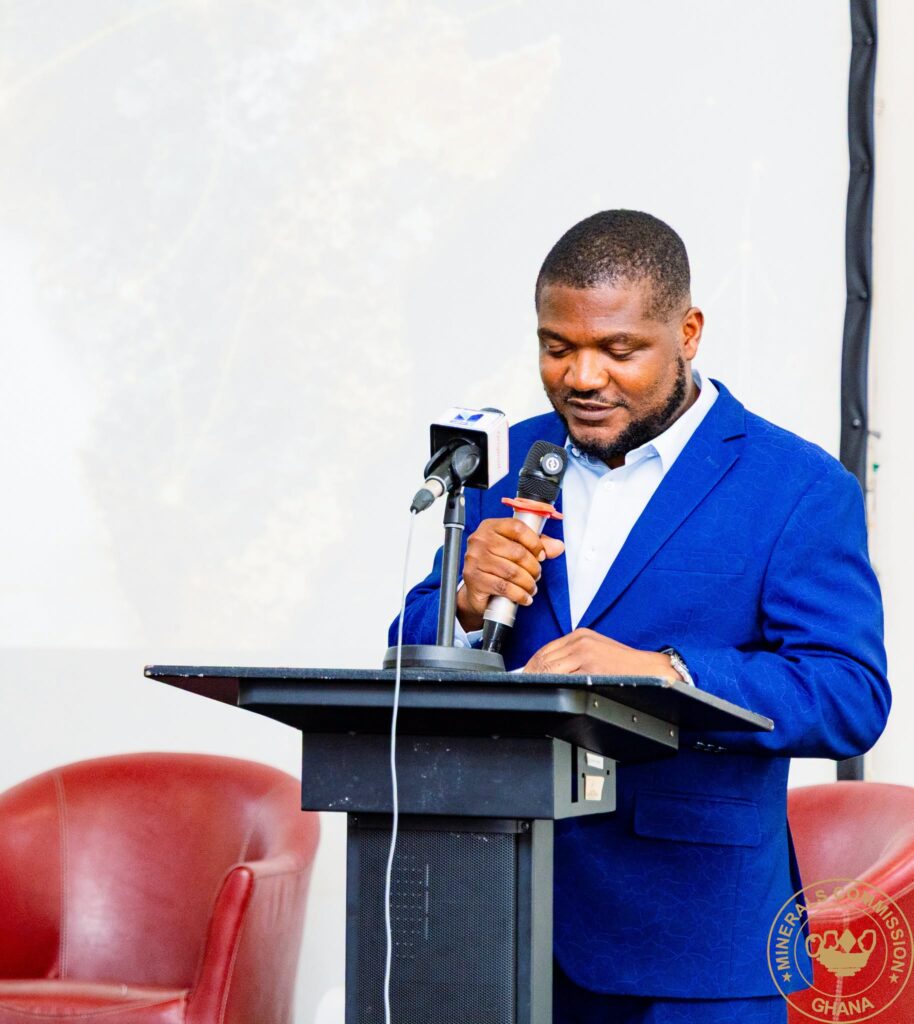
He said the reforms are aimed at improving transparency, promoting value addition, strengthening local content and ensuring that Ghana derives maximum benefit from its mineral resources while effectively managing emerging strategic and critical minerals.
The Chief Executive Officer further assured that the Minerals Commission is ready to collaborate with IMRIG by providing access to relevant data, supporting research initiatives and participating in policy discussions to shape the future of mineral governance in Ghana and across Africa.
He challenged the institute to become an independent centre of excellence that produces quality research, practical policy recommendations and objective analysis to address emerging issues such as environmental, social and governance (ESG) standards, climate change, licensing transparency and responsible resource management.
Mr Tandoh stressed that Ghana’s mineral future will not be determined solely by the availability of resources but by the quality of governance underpinning their management, expressing confidence that IMRIG would become a continental hub for research and policy innovation in the extractive sector.
Latest Stories
-
GRA assures Tullow of collaboration to settle $393m tax liability without disrupting its petroleum operations
15 minutes -
South Korea demands apology from Pyongyang for landmine blasts that injured three
18 minutes -
Carlos Queiroz not the sort of coach Black Stars need – Nii Lante Vanderpuye
48 minutes -
AFCON 2027Q: ‘Our Black Stars team is gone’ – Former Sports Minister
1 hour -
Prof. Prempeh calls for public review of draft constitutional reform bills
1 hour -
AFCON 2027Q: ‘I have never seen a poor performance from Black Stars like against Gambia’ – Nii Lante Vanderpuye
1 hour -
Nigeria set to launch National Digital Address System 9 years after Ghana showed the way
2 hours -
Policy rate decision takes time to reflect in lower lending rates – BoG
2 hours -
Western Regional Minister applauds Karpowership’s role in Ghana’s power sector
2 hours -
Playback: Road safety crises: Where are we getting it wrong?
2 hours -
Enterprise Life celebrates 25 years of protecting families and building trust
3 hours -
ICC London rules in favor of Ghana against Tullow over $400m tax charge
3 hours -
We are disappointed in ICC’s ruling over our corporate income tax assessment in Ghana – Tullow Oil
3 hours -
Cost of building inflation for August 2026 increases to 4.6% – GSS
3 hours -
Today’s front pages: Wednesday, September 30, 2026
3 hours