


Audio By Carbonatix
As part of its 2022 investment strategy, the Minerals Income Investment Fund (MIIF) has planned to invest in lithium and salt.
This was made known by the Chief Executive of MIIF, Edward Nana Yaw Koranteng on the sidelines of the Mining Indaba recently hosted in Cape Town, South Africa.
According to MIIF, Ghana has commercial lithium reserves, which are the primary mineral needed to drive the expanding electric vehicle (EV) market.
“The data is exceptional, with additional opportunities from the value chain and for byproducts such as feldspar – the main resource in ceramics and fibre-glass,” said Nana Yaw Koranteng.
He said that the global market for unprocessed lithium is around US$6.83billion with analysts projecting steady growth to circa US$10billion by 2028, and the global lithium battery market is projected to hit US$100billion by 2025 due to the rapid expansion in the EV market.
“We clearly see lithium as a growth pole after analysing all the data, and have started deliberations with Atlantic Lithium which holds concessions with recoverable grade of 560 km2 miles in Ghana,” he told the investors gathered in Cape Town.
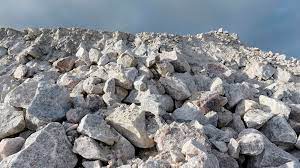
“A direct equity investment provides a good opportunity for MIIF to come in at an early stage, considering Atlantic’s planned listing in August 2022. We are looking at an IRR of 125% in four years and a projected revenue of more than US$1.5billion over eight years,” the MIIF CEO added.
He also mentioned that MIIF is extending its non-gold resource holdings by investing in salt production.
According to the MIIF CEO “Salt should hit a US$33billion market value in 2026, with the industrial salt market size estimated at circa US$14billion in 2020. The industrial salt sector holds much promise for Ghana, with West African regional demand alone estimated at circa US$600million dollars per annum.”
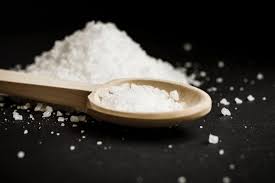
Mr. Nana Yaw Koranteng stated that “the Ada Songhor salt ponds have a proven track-record of producing high quality evaporated salt, about 41,000 acres of lagoon basin with a significant potential for large-scale salt production and industrial use, as well as for export.”
Therefore “A full development of the salt ponds would arguably create sub-Saharan Africa’s largest salt ponds complex. The current fields have approximately 13,000 acres of salt ponds and pans, but production averages only about 20% of capacity.”
“In our view, there is potential to produce over a million tonnes of salt and other industrial chemicals for both the local and international markets – making Ghana the centre of salt production in the shortest possible time. MIIF intends to invest about US$30million into the sector and has already been approached by potential co-investors,” he said.
Latest Stories
-
Tamale Child Deaths: Vehicle owner arrested as IGP deploys homicide team
11 minutes -
From ShattaFest to MoMo Fest: Entertainment takes centre stage in youth engagement
17 minutes -
Nigerian military aircraft crashes, killing 32
22 minutes -
MTN encourages Ghanaians to use MoMo for saving, investing and financial planning
22 minutes -
Absa Bank Ghana names Stephen Ato Frimpong as Board Chair
30 minutes -
Pickford ‘almost caused crash’ with careless driving
32 minutes -
Author and former politician Jeffrey Archer dies aged 86
43 minutes -
No education reform can succeed without teachers – Education Ministry
52 minutes -
Gauff condemns racist abuse after China Open win
1 hour -
Medvedev disqualified for hitting spectator with ball
1 hour -
Oliseh scores twice in late comeback win for France
1 hour -
Pentagon stops using Anthropic AI tools after blacklisting company, BBC told
2 hours -
From despair to dance: Family of nurse Salomey Baffoe rejoices after GH¢100k bail granted
2 hours -
Kejetia Phase III pricing talks loom as government moves to restart stalled works
3 hours -
Nchiraa Yam festival: Two killed, 14 injured as police restore calm
3 hours